Marsh Applique

Here is another piece that I completed in Level 3 Advanced Studies in Experimental Stitch class.

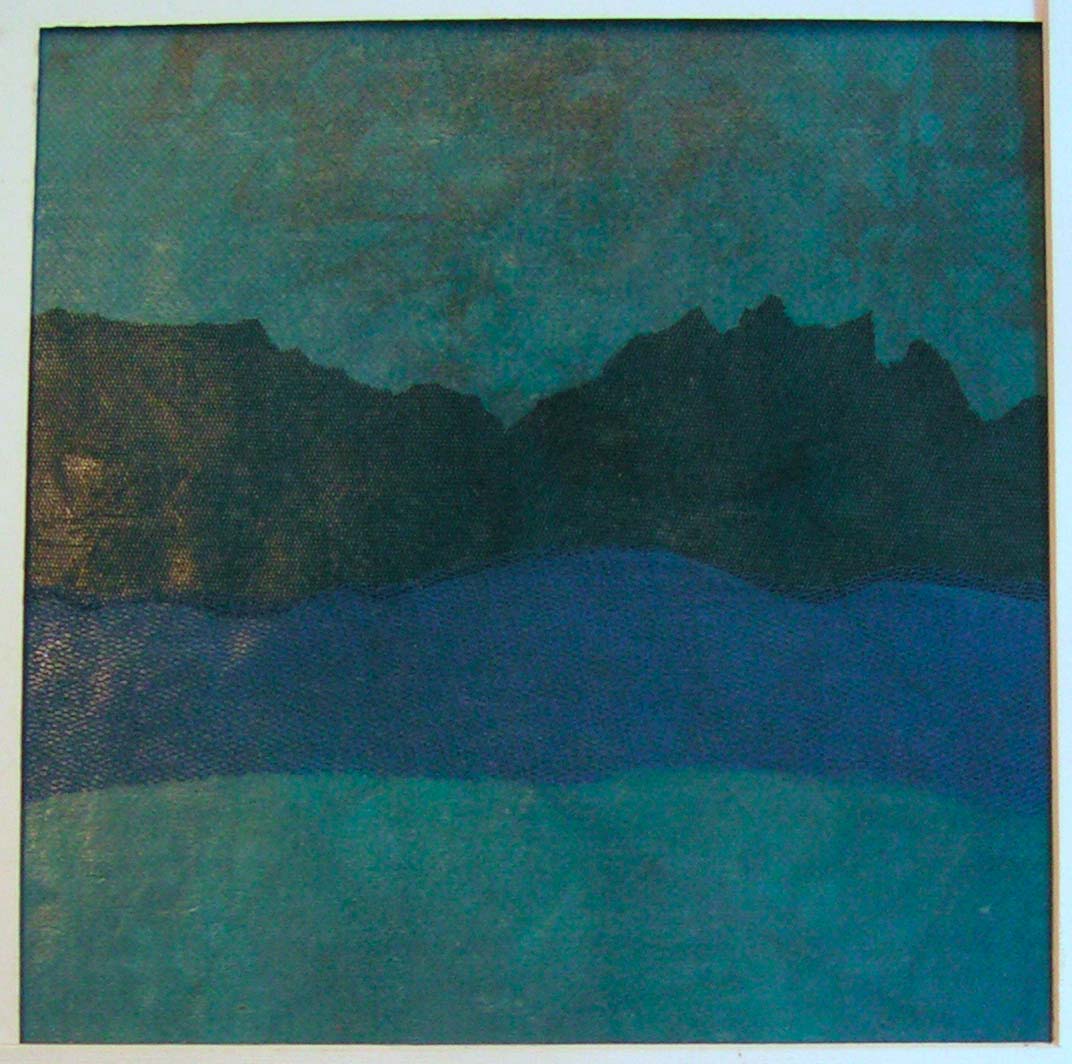
This is what the piece started with. Mainly deconstructed screen printed fabric and a few pieces of shibori dyed fabric. It needed more so on to layering and stitching.

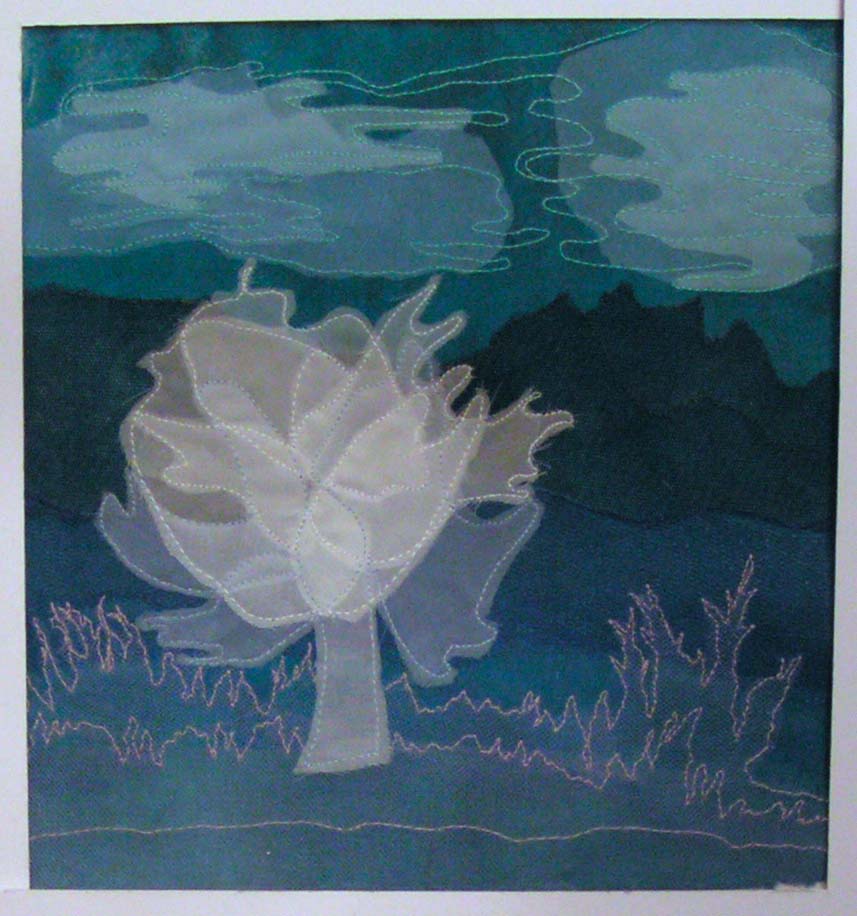
Here’s the finished piece and I have called this one, Marsh. It’s kind of amazing what layers of fabric can do to change the look of a piece.

Simplicity

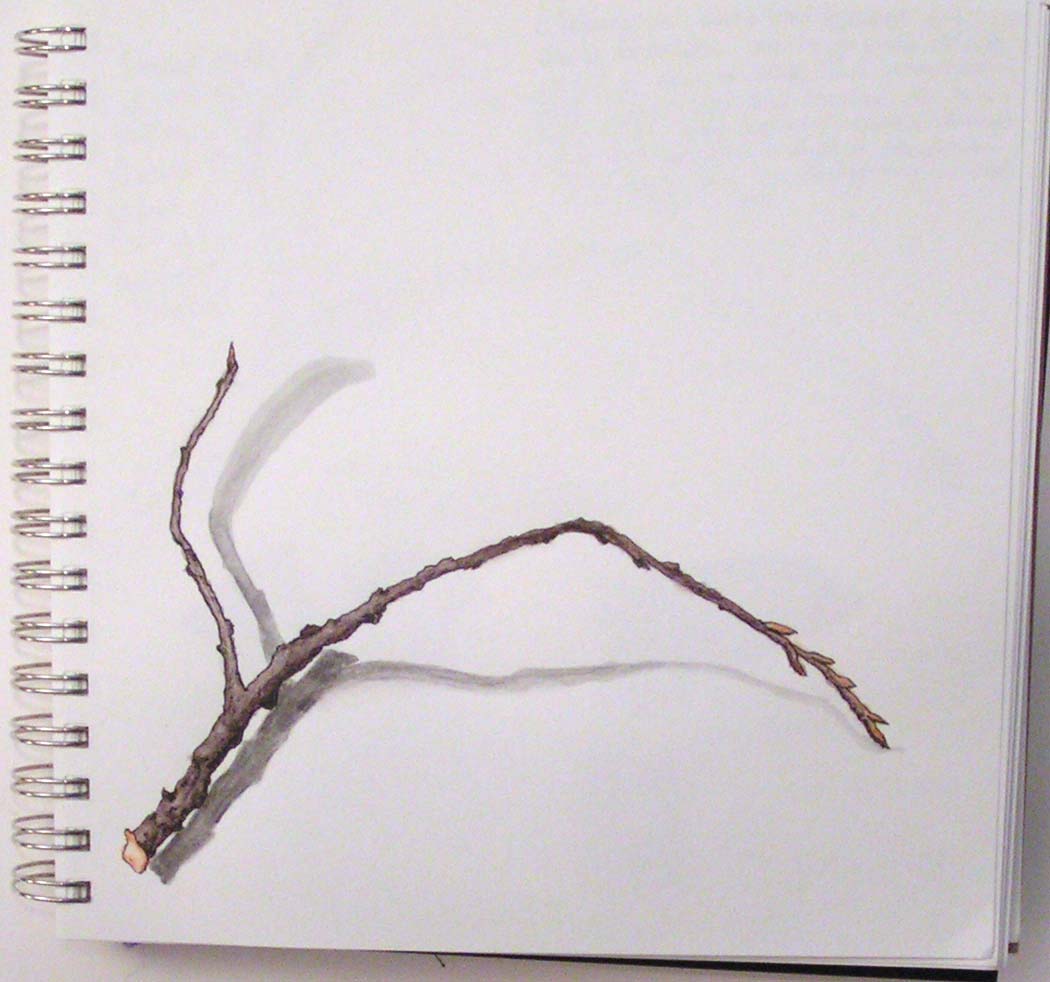
I love simplicity in design. It’s not easy to achieve but I always admire when a piece is taken back to the bare essence of an idea. So when Textileartist.org announced a challenge by Emily Jo Gibbs, I was intrigued with her style. The instructions were to find a stick or an object such as a paintbrush to be your inspiration. Then, sketch the item and use that sketch to create an applique. Ha! Applique is perfect for another homework assignment. Plus, the simplicity of using a sketch as the design. I have hundreds of sketches that I could use. But I found a stick, and did a sketch of it, including the shadow.

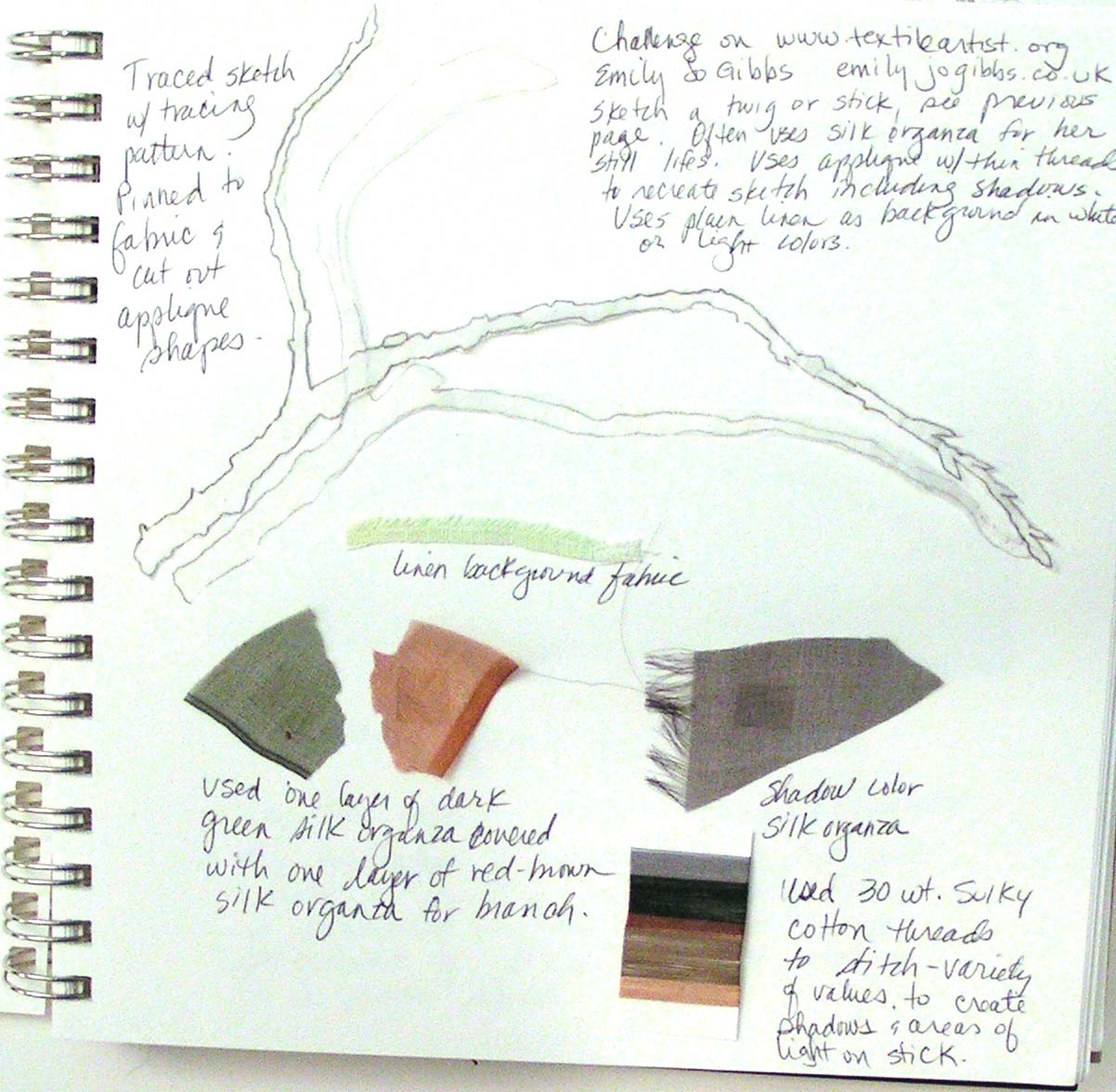
Then I created a pattern for the applique pieces out of tracing paper, chose some hand dyed organza and a linen background.
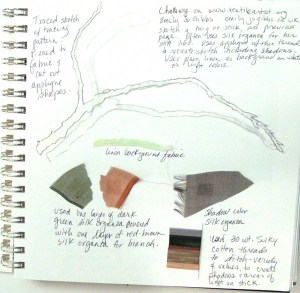
Here’s the documentation in my sketchbook for Level 3 Stitch class.
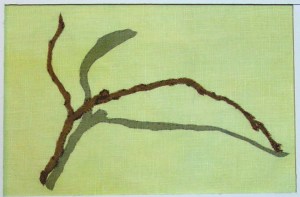
Then on to hand stitching while listening to a portion of an online class given by MOMA. I love the simplicity of the piece. A bare bones sketch in applique. As I said, I have loads of sketches that I could recreate this way.

For the MOMA class, the artist featured this week was Barnett Newman. I had never heard of him before and it was interesting to learn about his style. Again, simplicity is evident. His work that he is best known for are his “zips”, the line of yellow oxide down the middle of the painting in a solid colored background. But the “zips” weren’t usually exact and had more complexity to them as you get closer and view the painting at more length. Many of his paintings are really large so that as you get closer, you are engulfed by color. The painting above is done in his style. Acrylic paint on sketchbook paper. I don’t think it quite gives the same impact as it might have on canvas or board. But it was an interesting experiment.

It’s a fun course and now we are studying Willem de Kooning.

Thanks for stopping by and stay safe!


After The Snow

I have seen a lot of people recreating famous paintings online. So I thought I would give it a try with an applique piece. I used Paul Klee’s Before The Snow as inspiration. I had printed the photo of the original out in black and white so that I could see the values and the shapes better. It has been several months since I printed out the photo and I knew it had something to do with snow but I didn’t remember the title even. So I started thinking it would look good in a combination of blues and purples.

I used a hand dyed fabric for the background, covered that with fusible and then added tulle and sheer fabric.

Here I have added the clouds and the foreground plants.

Then I added the tree. So it was definitely looking snowy. And then it snowed here, which isn’t that unusual in April but when you’re housebound, the cabin fever seems to increase since it was too cold to even go outside in the garden. But I was celebrating the snow with this new piece.

Then I added free motion machine stitching. I tried to keep the stitching fairly simple and just give a little bit of line definition. So then I decided to go back and look at the original photo in color. Imagine my surprise when it turns out that it’s Before the Snow and it’s in fall colors. But that’s OK, After The Snow turned out as I had been seeing it in my mind’s eye.

Thanks for stopping by and I hope you’re staying well.

Portrait Applique

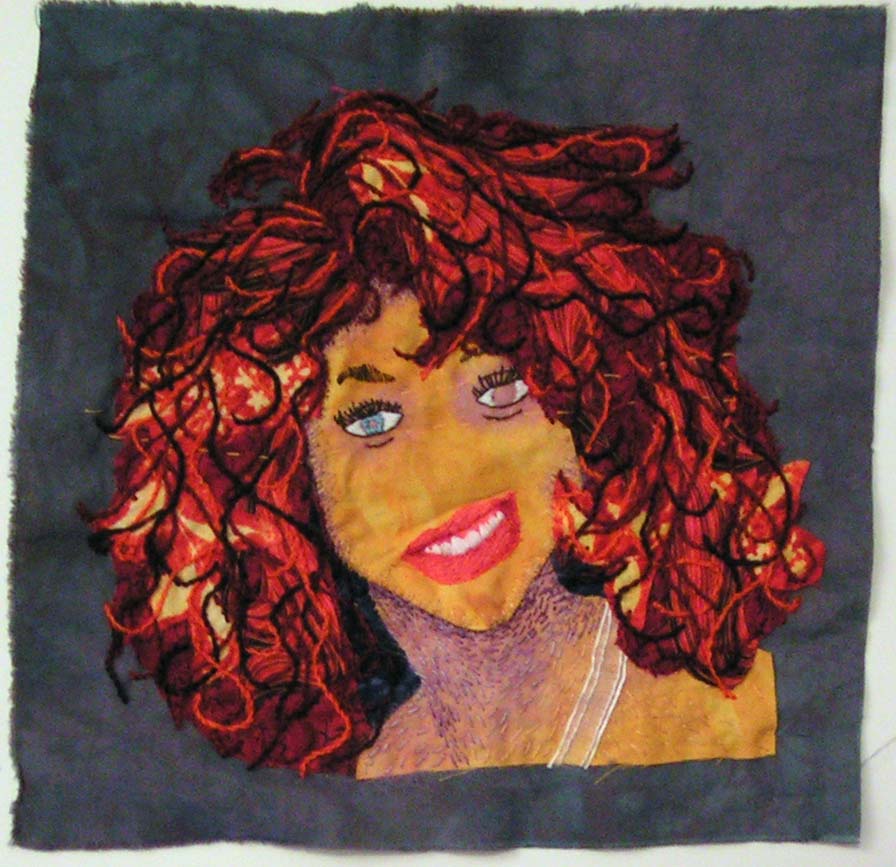
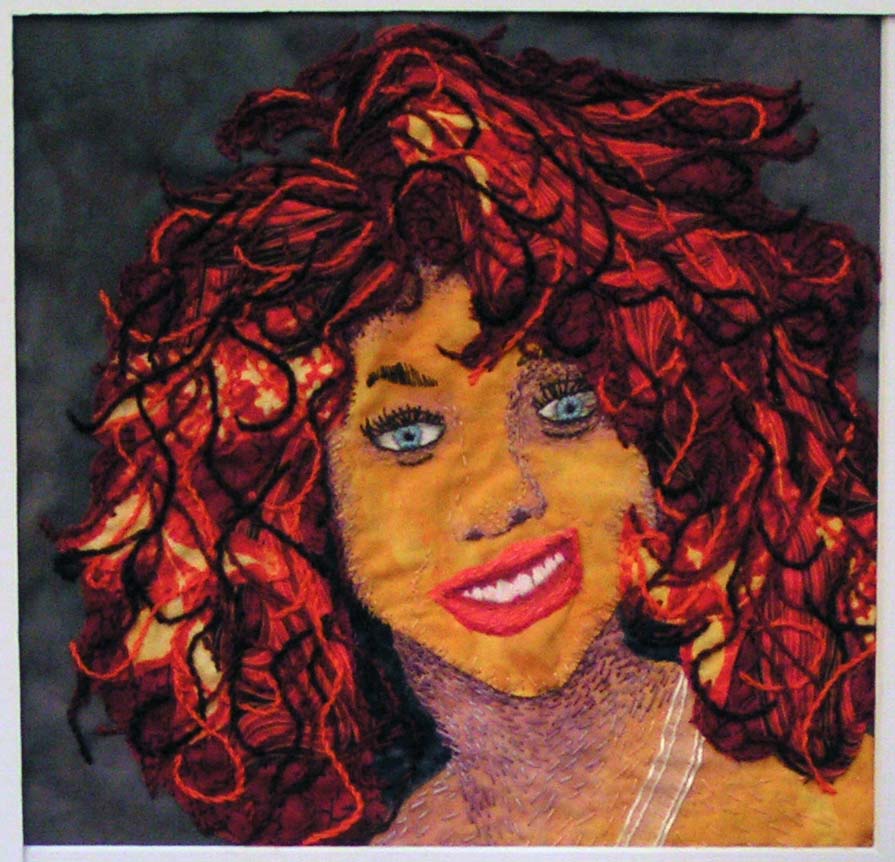
I have been working on this applique piece for over a month. At our art meeting in February, we all worked on portraits. Some of us created portraits with paper collage but I decided to use fabric. That way, the portrait would work for my stitch homework. Having never done a stitched portrait, I learned a lot and found it fun, up until doing the facial features. Then I got a little stressed. I didn’t take very many in process photos.

These were the samples that I did in advance for facial features. I ended up doing an eye that was more like the one on the right. The teeth ended up being put directly on the lips fabric instead of having two layers of fabric with the dark for the inner mouth. That just didn’t work. And noses are hard.

Here she is partially stitched. I used a photo I found online when I searched for celebrities with wild, curly hair. The reason I did this portrait was so I could stitch wild, curly hair. That was my favorite part. None of the fabric was fused down, mistake number one. But it ended up working OK. The mouth ended up tilted too much and I really didn’t like it. So I did some surgery and cut it out and stitched it back down. This would have worked except for fabric fraying. I ended up adding some glue at the edges to keep it in place.

And here’s the finished portrait. I fussed with the nose and the mouth for an inordinate amount of time. They still aren’t the way I had in mind exactly but they’re OK. And it was fun trying something new. If I do this again, I will fuse all the fabric. Maybe I should try one with fused fabric and free motion machine stitching? That might be fun too.

I hope that all of you are staying safe and well in this crazy world. I’m staying at home and I’m finally out of the retail business, so more stitching, felting and fiber art to come! Yay!

Confetti Applique Sample

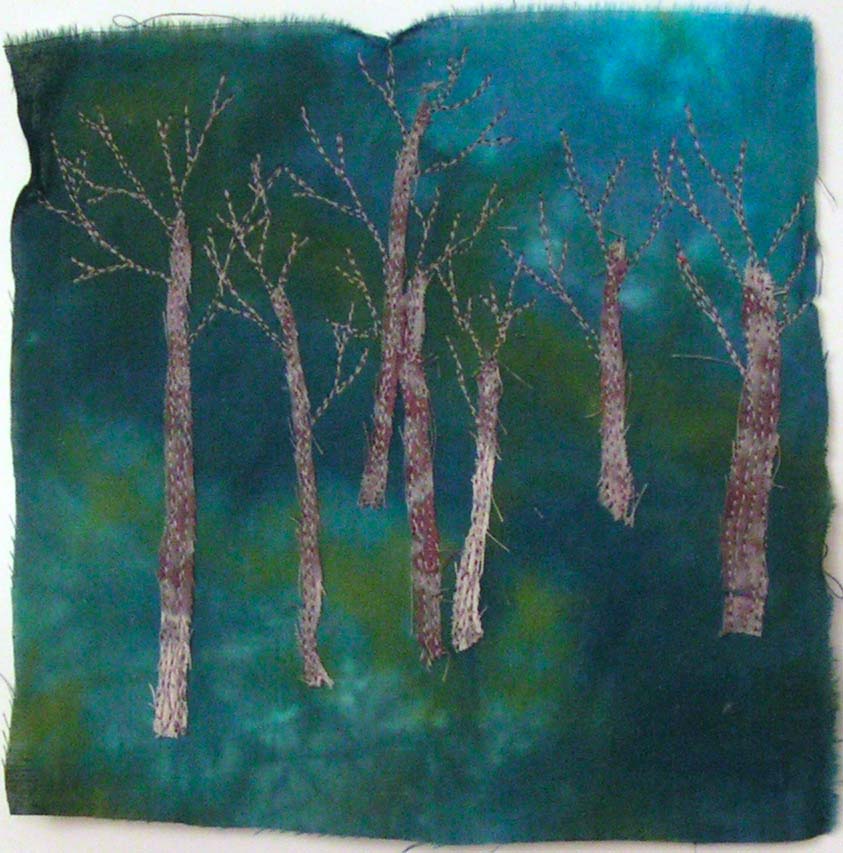
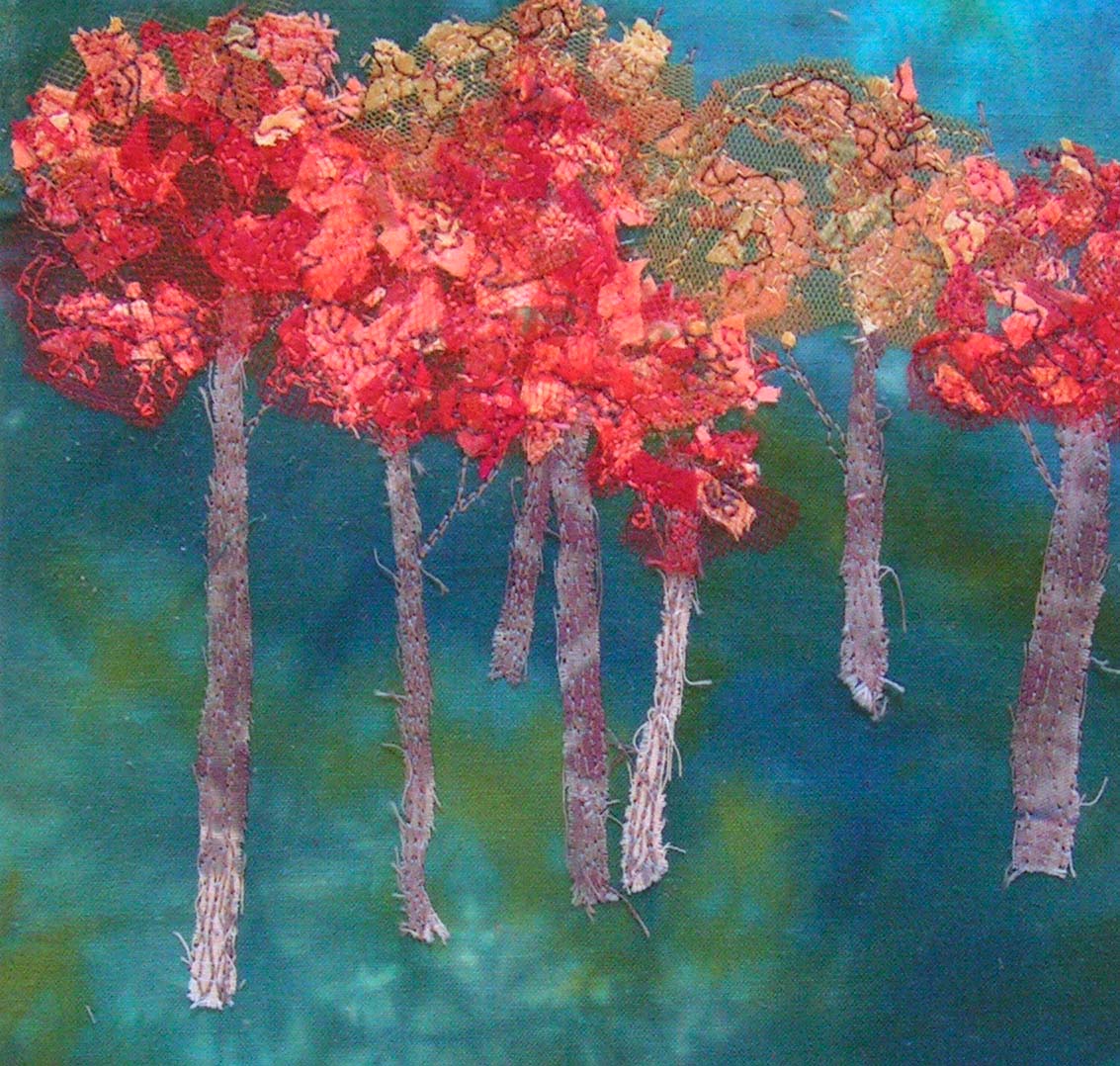
This week, I got another applique sample completed. This one is called “confetti” applique. I thought the technique would look great as foliage, so I immediately thought of trees and the forest. Not surprising, huh?

I started with an iced dyed background and added some trunks. This is a machine stitch applique so on to some free motion stitching. I did back the piece with two layers of Lutradur fused together that I had from a prior class assignment. It’s fairly sturdy for adding free motion stitching on top but quite thin.

I stitched the trunks in place and added some branches. Now on to the confetti. I forgot to take photos in process, but I essentially shredded some fabric in different fall leaf colors with my rotary cutter. Then I used BoNash powder to fuse these scraps under a layer of tulle.

I did the further trees with a yellowish brown tulle and the foreground trees with a brighter orange or red tulle. Then I free motion stitched it all into place.

Here’s the finished sample. I liked this technique and I would have done more with the background if it was to be a finished piece but it’s just a sample. I have some ideas on creating a larger piece this way. Note to self, finish background before adding trees and foreground.

Thanks for stopping by and have a good weekend.