Inspiration Deck

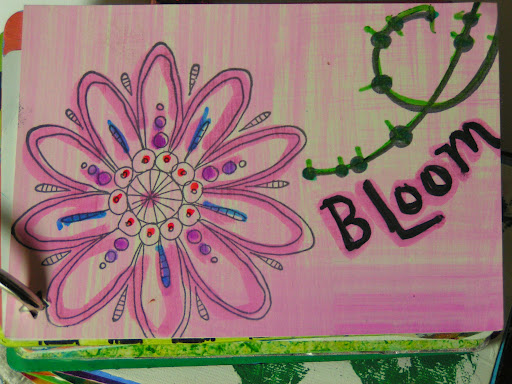
 In February, I found a blog by Jess Brogan called In Search of Dessert. She was hosting a inspiration deck swap which you can read about here. So I decided to join up and participate. I applied gesso to a deck of playing cards on both sides and then painted them.

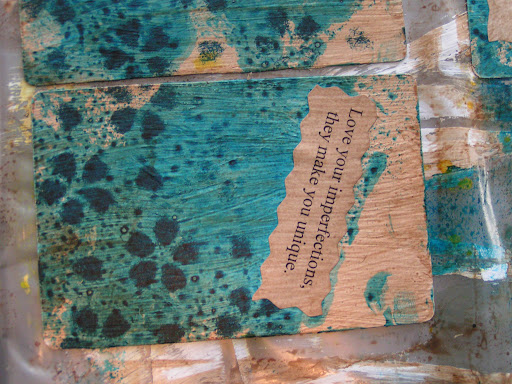
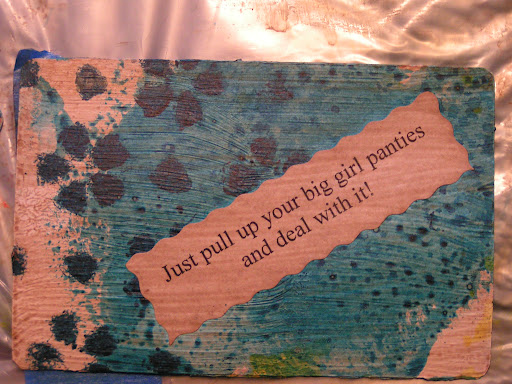
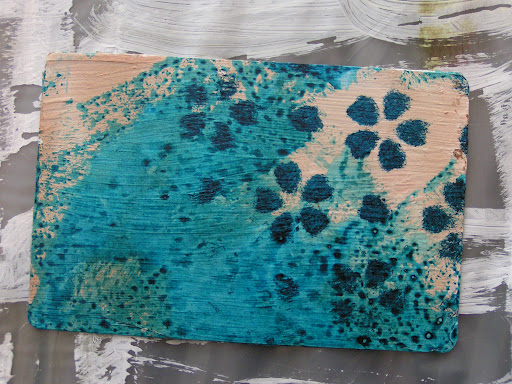
 This is what they looked like after I painted and stenciled them.

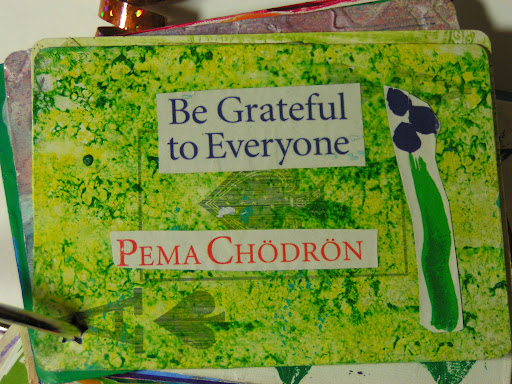
 Then I printed out a bunch of inspirational sayings on white paper, cut them out and glued them down with a combination of gel medium and walnut ink. That way I glued down the paper at the same time as giving them a coat of walnut ink.

 On the back of the card I put my name and blog addresses. I hope no one was offended by this one but it makes me laugh.

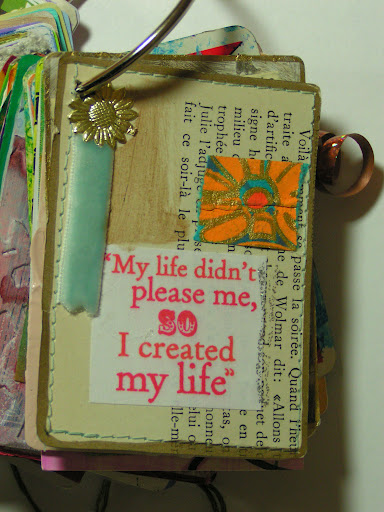
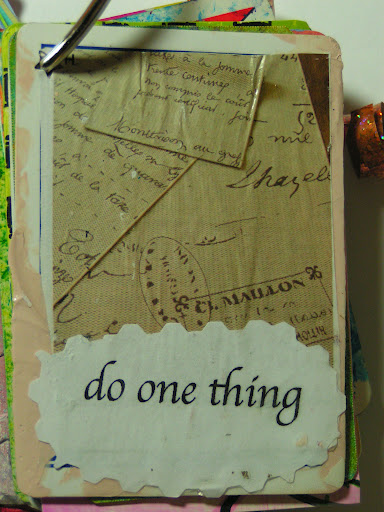
 On Friday, I received these in the mail. A deck of 52 cards from different people with inspirational sayings. Now when I’m in need of inspiration, I can take out the deck and find some. I can also check out 52 different websites or blogs of people who made these.

 I am going to show a few of the cards that I received. Aren’t they wonderful?

I always think it’s great to see what other people come up with when they follow the same instructions. This was a fun swap and thanks to everyone who participated for making my cards. And thanks to Jess for coordinating and making up all these packs of cards. It was fun.

I’ve been felting for the last two days so more photos to come soon.

Printing with Veggies

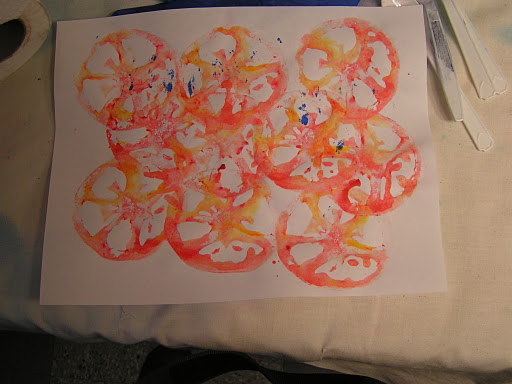
 Our local surface design group met today and we printed with veggies and fruit on to fabric and paper. We used mainly textile paints. This first one is a tomato print by Jan.

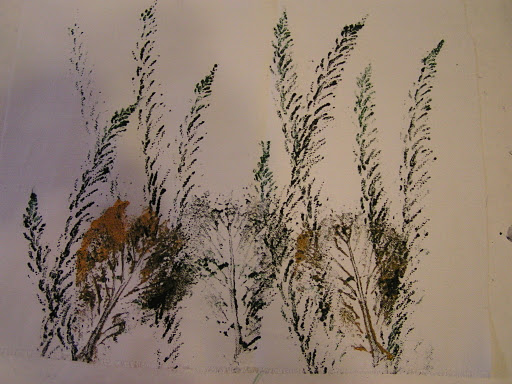
 This is by Louise and I think is spinach leaves and some type of frond that Jan brought from a flower arrangement she was going to throw away.

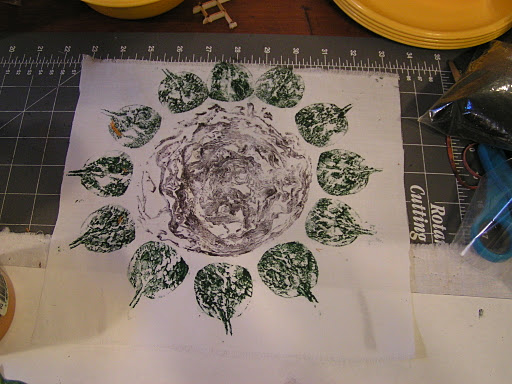
 This is also Louise’s and is a cabbage print surrounded by spinach leaves.

 Here is the cabbage with paint on it. This was one of our favorite veggies to use as a stamp.

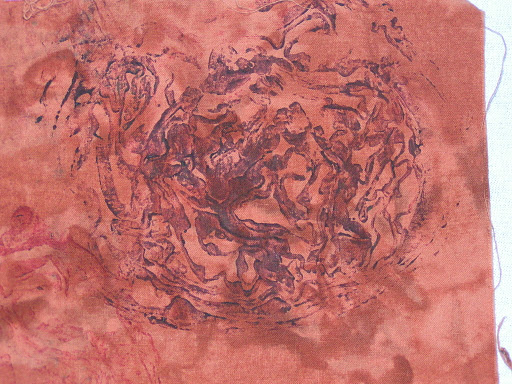
 Here Carole used the cabbage to print a silk scarf. She is going to over dye this and then may do more printing on top of that.

 This is a pear print that Carole did on a piece of rusted paper.

 Here is a cabbage print that I did. I hope to add some hand stitch to all of my pieces if I have time.

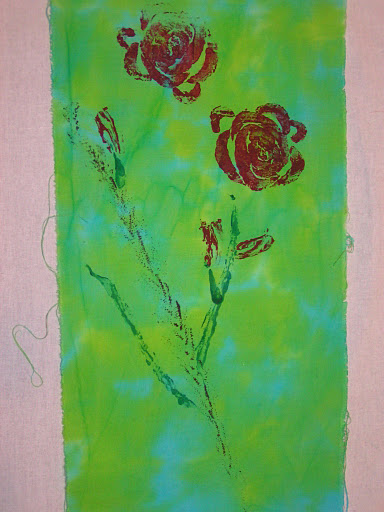
 This is a celery rose. The rose buds are printed with dates and the stalk with green beans!

 This piece has cabbage, pepper, plum, apple, pomegranate and onion prints.

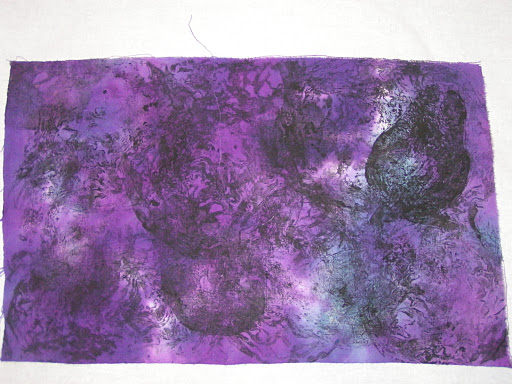
 This one is pear prints covered with cabbage prints. We had a great time!

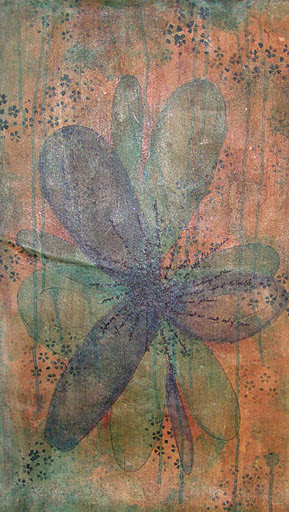
 These next photos are of a round robin project we have been working on for the last 4-5 months. Each of us took a piece of canvas and painted the background. Then it was passed on to the next person and each member added to the piece. This was supposed to be the last go round but mine didn’t get finished. This one is Bunny’s. She started with a yellow ochre background and then drew the flower shape on with a Sharpie. Louise used Dye-na-Flow paint and painted the flower. I added all the rest. Carole didn’t work on this but did the “other half” which you’ll see later. I added many layers of thinned acrylic paints, a poem to  make the stamens on the flower and lots of alcohol ink.

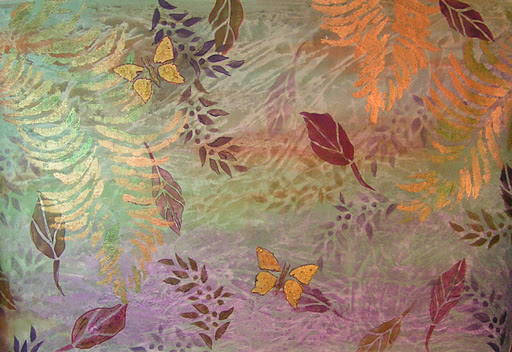
 This one is Carole’s piece. She painted the purple and green background. Louise added the gold fern leaves with a stencil. I added the other leaves with alcohol ink and Bunny added the butterflies.

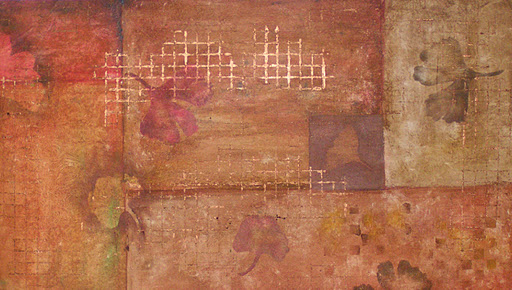
 This is the other half of Bunny’s. Carole did the background and then Louise added stenciled leaves and the gold grid.

 This is Louise’s piece. She did the grey background. I added the rust and black color in swirls. Bunny added the leaves with oil paint sticks and Carole added the branches. Doesn’t it look like a windy fall day?

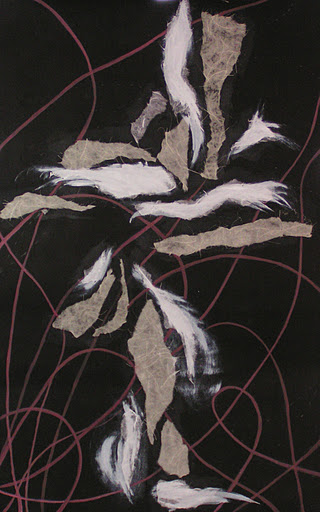
This is my piece. I used black gesso and then added hand made paper scraps with a bit of white paint over some of them. Carole added the swirly lines. Louise said she could figure out what to do with it and Bunny skipped a month so didn’t do anything on mine. I told Louise to add color so she is going to work on it and then give it to Bunny. I’ll show you the finished piece when it gets completed.

The round robin was really fun and I think the finished pieces turned out well. It was hard to work on someone elses piece of “art” but it certainly was a learning experience!

Friday’s Dyeing Session

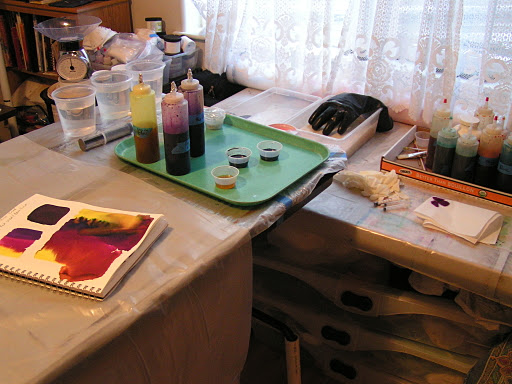
 For my stitch class, I needed to do a dyeing session at home. I usually only use acid dyes since I mainly dye wool and silk. For the assignment I needed to use Procion MX Dyes. So I mixed up a set of dyes and here I am about to start. You can see my color notebook on the left where I was working out different color combinations.

 I dyed a bunch more cotton threads and here they are all rolled up in plastic batching. I did try dyeing some wool thread and using vinegar to soak instead of the soda ash. Ann (Shepherdess) had suggested it. I’ve tried the wool thread with Procion MX before but soaked in soda ash and they don’t turn out very well. But this worked, they aren’t quite as bright as they would be with acid dyes but they still have a lot of color left. Before, I always ended up with very pale colors.

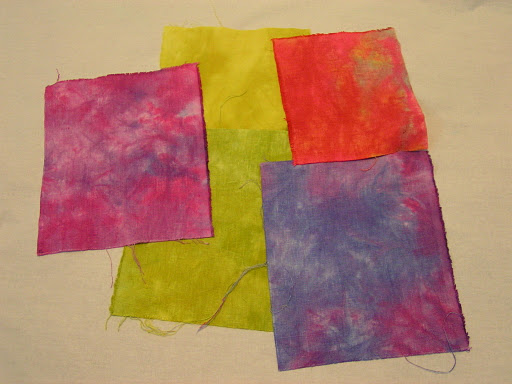
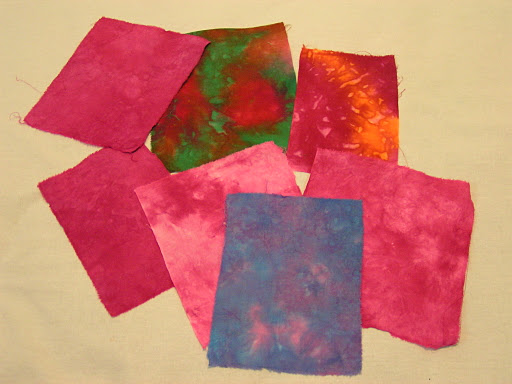
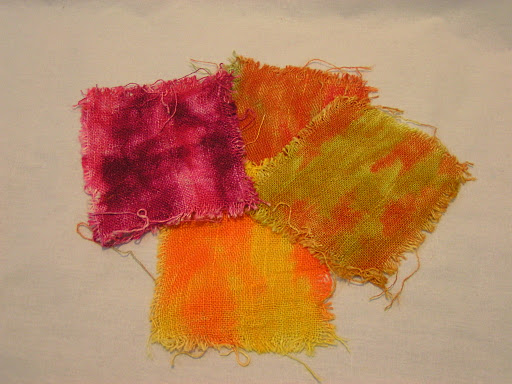
 Here are some of the fabrics that I painted. These will be used for our stitch samples. I dyed linen, muslin, cheesecloth, commercial felt, silk organza, burlap and cotton organdy.

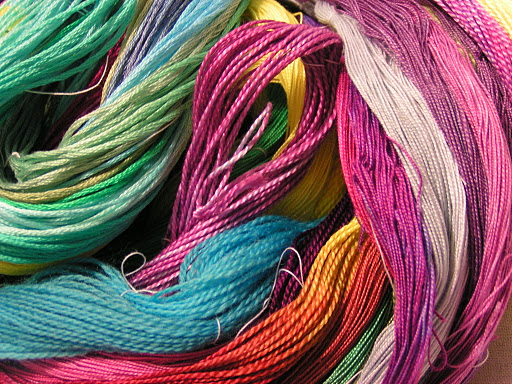
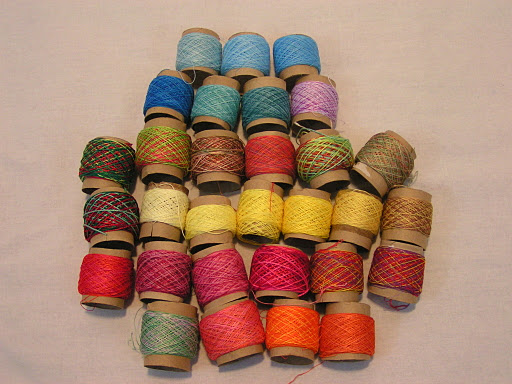
 Here are the threads after rinsing and drying.  I wanted more purples and greens to round out my colors of thread that I now have.

Don’t you just love the colors? The turquoise one at the bottom left is the wool thread. Now I just need to iron all the fabric and wind all the thread into balls.

Level II Hand and Machine Stitch Class and a Surprise

 I started the Level II Hand and Machine Stitch class at Gail Harker’s last week. The first two and a half days was spent in the dyeing studio. Gail has just moved recently from Oak Harbor to LaConner, Washington. Her new studio is wonderful and we had a great time. I won’t discuss the10 hour drive from Montana to Washington with two Yorkies who both had Giardia. The less said about that the better!

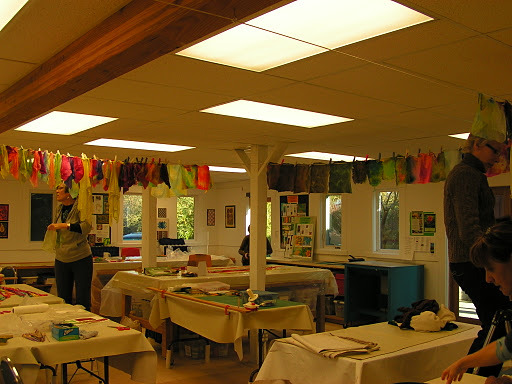
 Here are some other class members hanging up their dyed fabric and threads to dry. It looked like colorful prayer flags all around the room.

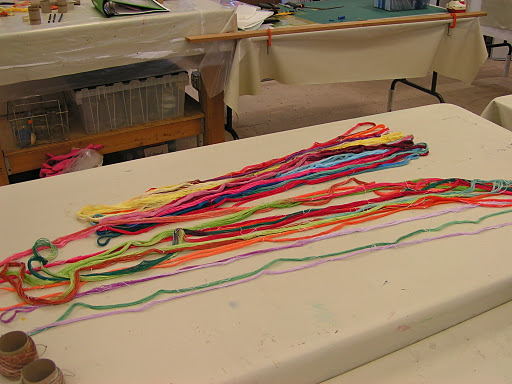
 Here are some of the threads I dyed after they were dried. They were waiting to be wound up with a thread winder. Normally, we wind the thread on half of a toilet paper tube but they didn’t have many so I only got two in class.

 Here we are at the table discussing something. We worked on hand stitch this session and I have lots of homework to do. We’ll be working on Kantha stitch on our next session in February.

 Here are some photos of my dyed fabrics. We will be using these over the entire course of the class. This is silk organza. We used Procion MX dyes. I usually use acid dyes at home but I’ll be ordering some Procion MX as it is part of the homework to have another dye session.

 This is cheesecloth – #50 and #90 weights. A lot heavier cheesecloth than the kind you buy in the grocery store around here which is #10.

 This is linen.

 And muslin.

 And then white burlap.

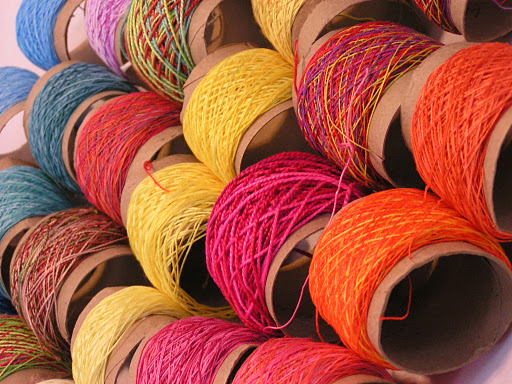
 Here are all the threads I dyed on their cardboard tubes. I finished winding them at home. We used all cotton threads in a variety of weights.

 Don’t they look yummy?

 I need to dye some deep purples and perhaps some more greens. So more thread to come!
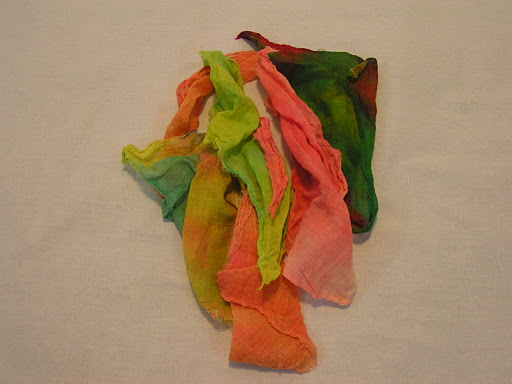
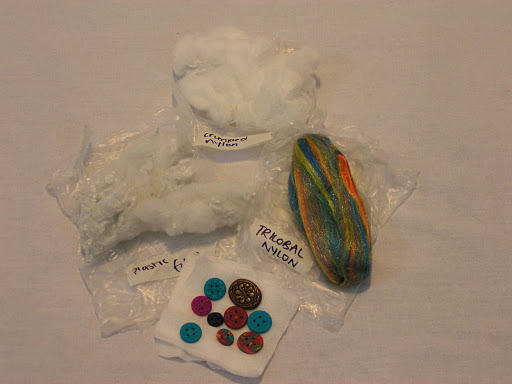
 When I got home I found a package from the UK. Zed had sent me samples of nylon and plastic fiber to experiment and add to felt. Thanks Zed – it was a wonderful surprise to find this package waiting for me when I got home.

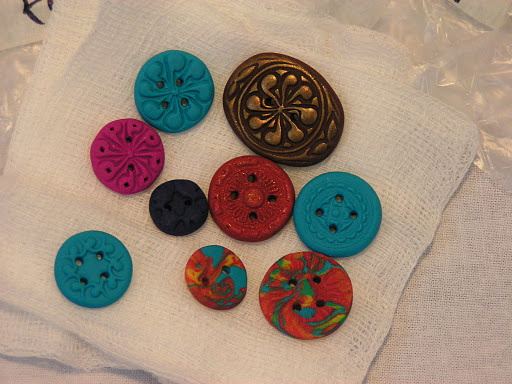
And look at these wonderful buttons she makes out of polymer clay. I can’t wait to add them to something.

Quick and Easy Note Cards

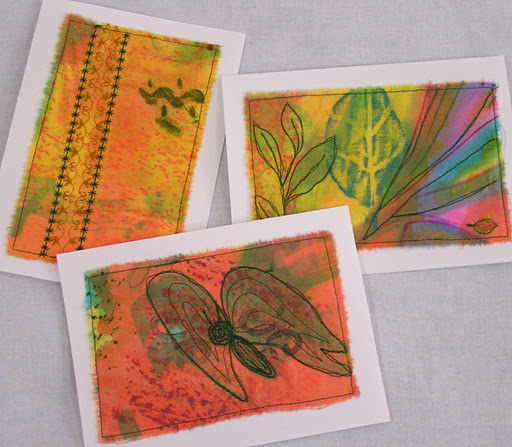
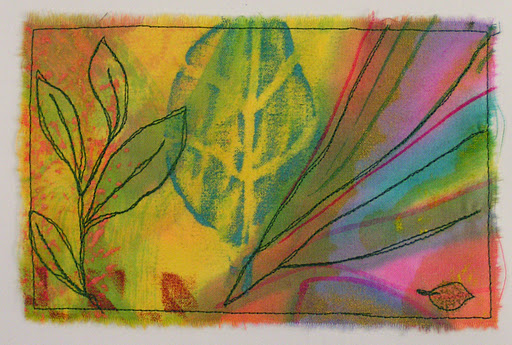
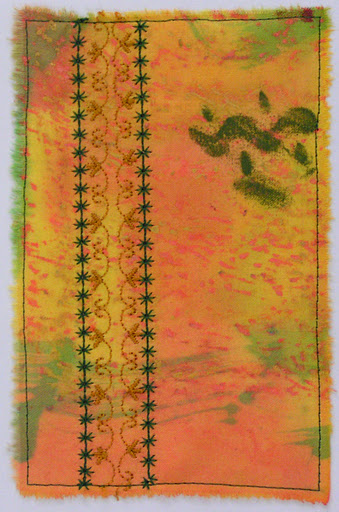
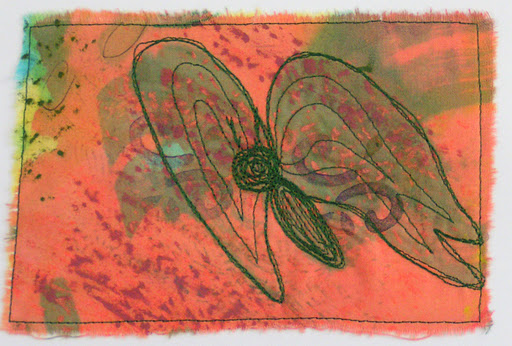
 I cut up my painted fabric into approximately 4″x6″ rectangles and I now have a big stack to use to make note cards. I already had the white note cards and since the fabric is so colorful, it’s simple to add a bit of machine stitching  and sew it to the card.

I just looked at the piece to find a place to start. The green paint on the left looked like leaves so I thread sketched those in and sketched in longer leaves on the right. I used stitch and tear to stabilize the fabric. I found it worked best if I fused the stitch and tear and the fabric before stitching. I then fused the stitched fabric to the card before sewing around the edge.

For this card, I used automatic machine stitches to make a pattern. I tried using a glue stick to baste this in place before stitching to the card. It didn’t hold very well and shifted a bit with stitching.

I saw a butterfly in this piece of painted fabric. He’s a bit wonky but still looks like some sort of flying insect. Each card only takes about 10 minutes or so. I’m going to try and stitch a few every day so I have cards to use when I need them.