As the year winds down, I have been reflecting on what I have accomplished in the last year. At the first of the year I had decided my word for the year was “choose” and that I wanted to make decisions with intention. I actually did most of the things that I had planned on doing and then did several more “big” things that I had no idea I would choose to do. It was a pretty exciting year. Here’s my round up of the fiber art related things that I completed in 2011.
- The Design Focus Friday series of blog posts was completed. I really think that writing about design has helped me think about how to design a piece with a better focus on the principles and elements.
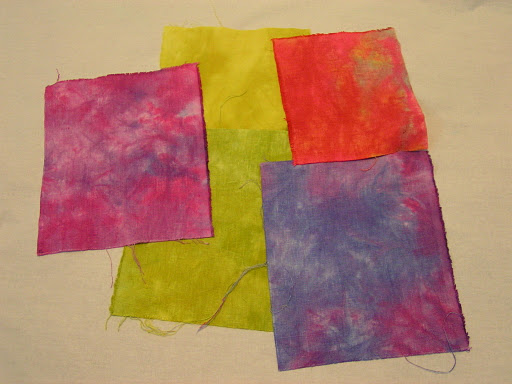
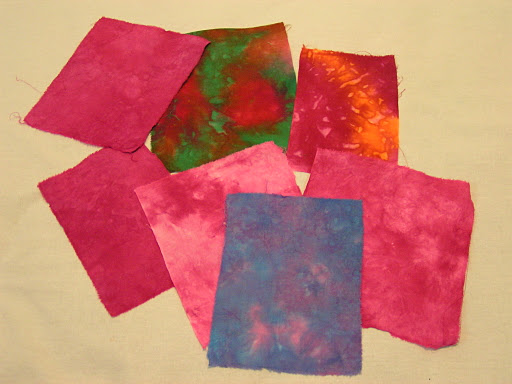
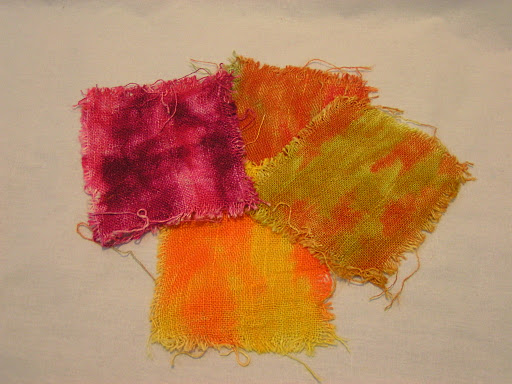
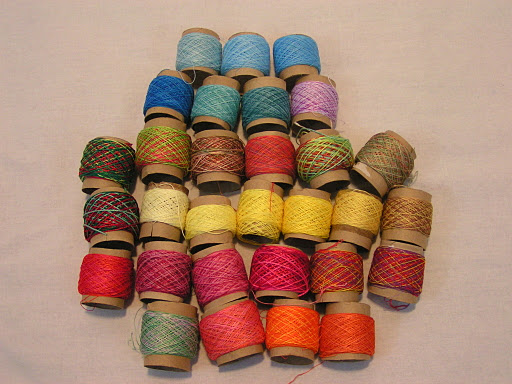
- Continued exploration into surface design including making my own silk screens, screen printing with oatmeal, torn paper and water soluble glue, gelatin printing, Eco printing with leaves and fabric painting.
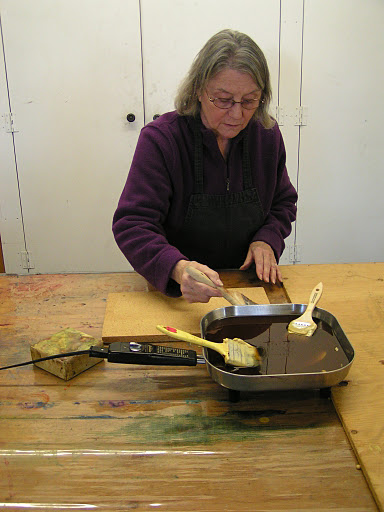
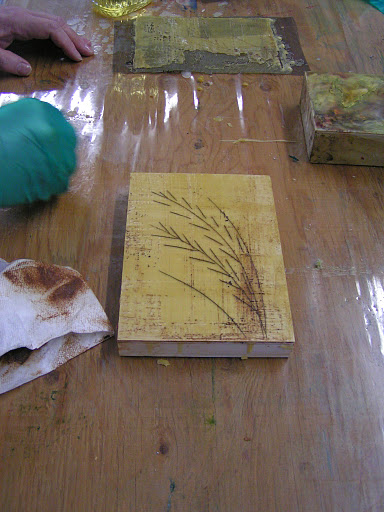
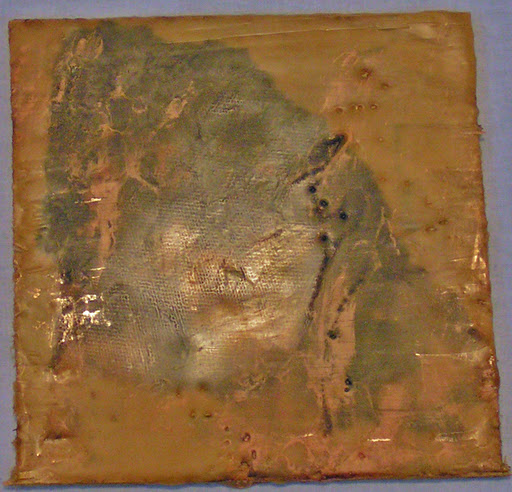
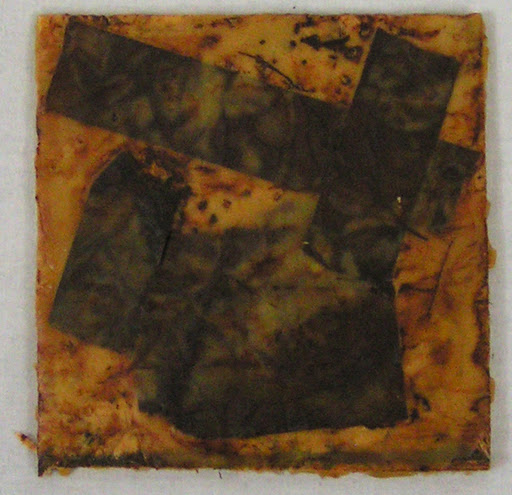
- I played with encaustics and even though I probably won’t do any more, it was fun.
- The fabric book page swap came to an end and I fabricated my “tree” book.
- I did attempt to get my work into another gallery in Missoula and sent entries to two fiber art competitions. None of my work was accepted but that’s OK, at least I tried.
- Completed two rice paper and watercolor collages in my studio journal.
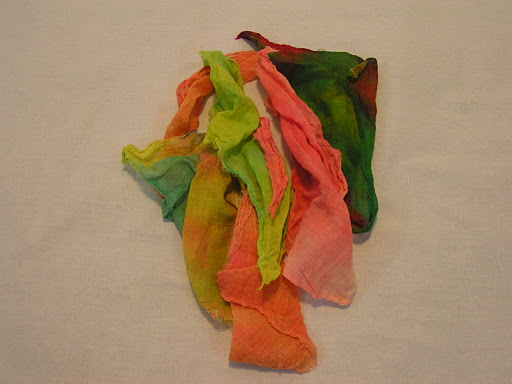
- Dyed a variety of scarves and made tons of cat toys to sell in the store.
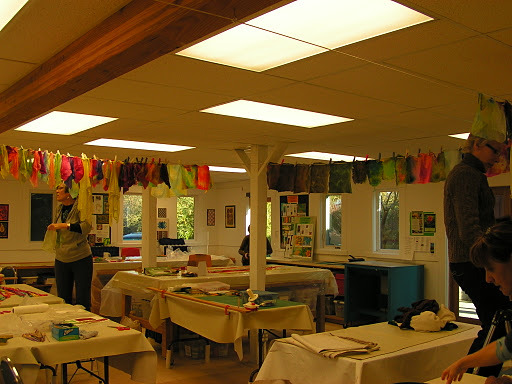
- Completed Level I Hand Stitch at the Gail Harker Creative Studies Center.
- Began Level II Hand and Machine Stitch with Gail which will continue until February 2013.
- Carded half of a fleece of merino wool (still have the other half to finish).
- Felted three bird houses for Felt United Day.
- Felted a mobius scarf for the “twisted” challenge.
- Felted and direct dyed a bag for my husband’s new tablet.
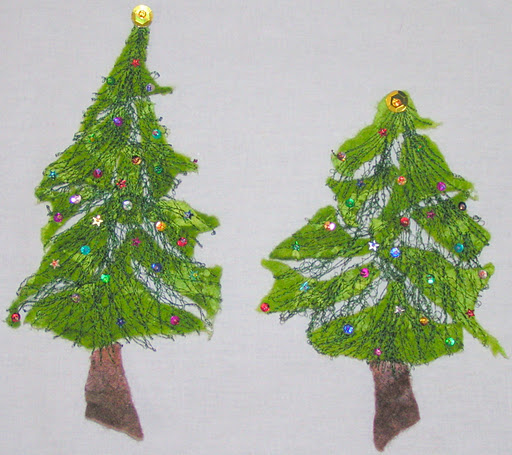
- Made a felt scrap bowl and Christmas tree ornaments with a step by step photo tutorial.
- Mentored another artist in nuno felting.
- Wrote the book ‘The Complete Photo Guide to Felting‘ which is being published by Creative Publishing International. This was 6 months out of the year of very hard work. I felted tons of samples and projects for the book but wasn’t able to show anyone any of it. The book is still in the editing process and I still have to work with the editor on making sure everything is in the right place and it says what I meant it to say. The publish date will be August 1, 2012. It will be so exciting to see it completed.
- One of the most fun things I did this year was to get together with a group of three other felters from all over the world and develop our own virtual studio and forum. I have so enjoyed interacting with my felting friends in creating the website and I look forward to our work together over the coming year.
So, for me working a full time job, that’s a pretty impressive list. The next time I ‘choose’ to write a book, I think I will have to quit my other job. Writing a book is a full time job in itself. But there are no plans for another book at this point and the next year and a half, I will be concentrating on my Level II stitch class. I am going to be considering what my word for next year will be and what my other plans will be. Once I’ve decided, I’ll write another post to let you know. What are your plans for the coming year? I’d love to hear what you want to accomplish in the coming year.