I haven’t done a nuno felting tutorial so I thought it might come in handy for those of you who haven’t tried it before and need a little guidance. The most important thing to remember about nuno felting is that you need to be more gentle and take a little more time when you start felting so that the wool fibers have time to migrate through the silk or open weave fabric that you are using. Nuno felting is the process of making a new type of fabric by combining a loose weave fabric with wool fiber. The easiest way to do this is use a fabric that is light weight and loosely woven with a wool that is a fine fiber such as merino. This allows the fine fiber to move easily through the fabric. It is possible to use other fabrics and fibers but if you’re just starting out, I would suggest trying a 5mm silk gauze and 18-22 micron merino wool. I got the silk gauze from Dharma Trading and the merino was from a local source. I also carded in some embellishing fibers when I was making batts but you can add embellishments on the surface without carding them in with the wool. You just need to remember that silk and other plant fibers will not felt and attach to the silk fabric unless they have some amount of wool to help adhere them to the surface.

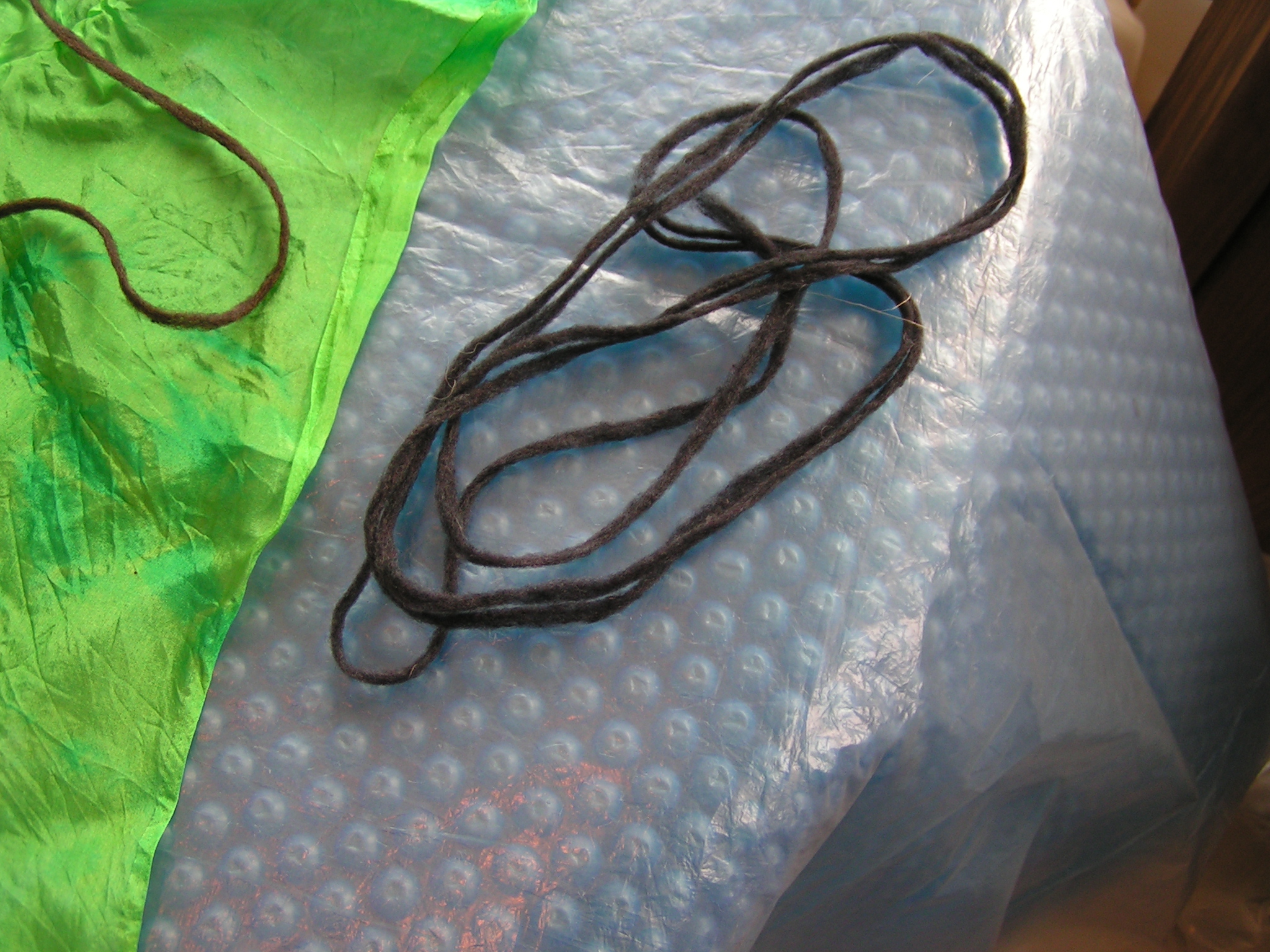
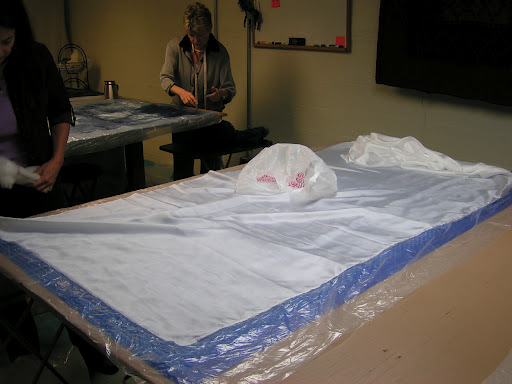
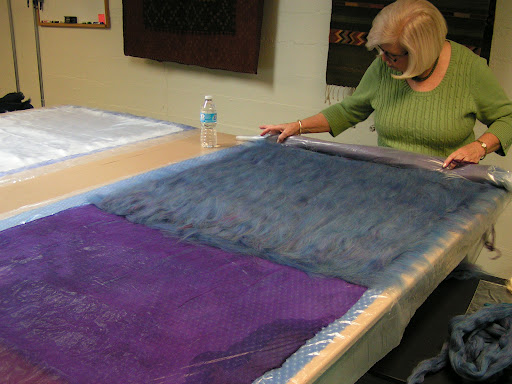
To start, I laid out a layer of plastic to protect the table. I then laid out a section of pool cover. You can use bubble wrap if you have that instead. Then I use very thin, light weight painter’s plastic big enough to cover the piece of silk that I am using. You need two sheets of painter’s plastic to sandwich your nuno felt in. The photo above is actually the back side of my felt. I used preyarn to create a branching effect. I then placed the other piece of plastic over the top and flipped the sandwich of plastic and silk over to the other side.
 Here’s a photo of the preyarn. I really like to use this for fine lines in felting.
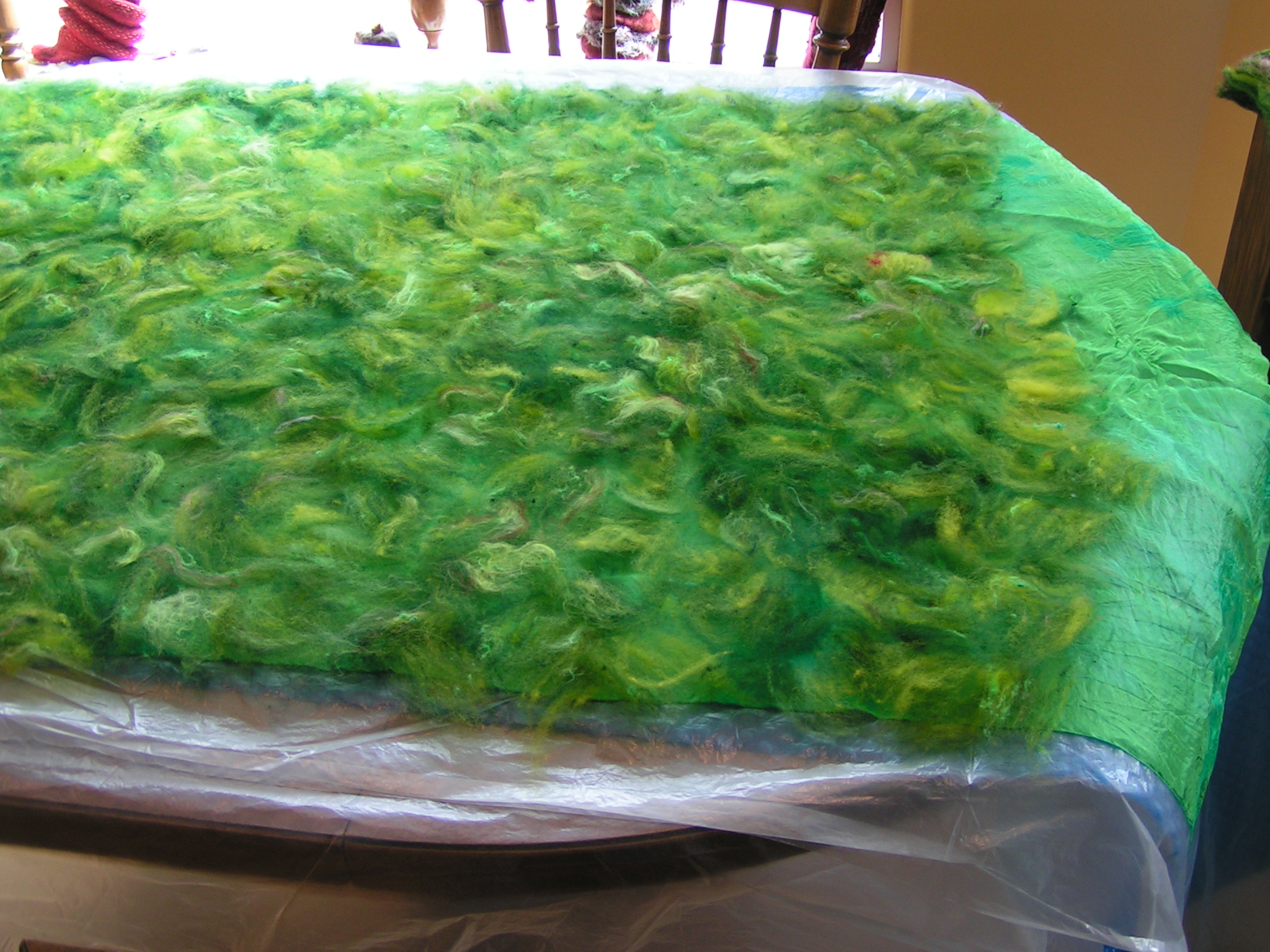
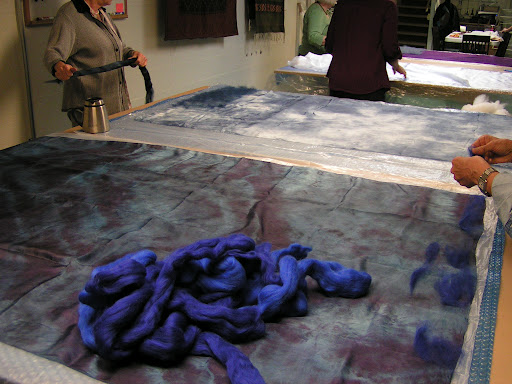
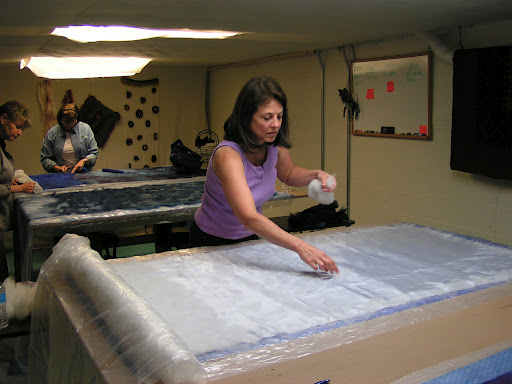
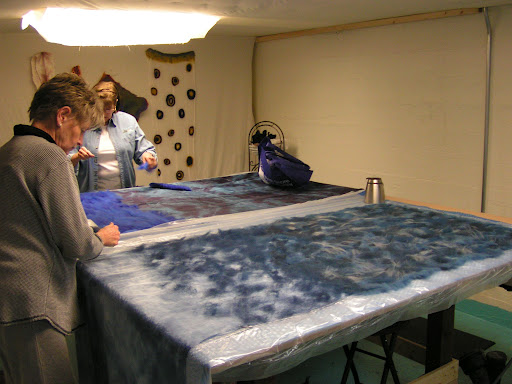
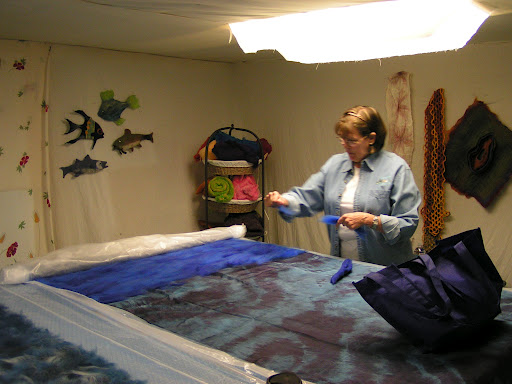
 Next I laid out my wool on the silk fabric. I just pulled small bits off the batt and laid them randomly on the fabric. I didn’t want the piece to shrink in the same direction thus the fiber is in all different directions. I didn’t worry about missing any spots as I wanted some of the silk to show through. You do need to be careful about the edges and cover them completely with fiber especially if the edge has been cut or torn. The wool once adhered with the felting process will keep the silk from fraying. Also, if you pat the wool down as you go, it has less tendency to fly away as you’re working.
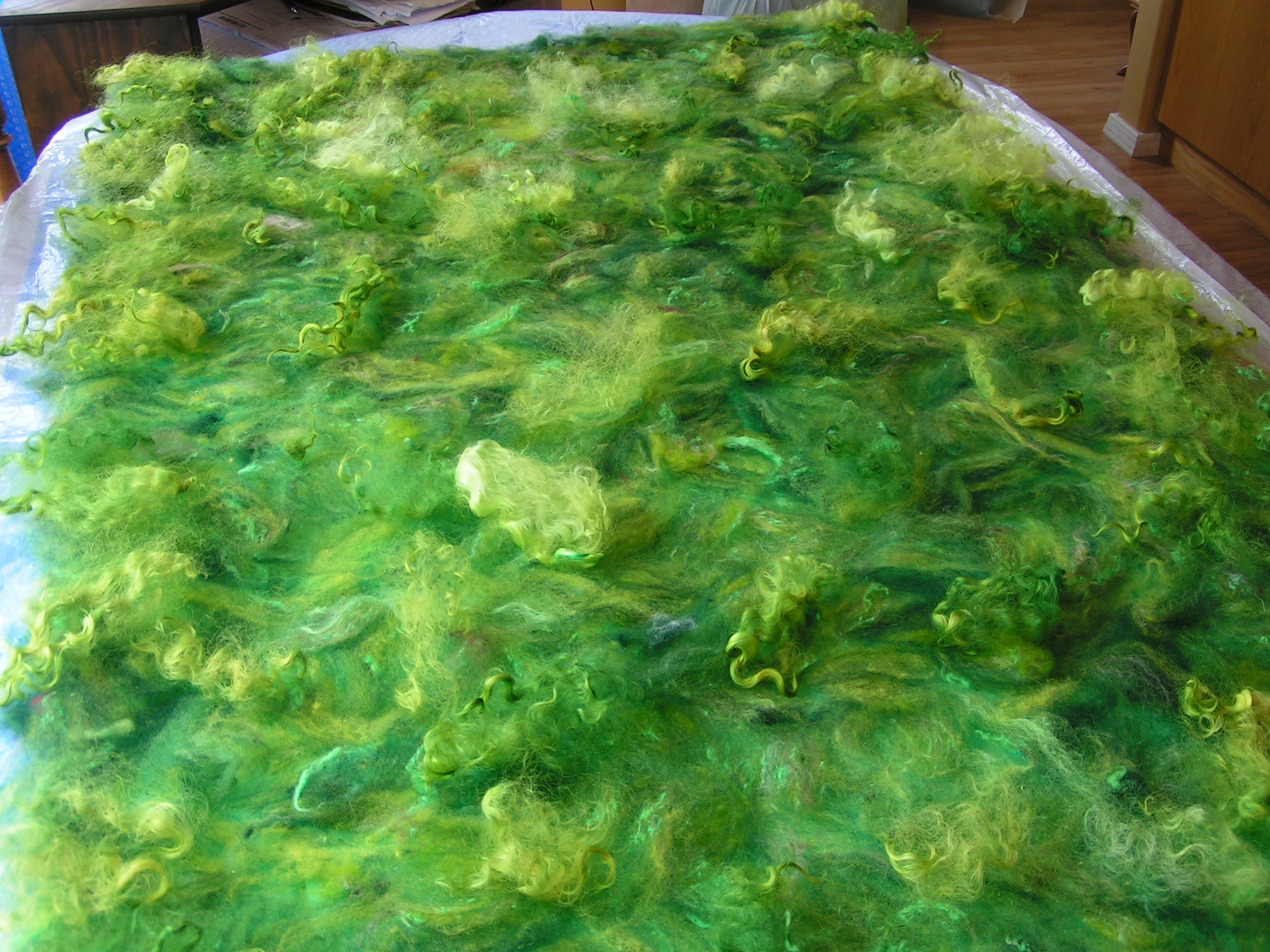
 Once the silk was completely covered I added Wensleydale locks as embellishment. If you don’t want a very textured surface, don’t add locks. They shrink differently than the merino and give a very textured effect. But I love texture so on with the locks.
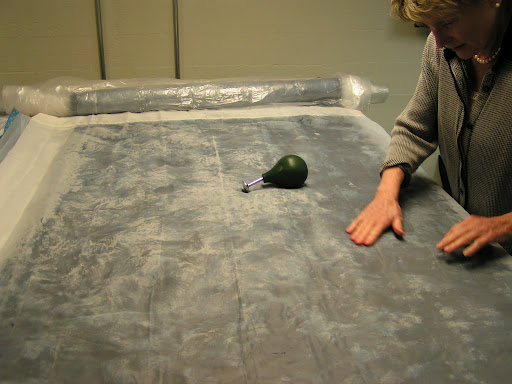
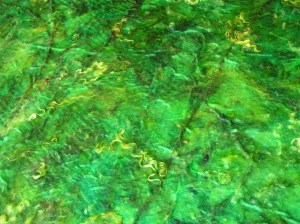 Next I wet down the entire top surface. I used cool, soapy water sprayed from a ball brauser type sprayer. Avoid hot water as you don’t want the wool to felt to itself before the fibers migrate through the silk. I gently pat the wool down as I wet it to make sure all the air bubbles are out and that the wool is completely wet. The photo above you can see the preyarn lines showing from the other side so there really isn’t a lot of wool here, just a small, light layer of wool. Once you’ve got the entire surface wet down, cover the whole piece with thin painter’s plastic.
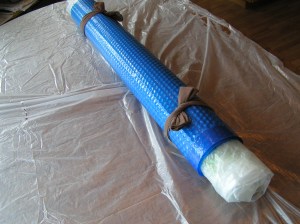 Then roll everything up in the pool cover or bubble wrap and tie with nylons. Then the rolling begins. Start rolling gently and avoid heavy pressure to start. I usually roll 50 times, unroll, and then roll up from the other end. I do that at least twice. Check between each roll and try to smooth out the wrinkles that develop in the plastic. Have towels handy for sopping up any errant water that comes out the end. After doing 4 x 50 rolls, I check to see if I see any fibers migrating through the silk. Look at the back side of the silk and see if you see little ‘hairs’. Sometimes you can see this better if you add more water or take water away by blotting with a towel. At this point, I flip the piece over so the back side is up and remove the top piece of plastic.
 Then I start rubbing the back side of the silk with soapy hands to encourage those fibers to come through the silk. I use quite a bit of soap on my hands for this although you can’t really see it in the photo. Once I’ve rubbed over the entire back surface, I put the plastic back over the whole thing, fold it up and put it in the microwave for a couple of minutes to heat it up. Then I roll again. This time you can add more pressure with your rolling. I usually roll 4 x 100 with this set, checking each time and switching from end to end as I roll.
 The next step is to begin fulling. Make sure that you see lots of fibers on the back side of the silk before you start fulling and again, you need to be gentle. I take the whole piece, dip it gently in hot water to warm it up again and then I either rub very gently against the pool cover or do gentle dropping. As the wool starts to shrink and the silk starts to ruche or pucker up, you can add more pressure and be a little more aggressive. I keep warming up the felt as I go either in hot water or in the microwave. Keep dropping and rubbing the felt against a rough surface such as the pool cover or bubble wrap until the wool has shrunk and is completely attached to the silk. Nuno felt usually shrinks at least 40-50% and sometimes more than that. If you want to make something a certain size, it is best to make a sample first and measure the shrinkage. That way you know what size is needed at the start.
 Rinse the fulled piece of nuno felt in clear water and then soak in a bath of vinegar water for 5-10 minutes. Rinse again with clear water. I usually put the nuno felt in the washing machine on the spin cycle to get the water out and then hang to dry. If you want the piece to be more square, you should block it to dry. You can see that I got lots of texture which is what I wanted.
This is the silk side. I always love the texture and ruching that you get from nuno felting on the silk side. That’s the basics of how to nuno felt. If you have any questions, please feel free to ask. I have a much more thorough explanation in my book The Complete Photo Guide to Felting if you need more explanation.
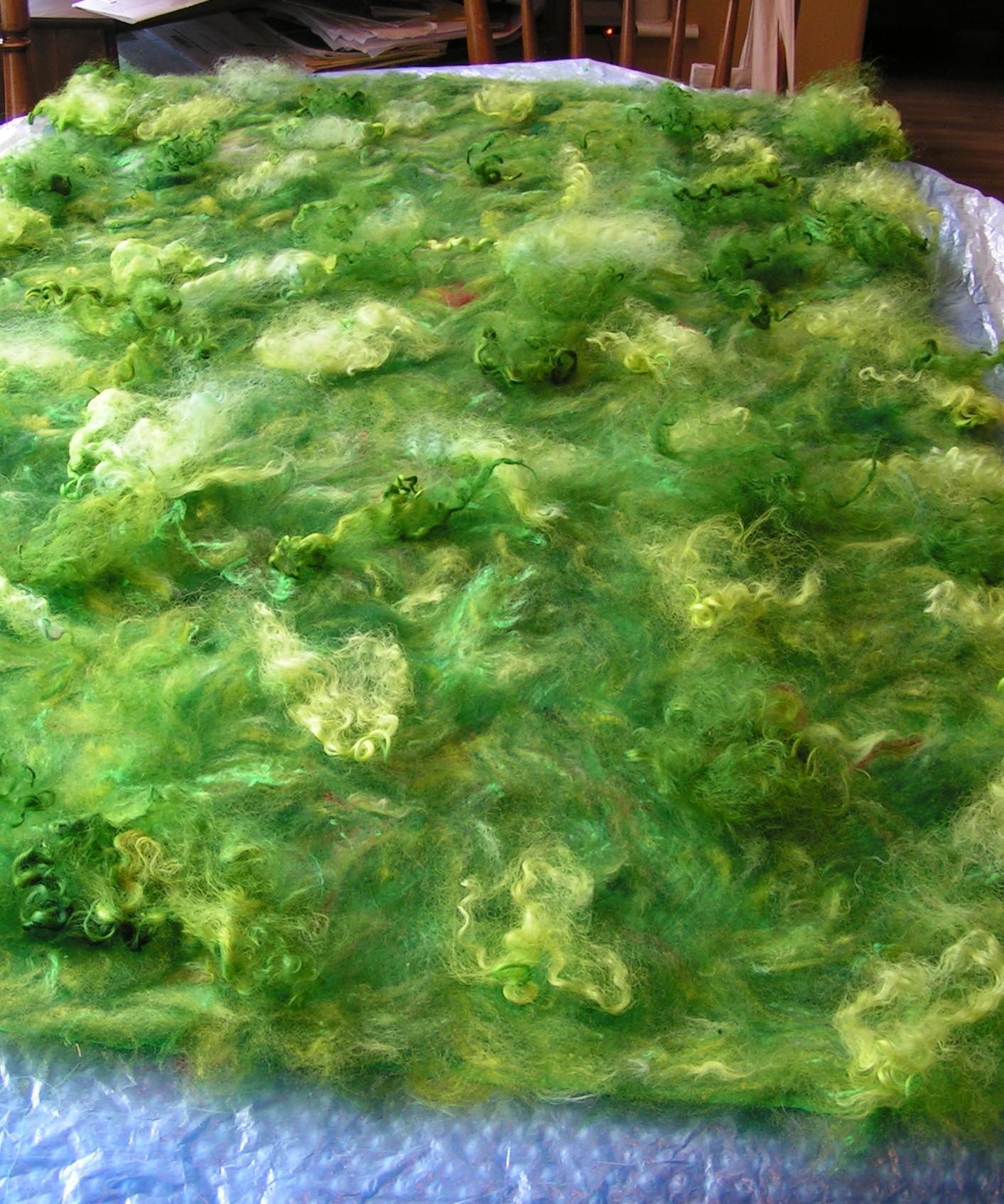 This is the lay out of the second piece. It looks just like the first!
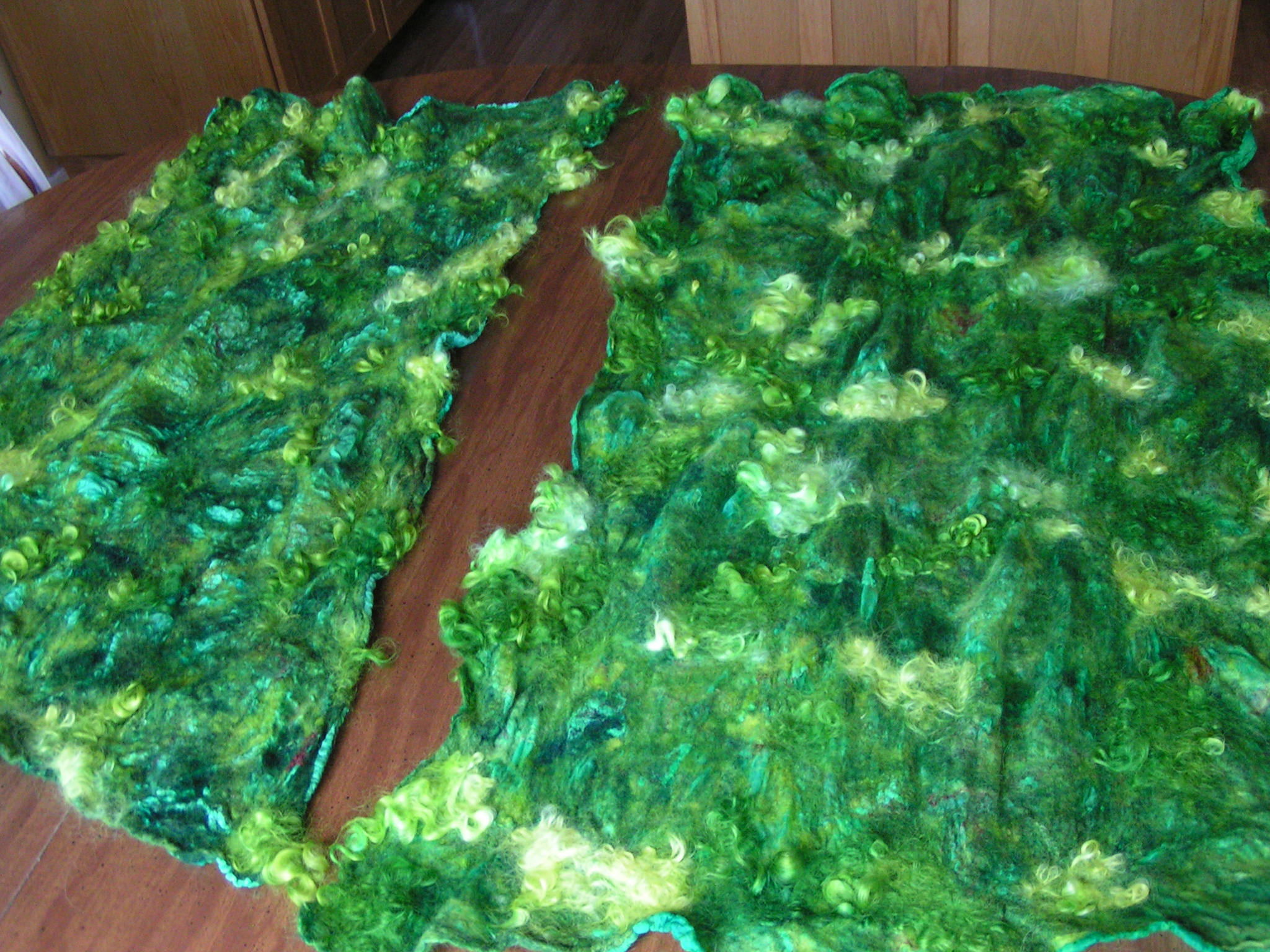 And here are the two completed pieces together. I am happy that they look similar because the next step is to cut each of them up into four triangles and then sew them together. With this much texture, the stitching the piece together might turn out to be very interesting. I wrote a post on the Felting and Fiber Studio site about the exhibition. If you didn’t see it, go check it out. It’s a call for entries for an exhibition and I’d love for any fiber artist that’s out there to submit an entry. See the details here







 Ruth Lane Art