Nuno Felting

My local group met for the last time before our summer break. We did nuno felting. Sally and Louise made scarves, Paula finished up a piece she was already working on and I made some samples.

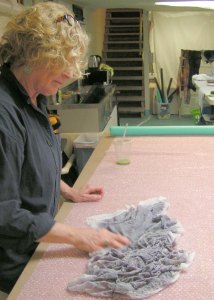
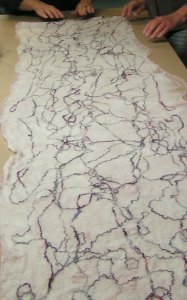
This is Sally making her scarf. She used a cotton cheesecloth/scrim type material and merino mixed with silk. She had never nuno felted before but did a great job.

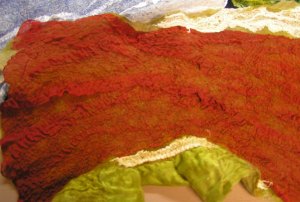
These are some pieces that Paula had made previously. I didn’t get a photo of the piece she finished today. Hopefully, she will frame it and I can get a photo of it framed.
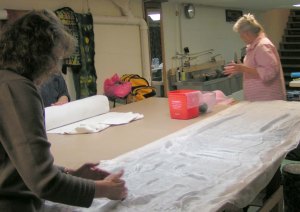
And here is Louise’s project. She used butterfly silk, cotton threads and a mix of poodle hair and merino. It took a bit of extra effort to get the poodle hair to felt but it worked in the end. It did smell a bit like a wet dog though.

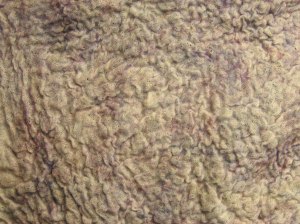
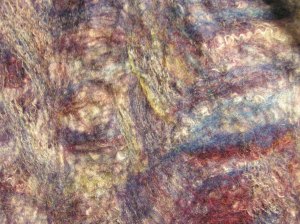
Here are a few samples that I made. The pink one has a layer of viscose fiber in the middle. I think that I added too much wool because I thought it would be a bit more light weight than it is. The second one is a weaving of two silk fabrics that I then nuno felted. The red and green fabric is from the pillows I recently made. It is silk charmeuse and very heavy. I didn’t think it would felt but Zed suggested I try weaving it in with a lighter weight silk that would hold the heavier fabric down. And it worked. The colors aren’t too exciting together but I was just testing out how the silk would hold down. I also tried sandwiching the heavy silk fabric between layers of wool to see if I could still see an outline of the silk in the middle. That one didn’t work. It just looks like felt. You can feel the silk as the felt kind of slides around on it but otherwise very unremarkable. But we all had fun so that’s the most important part.
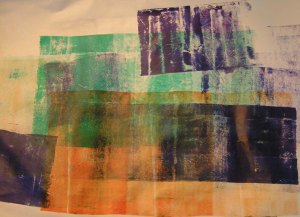
Layered Paper and New Stencil

I saw a video on Facebook this week using layering of stencils by Mary Beth Shaw of Stencil Girl. I decided to try the process out today. I already had some papers that could be used for backgrounds. I don’t have very many stencils that are just patterns though. So I had to  make do with what I had.

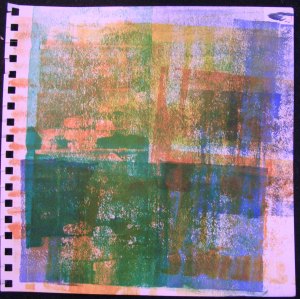
The photo on the left is where I started and the photo on the right is finished. I used my stencil that is based on bark but actually always looks more like an animal print. It’s an easy technique. You just keep using the same stencil and different paint colors. You keep moving the stencil into different positions and layering paint.

The next one used a painted sketchbook page and then using a commercial flower stencil. I didn’t do as much layering on this one. It’s an interesting technique that I think makes some great paper for collage and art journal pages.

Wild Geranium Inspiration Photo

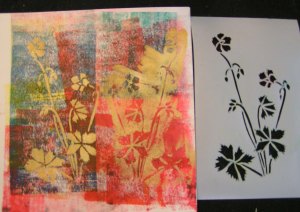
This is a wild geranium that grew in my flower bed. I decided to use this photo to create a stencil.

On the left, I added it to one of my already painted backgrounds. You can see the stencil on the right side of that photo. The photo on the right shows the stencil using ink from stamp pads on to scrap paper, very wrinkled scrap paper. Still working on my online stencil and print class if you couldn’t tell 🙂


Lino Cut Stamps

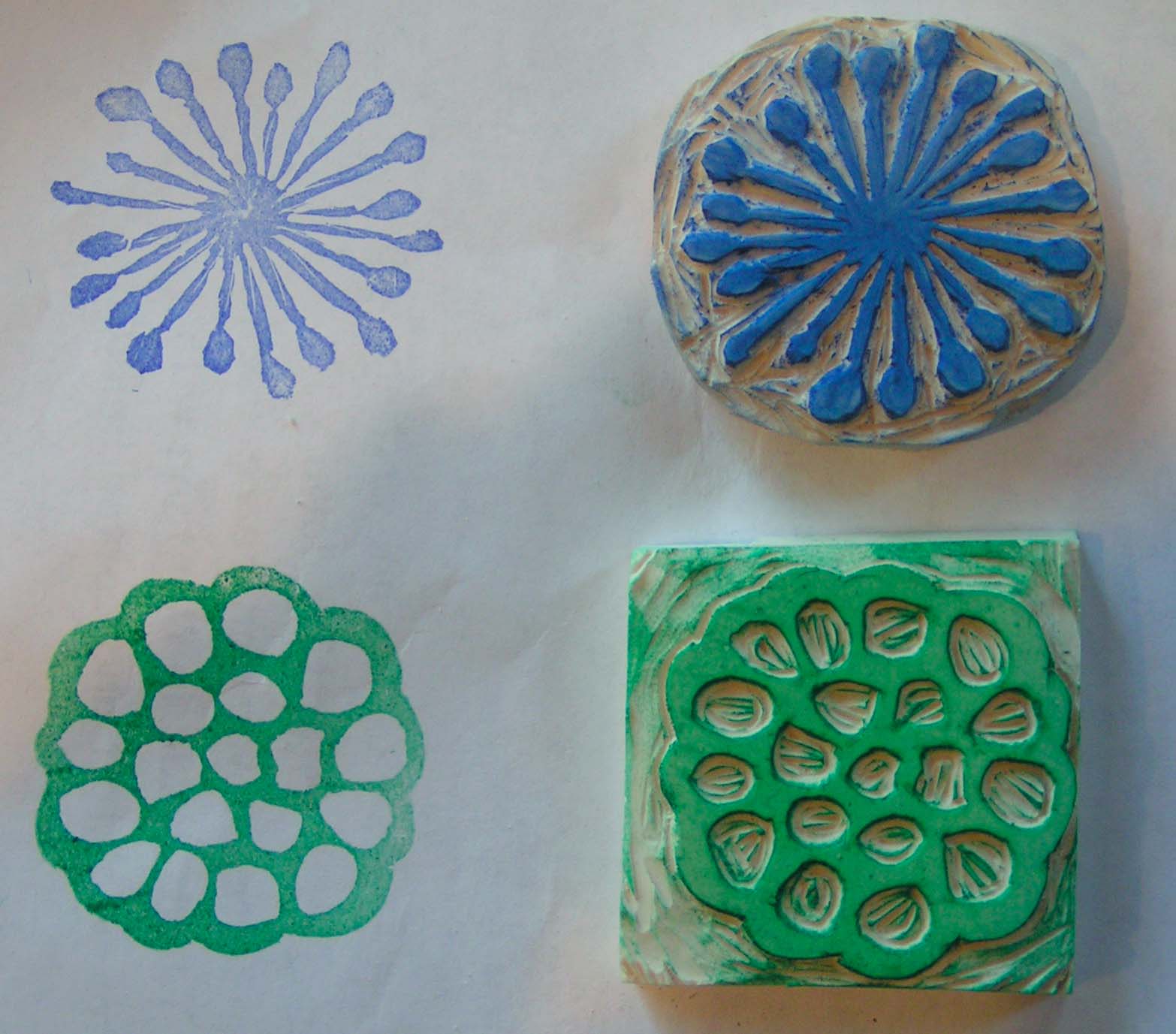
Still working away on my next online class so I made a few smaller stamps (about 2″ diameter). I started with a geometric one that I forgot to get a photo of because I didn’t really like it all that much. Then I made one that looked more like a dandelion seed head. That got me going on seed pods so I made a different one.

Pod Stamps

Here are the stamps with their prints on paper. I think I will make a few more of these seed related ones.

Pod Stamps on Felt

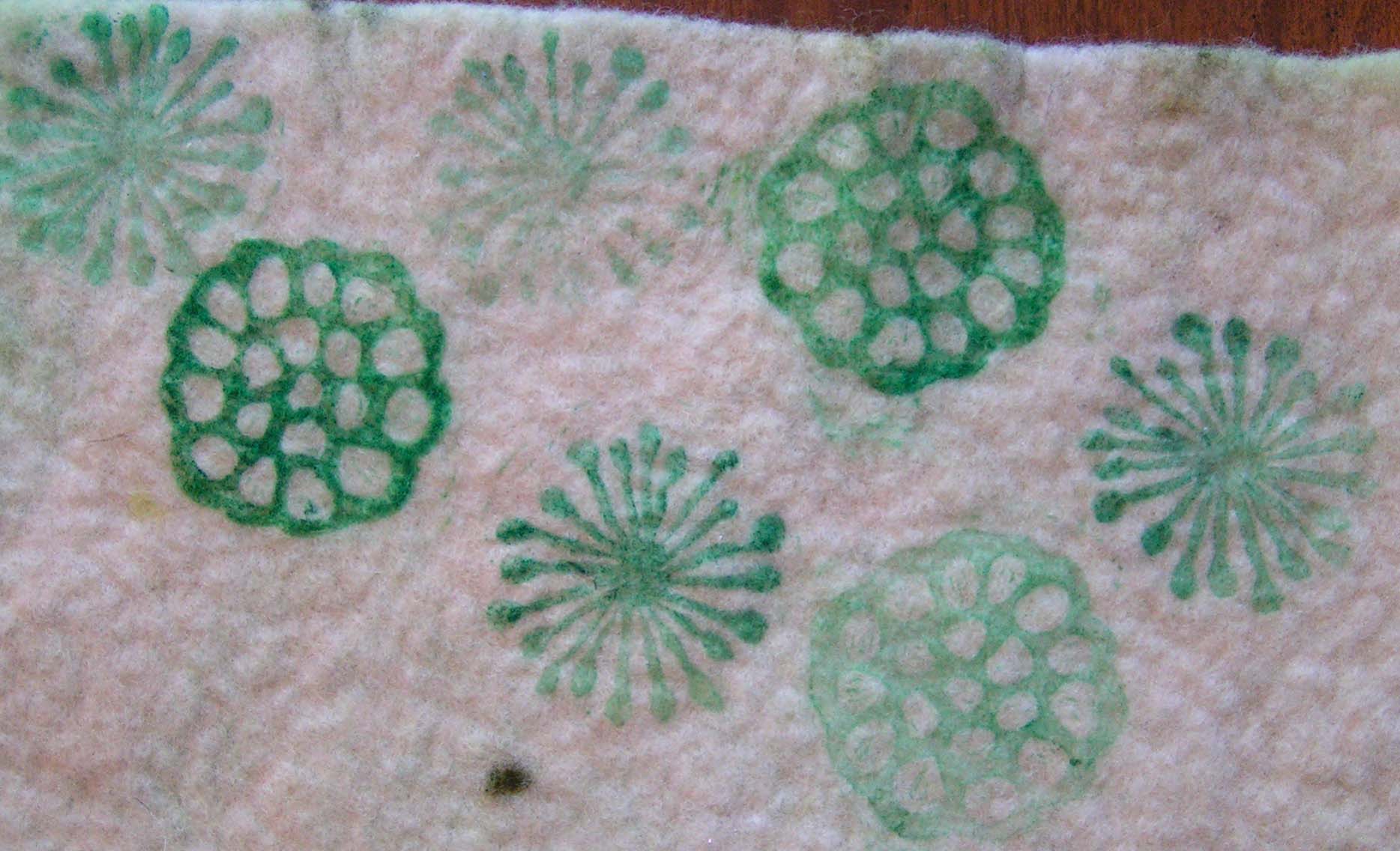
Here I tested them out on a scrap piece of felt. I printed these with screen printing ink instead of thickened dye since I didn’t have time to get that all set up. I also worked today on some free motion machine stitching on felt which I will post about on Sunday over at The Felting and Fiber Studio.

Sketchbook Update

I have been working in my sketchbook intermittently. I showed you the weeping birch sketch but thought I would play around with it in Photoshop to see if I could color the background. But I couldn’t figure out how to do that easily. I always forget how to use all the features and the complexity of the program always discourages me from trying much. But I can add filters to see the different effects.

Sketchbook - Weeping Birch cropped

Here’s the original.

Sketchbook - Weeping Birch bas relief

This is the bas relief filter. So it does give the effect of a colored background somewhat.

Sketchbook - Weeping Birch glowing edge

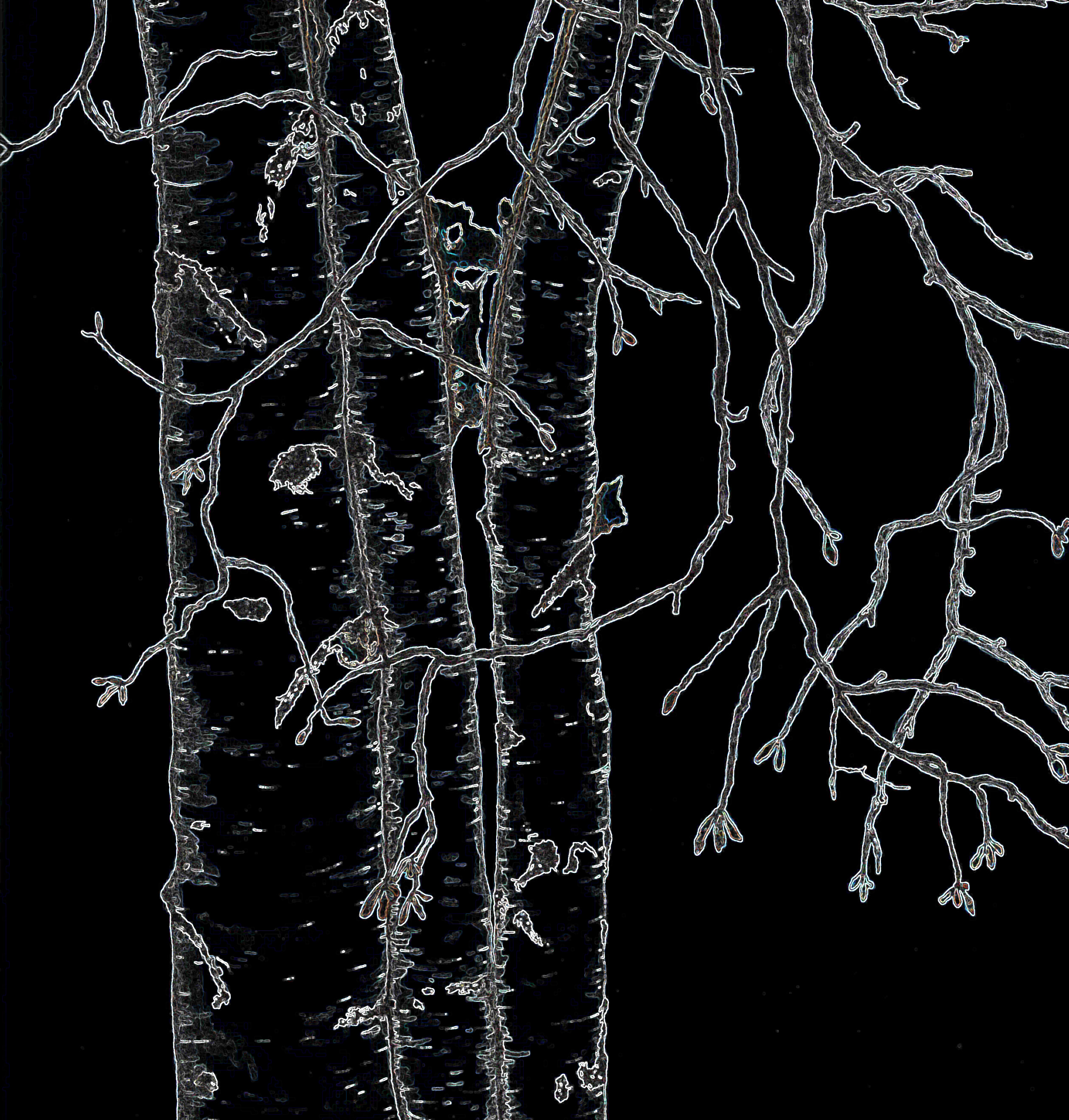
This filter is called glowing edge. Essentially just reverses the colors in this sketch.

Sketchbook - Weeping Birch palette knife

And this one is called palette knife. I think I could use this to carve a lino cut stamp. I might give it a try if I can get it transferred clearly enough.

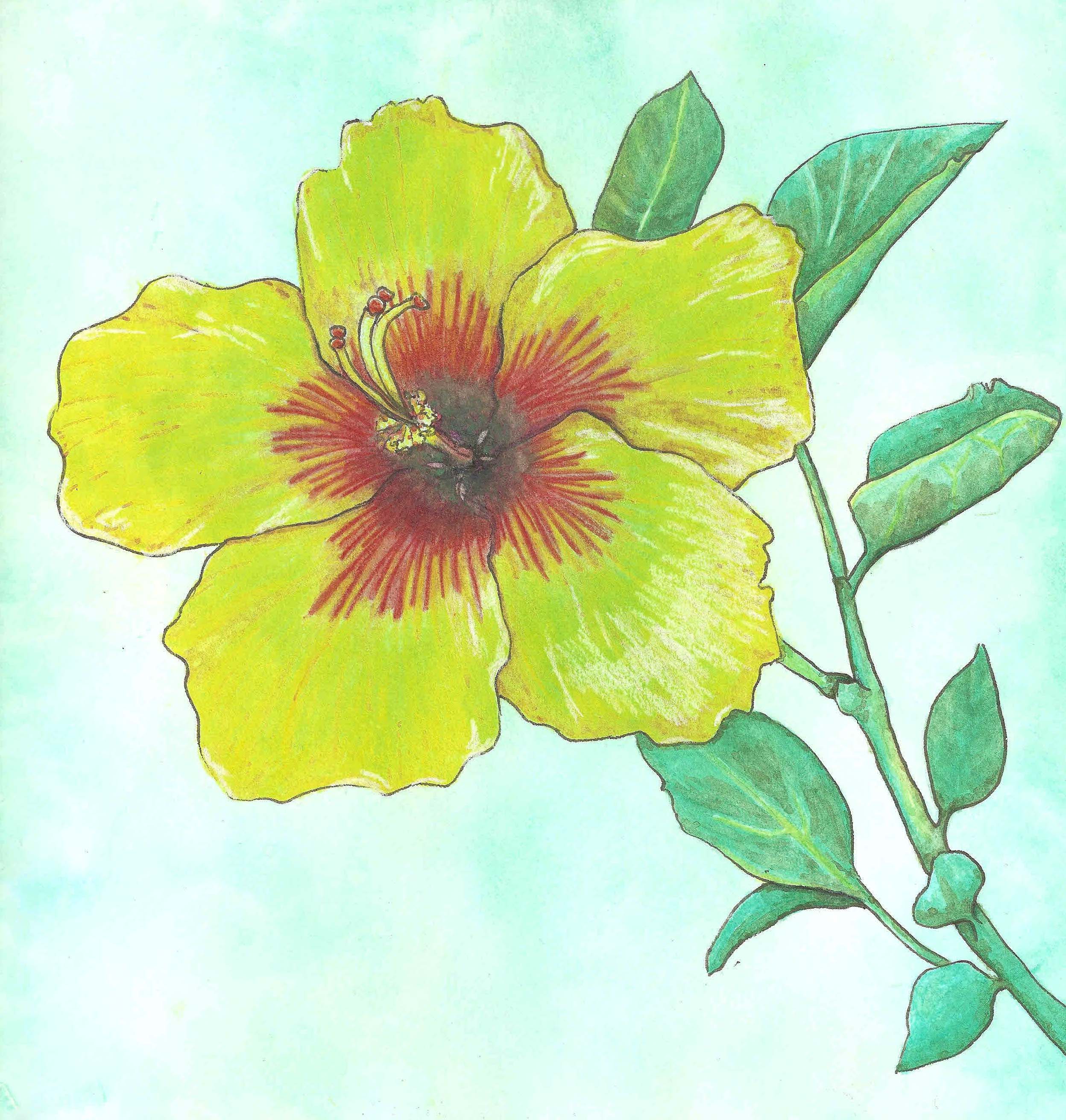
Sketchbook - Yellow Hibiscus web

This is a recent sketch that I drew from a photo from my Hawaii trip. The scanner just didn’t pick up the shadows and the highlights on the flower very well. Maybe a photo of it would work better. Hope you have a good weekend. Thanks for stopping by.


Lazertran Decals and Transfers

Our local surface design group met today and we played with a product new to us called Lazertran. Bunny took care of ordering all the supplies and figuring out what we needed. Basically this is a transfer process so we all came with photographs to transfer.

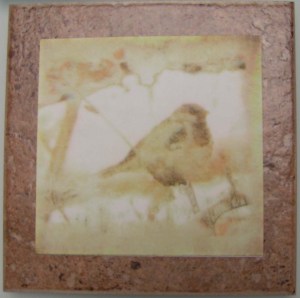
Carole did a demo for us. These are the decal type Lazertran sheets. They can be applied to smooth surfaces such as glass, tile or even wood. Once the Lazertran sheet is printed in the computer, it is soaked in plain water and the paper backing is removed. Then it is applied directly to the tile. Once it has dried, the item is baked in the oven at 200 degrees for 10 minutes. Aren’t Carole’s great grand kids cute?

The other process that you can use with Lazertran is to apply it to fabric. There is a specific Lazertran sheet for silk, for white fabric, for black fabric and for decals. The instructions are all different with each kind. So it gets a little confusing. Once the Lazertran sheet is printed, the white borders are cut off. For the silk variety, you iron the Lazertran to the fabric and then soak it in water to remove the paper backing. Here’s Louise showing off her creation. This is a photo of one of her original pieces of artwork.

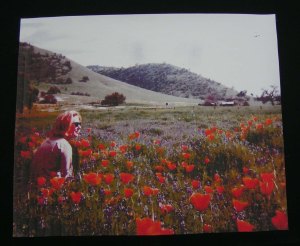
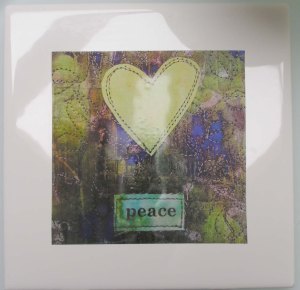
The Lazertran sheets for other fabric has you peel the paper backing off first and then ironing it to the fabric. The left hand photo shows a photo of Paula’s mother and the right hand photo is a decal on a tile of Sally’s original artwork. I only ended up making one piece and I have a couple more that I will probably do here at home. The hand of the fabric is really changed by the decals and they are quite shiny and have the look of plastic. I couldn’t decide what I would do with any of these as they aren’t really my style. But perhaps I can figure out what to put my decal on eventually. Have you used Lazertran before? Did you like it?