Using Up More Felt Scraps

I wrote a post about my first felt scrap landscape over on The Felting and Fiber Studio blog. I still had lots of scraps left over and some were pretty bright orange and pink. We visited Hawaii last week and those colors reminded me of sunsets.

Background Layout

Here’s the layout I started with for the sunset background. It’s a combination of screen printed, felted and dyed commercial felt.
Layout with Leaves

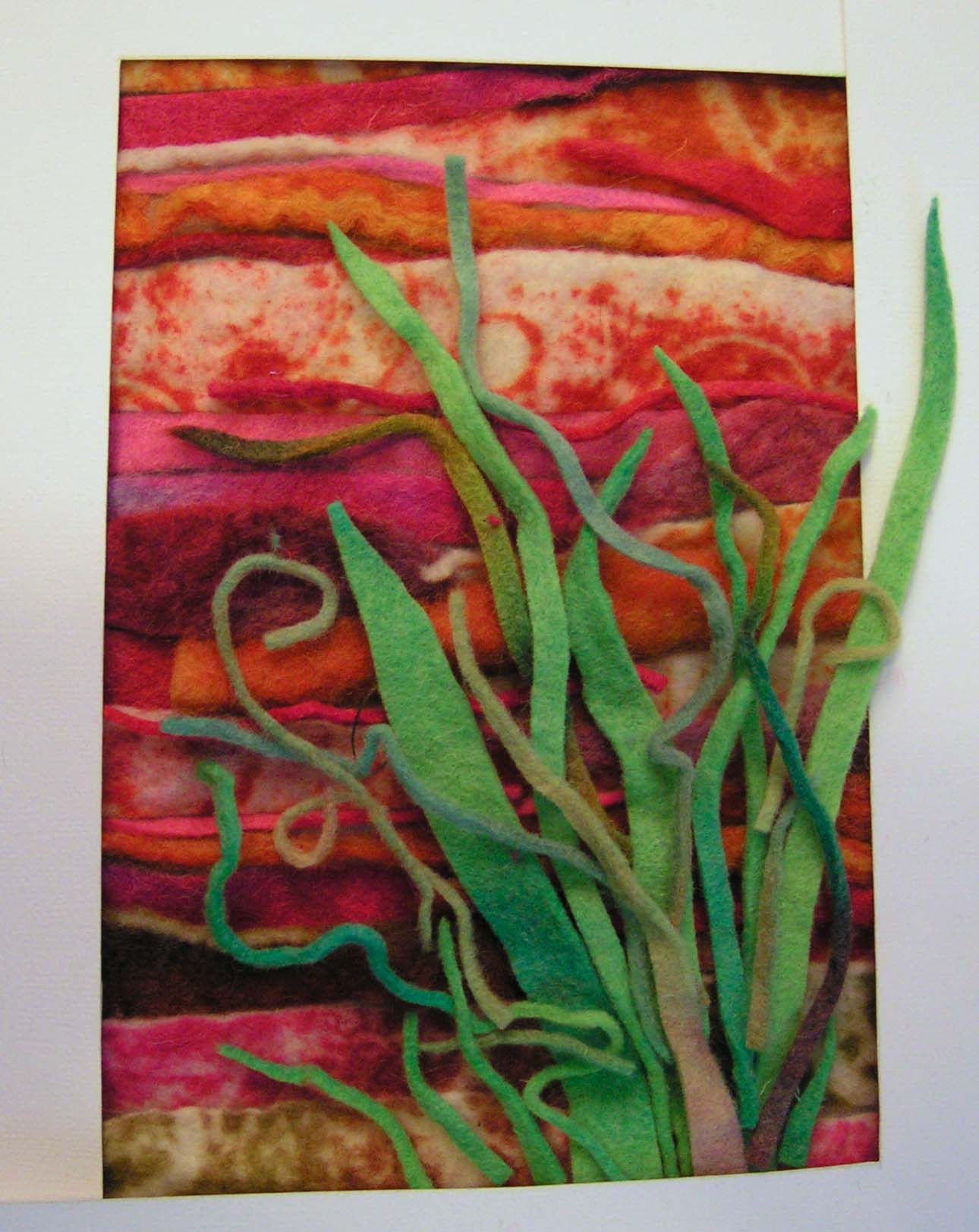
Then to add some lush greenery. I also wanted to include some fiddle head ferns still all curled up. I started with a light taupe green for these but midway through stitching I changed my mind. I felt the piece needed some darker values. You will see the change from this photo to the end but this was just a basic idea of how it would end up.

Painted Background

This time I decided that instead of using a white background of light weight interfacing that I would paint the interfacing. This is a terrible photo but you get the idea. Then there wouldn’t be any white spots showing through between the scraps.
Background Stitched

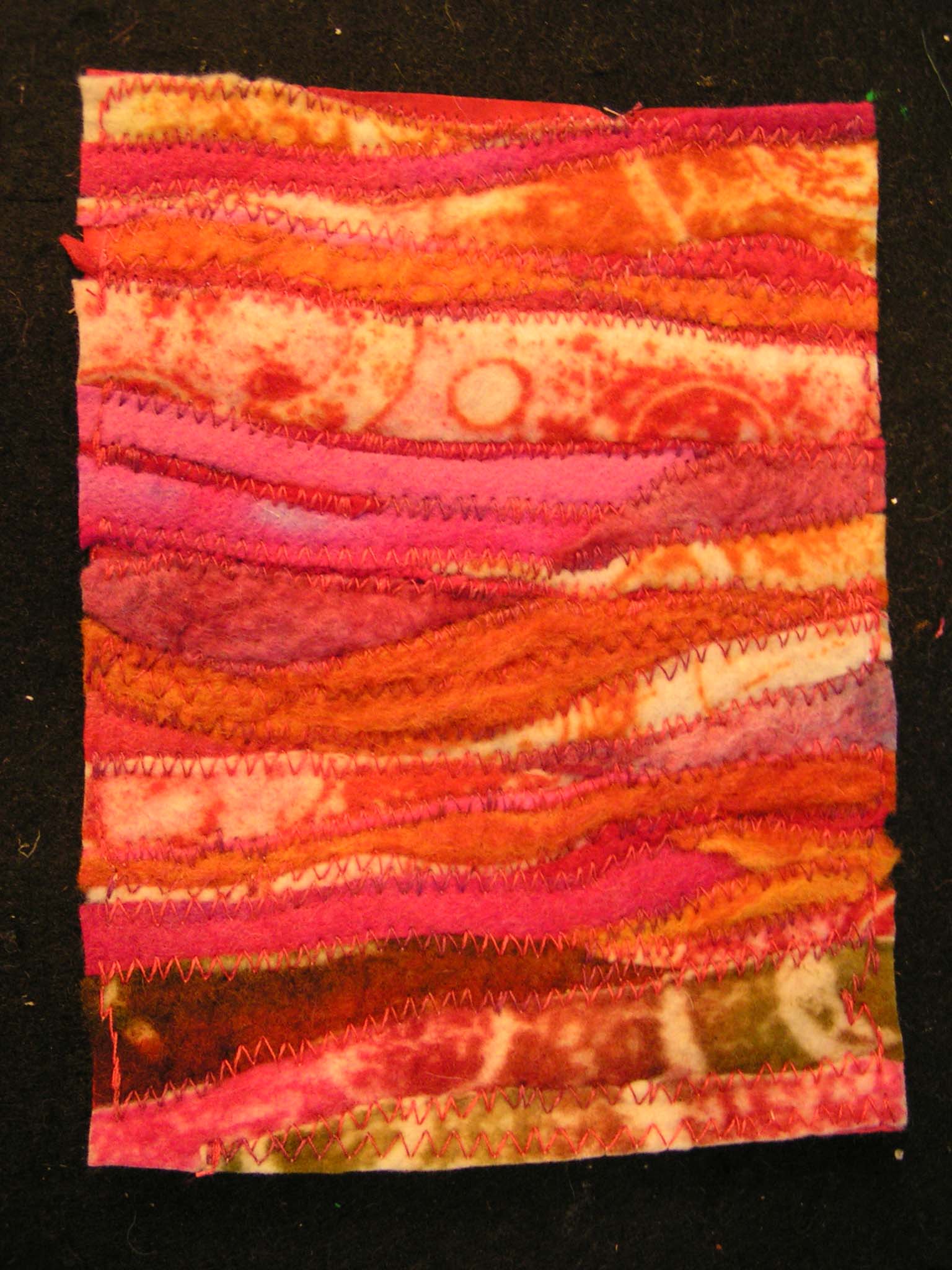
I used a zigzag free motion stitch on the machine to hold all the background scraps down. I used a variegated pink, red and orange thread.

Texture

You can see a little of the texture in this photo. The orange bits in the middle were not very well felted but the stitching holds it all together.

Hand Stitching Greenery

I then started to hand applique the leaves in place. At first I was planning on stitching them all flat to the background but decided I liked the way it looked with parts of the felt loose or just stitched on one edge.

Matted Finished Piece

And here it is with the matt around it. I definitely will not use the inside blue matt with this but that’s all I had at the moment. You can see the fiddle head ferns got darker in the end. I just cut some thin pieces from some darker felt scraps and then curled the end into a spiral. It was all a bit fiddly with the stitching but didn’t take all that long.

Finished Hawaii Landscape

And here it is framed. Again, not the best photo but you get the idea. It definitely reminds me of Hawaii. Great tropical colors which I don’t use a lot but obviously if I had scraps, then I had used these colors before. Perhaps I just don’t usually use them together? These scrap landscapes are a lot of fun. I still have plenty of more scraps so I think I’ll just keep going. Have a great weekend.


Mono Printing on Gelatin Plate Party

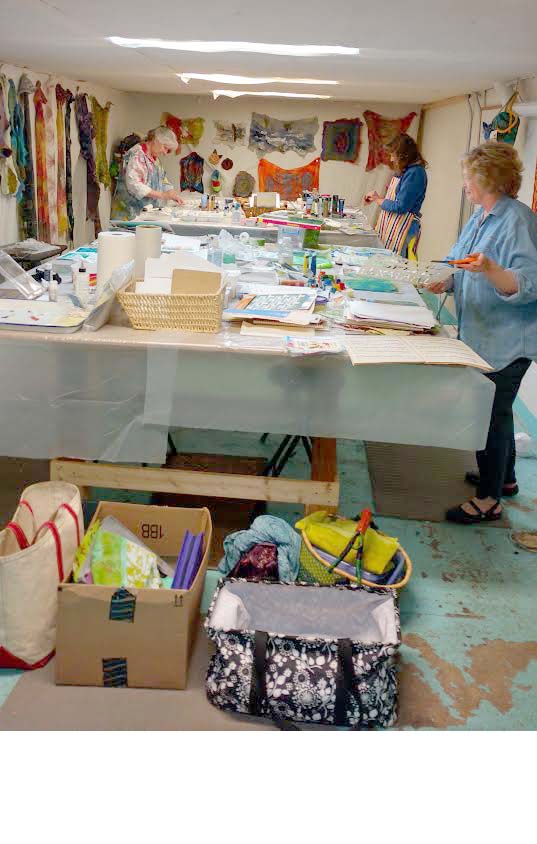
My local surface design group met today and we used our gelatin plates that we had made plus we used Gelli plates that you can buy commercially. The Gelli plates are much stiffer than the kind you can make on your own.

monoprints 10 web

We all brought tons of stuff to play with and a variety of kinds of paint.

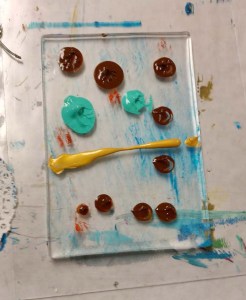
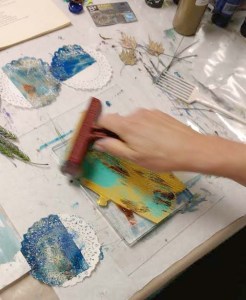
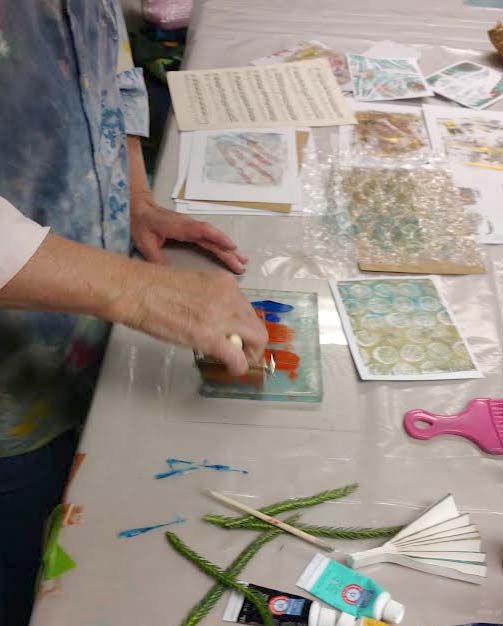
You can see here the paint applied to the plate, using the brayer to roll it out and before printing. Sadly, I didn’t get what the print looked like.

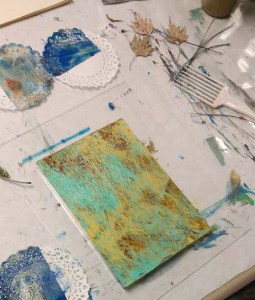
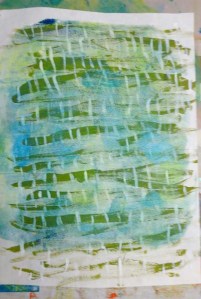
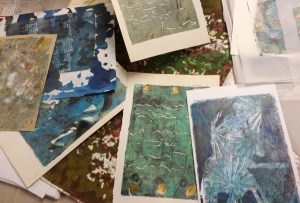
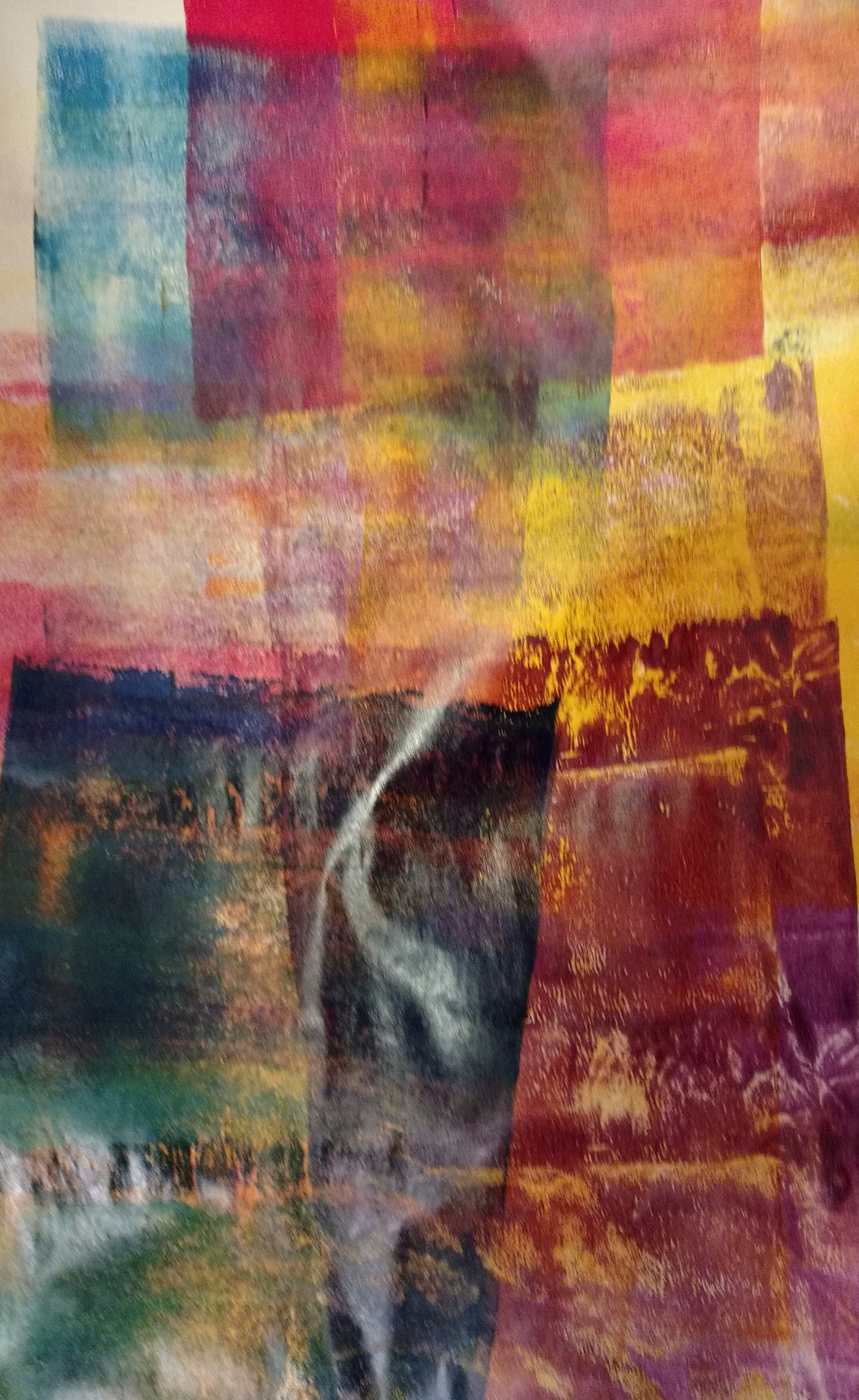
Here are a variety of prints. I don’t remember which belong to which person but they were all unique.

monoprints 5 web

It was great fun and even though I still don’t like all my prints, at least a few of them are looking a little better.  I will scan in a few of my favorite ones and show you soon.

Mono Printing on a Gelatin Plate

Next week our surface design group is meeting and we’re going to be using Gelli plates for printing. I don’t have one and Paula found us a recipe on how to make one of your own. So I thought I would give it a try. It was simple and I already had most of the ingredients, just had to buy four more packets of gelatin.

Gelatin Plate

Here’s the gelatin plate that I made. It is about 8″ x 8″ I decided I really needed to try it out. So I played around with some acrylic paints, stencils and texture plates. There are tons of Youtube videos out there on how to do this and the Gelli Plate company has a really nice set of videos on their blog.

yellow and orange print

Here’s one of the first prints that I made. It only has two layers and definitely needs a few more. I wasn’t sure on how much paint to use. This one I used Golden fluid acrylics and they dried really quickly. Plus I needed to use more paint.

dark and light print

This one was a clean up sort of print. I added a few dots into the middle, let it dry and then added dark purple paint on top. Then you pull the print. It picks up the dried yellow paint on the plate as well as the purple.

Bark Print

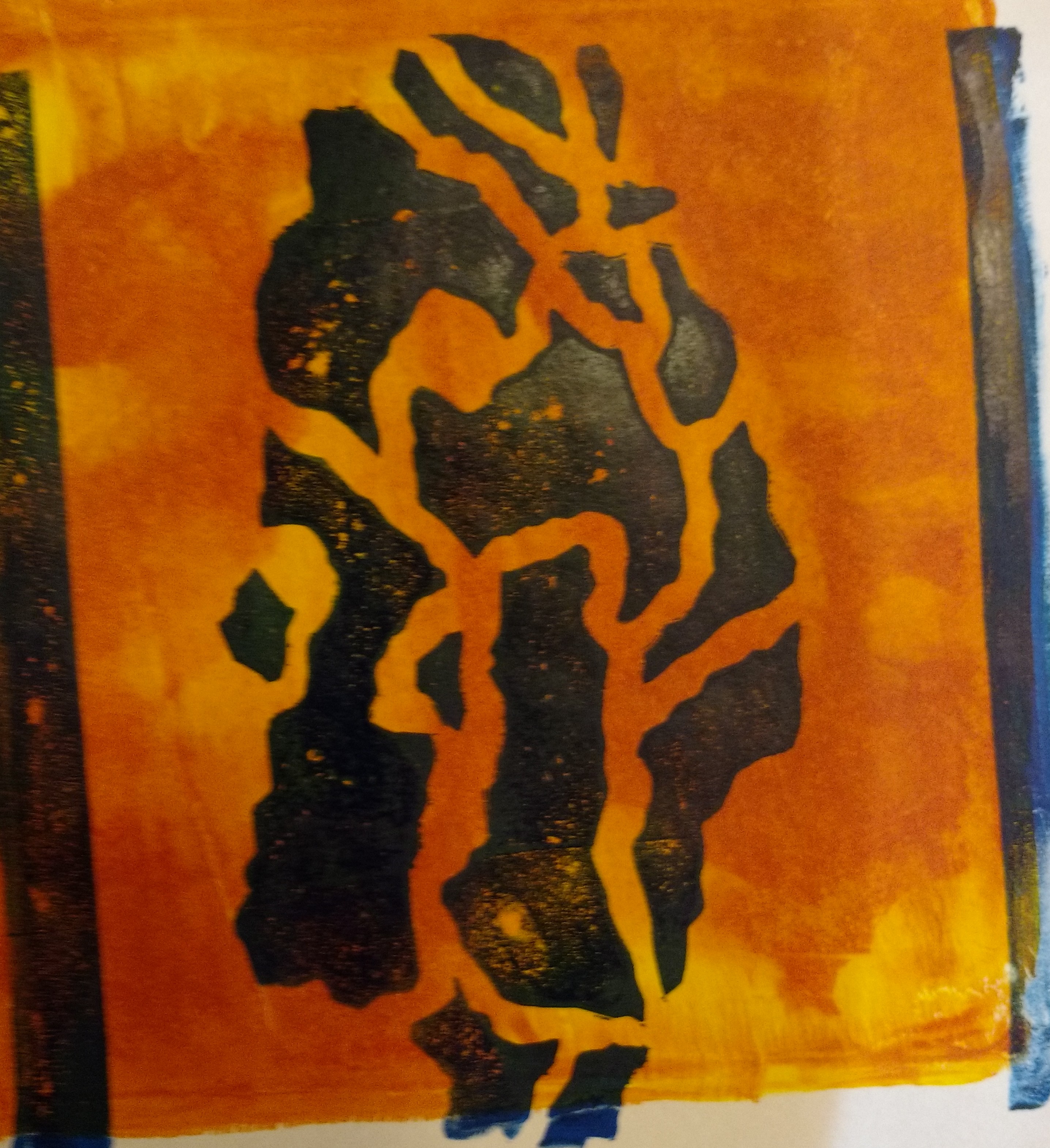
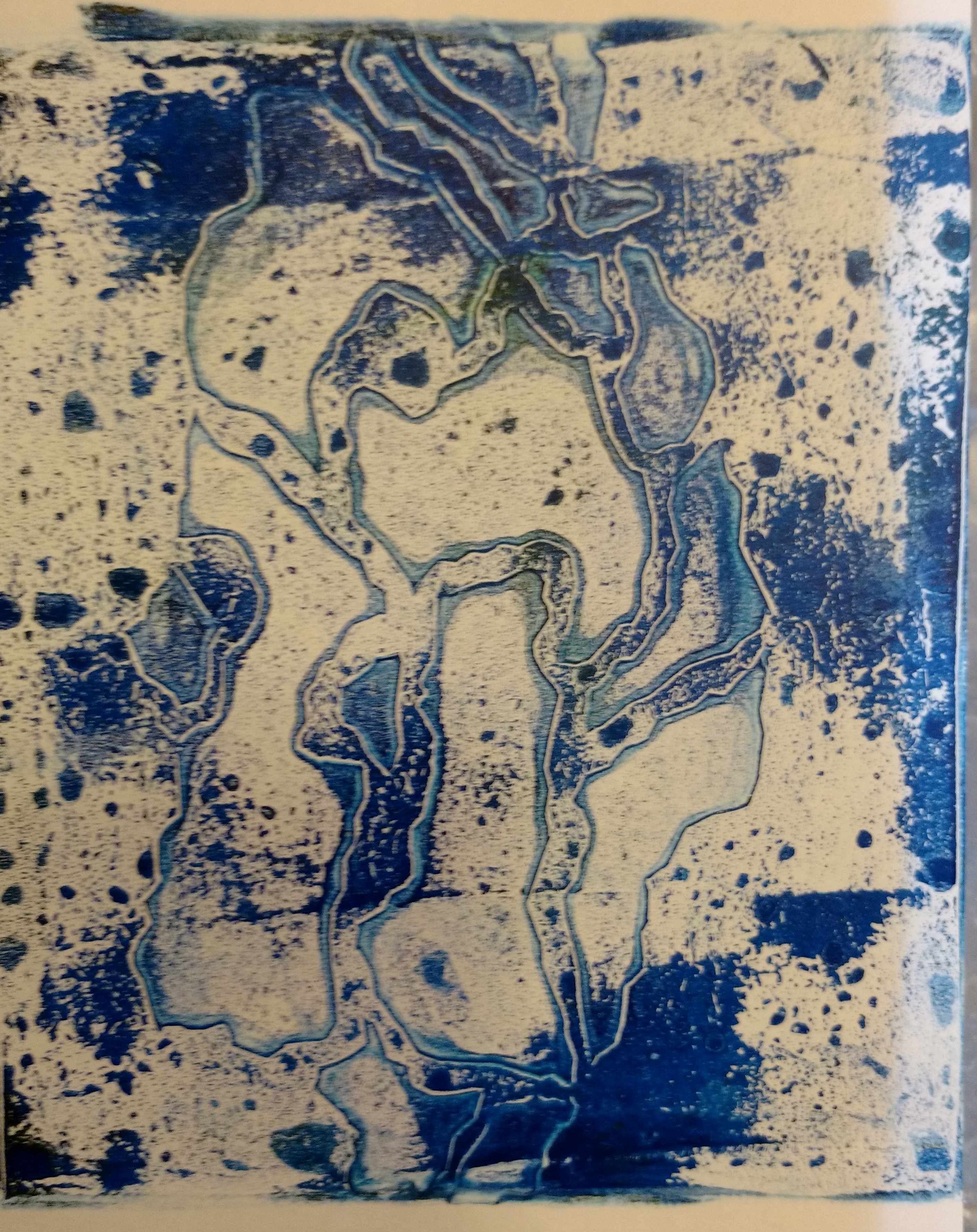
This one is two layers with blue over orange-yellow through a stencil that is supposed to represent bark. It looks too much like an animal print to me though. I switched to the high flow Golden acrylics and really liked the way they printed better than the standard acrylics. They don’t dry out as quickly either.

Bark Ghost Print

I love this ghost print after the stencil is pulled off.

Butterfly Ghost Print

And here is another ghost print from a butterfly stencil. I always seem to like the ghost prints better than the first print pulled with the stencil in place.

Scrap Paper

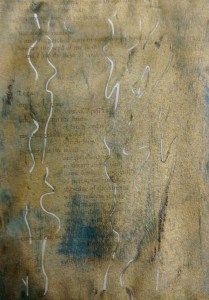
And this is the paper where I cleaned off my brayer. It’s pretty cool too. Have you tried printing from a gelatin plate? It’s pretty fun. I have included the recipe to make your own below that Paula gave us if you’d like to give it a go.

Make Your Own Gelatin Plate Recipe

1 1/2 c. Water
3/4 cup glycerin (Walmart)
3/4 cup rubbing alcohol (70% is fine)
7 envelopes gelatin
7 x 7,  or  8 x 8 glass or metal pan without any texture on the bottom
(Walmart or the Dollar Store has good pans)

In a microwaveable bowl, mix cold water and gelatin together with a whisk. Add alcohol and glycerin into bowl, mix. Microwave 3 mins. Remove and stir. Repeat till mixture is hot and clear. The mixture may still have a yellowish color to it. Do not boil. It took Paula 4 round of 3 minutes in her microwave to get mixture clear an hot. It took me one round of 3 minutes. Microwaves are variable so just keep a close eye on it. Pour into pan and let set over night. Try to remove any air bubbles from the surface. The painting surface will be the bottom of the pan which will be very smooth. Make sure to use a glass pan that is smooth inside. When set, use your fingers to pull the gel from the edge of the pan.  Once suction is released, it will come out of pan easily. Do not use a knife.