Fabric Book Update

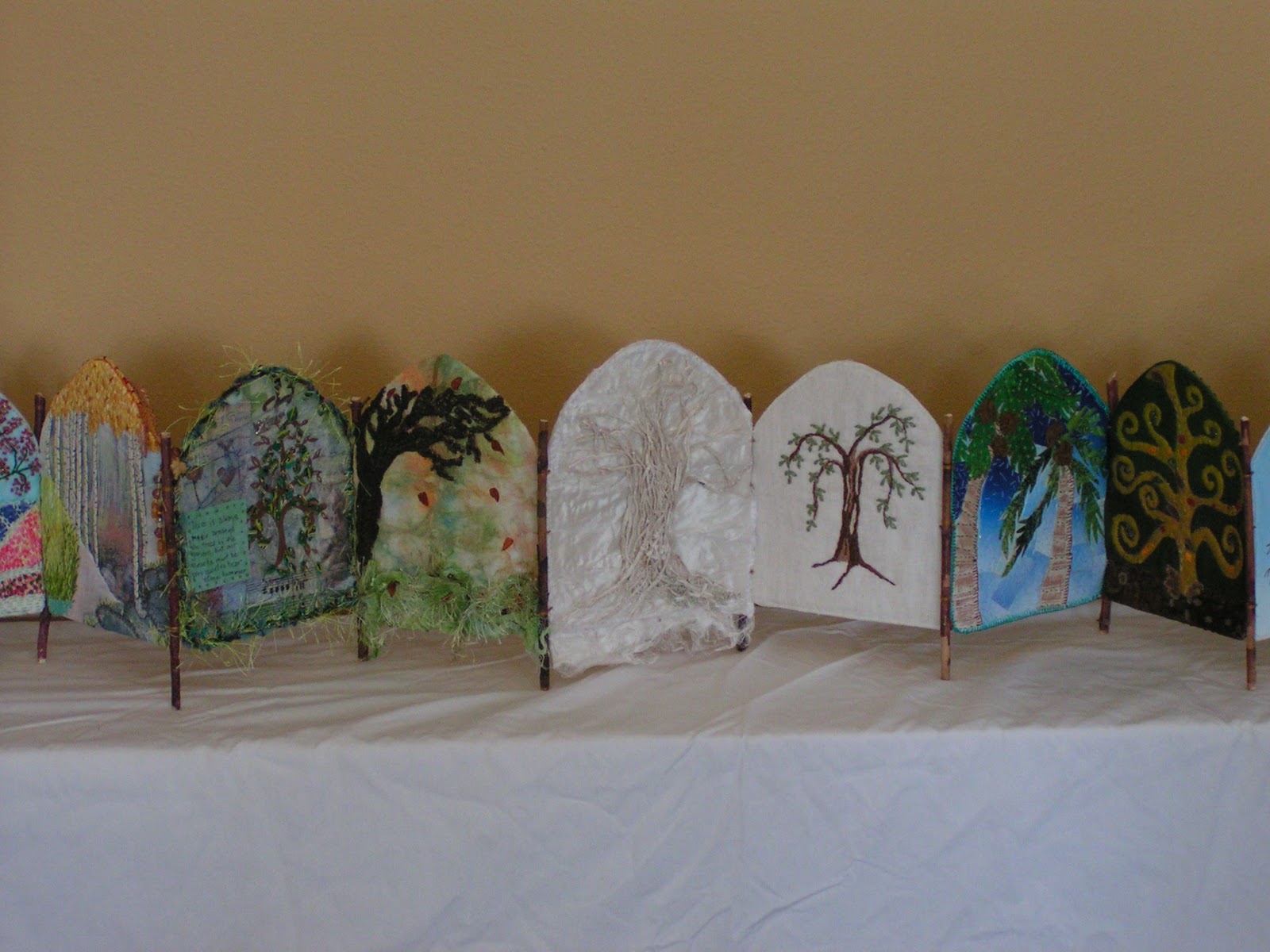
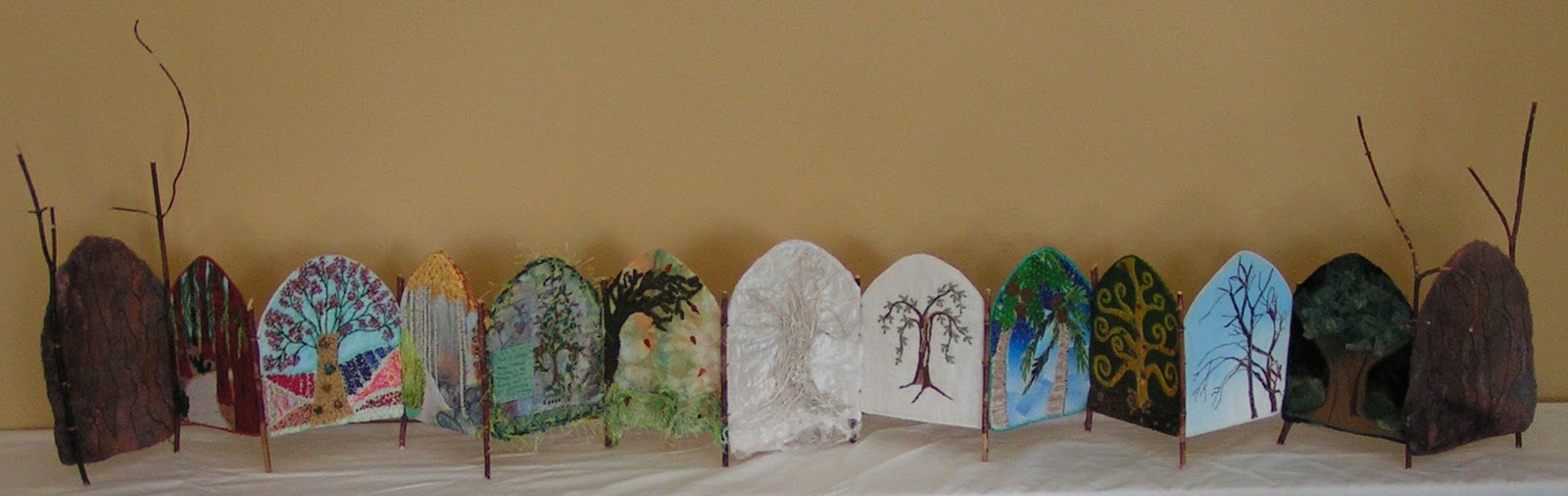
I have been working out the logistics for putting my fabric book pages together from the Traveling Pages Swap. I am going to make an accordion style book. Right now I have the pages pinned together and this shows the backs of the pages.

Here’s the fronts. It’s not very sturdy with just the pins holding it. I am planning on adding twigs for legs at all the page junctures.

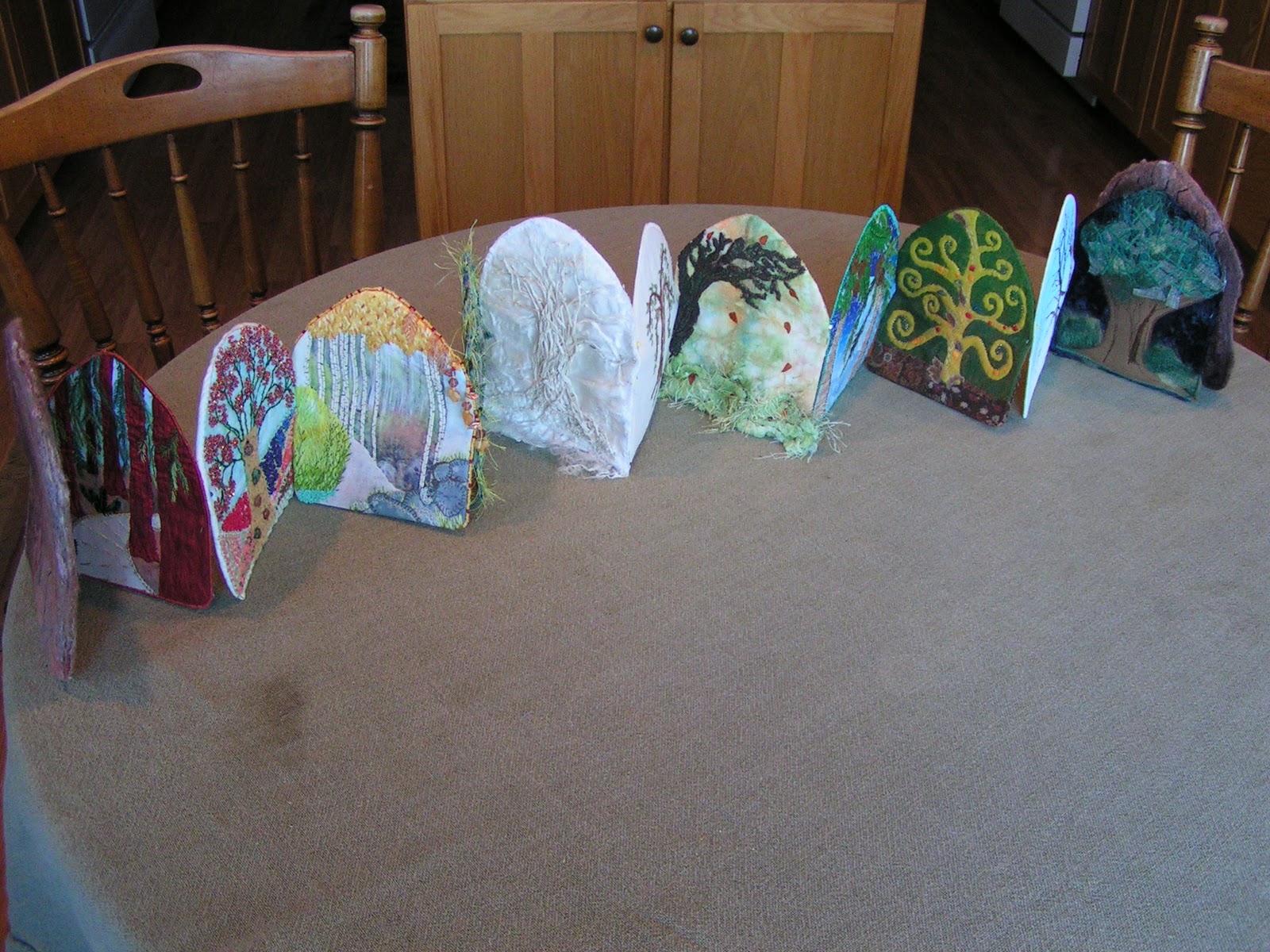
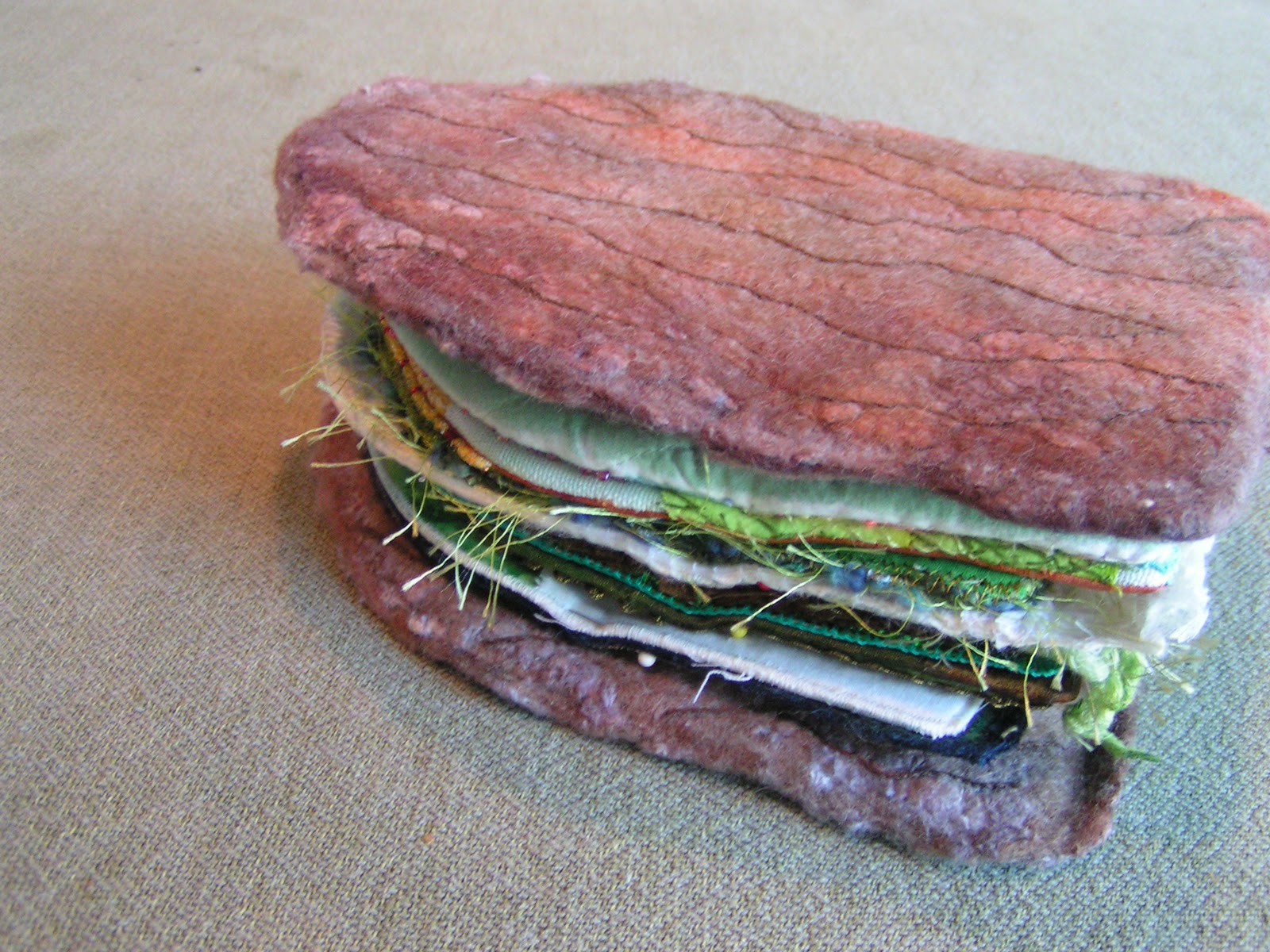
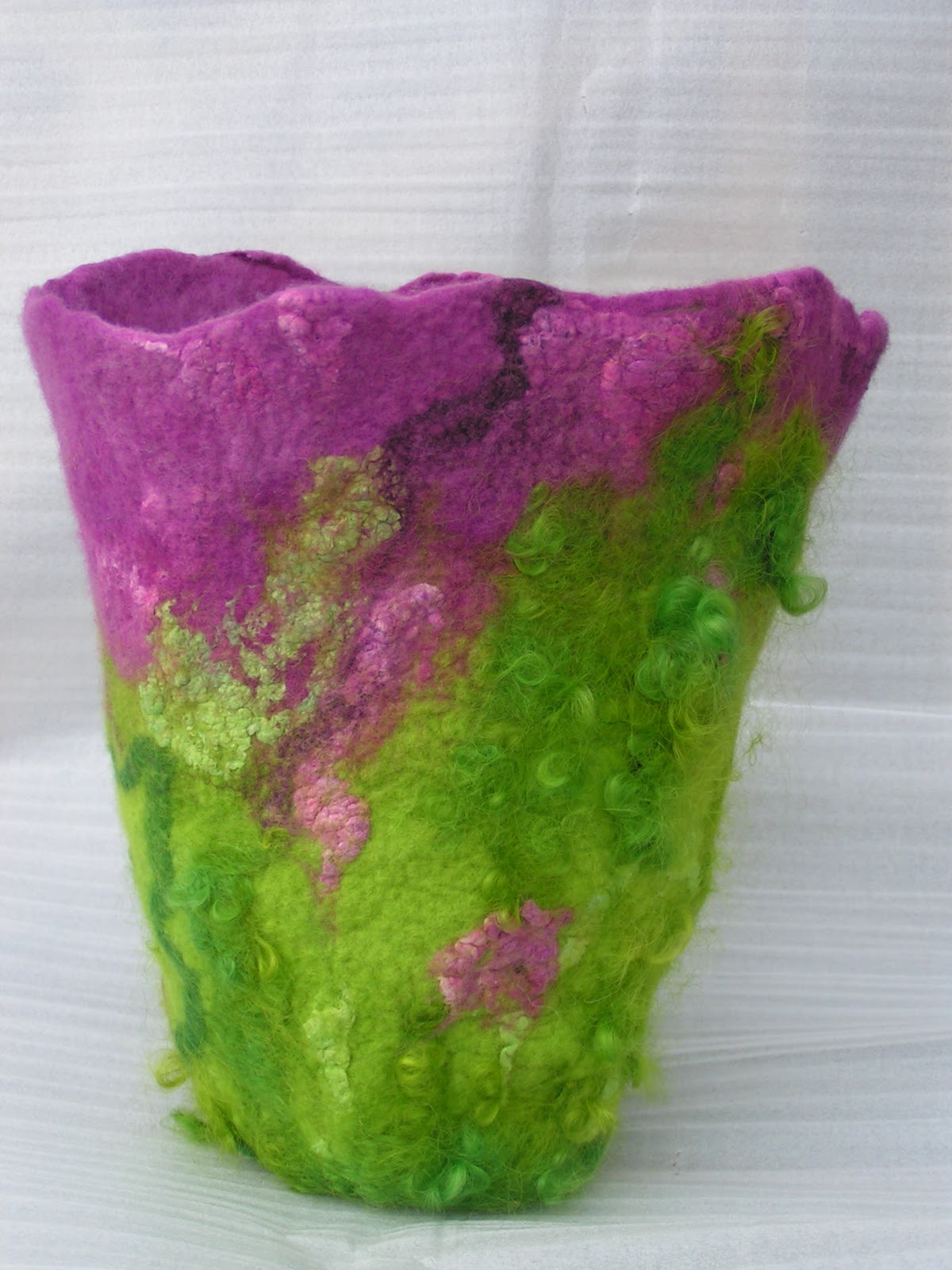
Here it is all folded up with the bark covers that I wet felted and then hand stitched with stem stitch.

I think it kind of looks like a burger with little lettuce bits sticking out. I’ve got to cut the sticks to size and then start assembling. It should be a bit fiddly so I’m not really looking forward to the process. Hopefully, it will go more smoothly than anticipated!

Design Focus Friday – Color

This month we’re going to focus on color. Don’t you just love to play with color? I think though that sometimes you might shy away from learning about color theory. It just sounds too technical and too much work. Many artists have spent a lifetime learning about color theory but you don’t need to get overwhelmed. Just jump in and start trying some of the ideas suggested here. It will be fun – I promise!

Color occurs when light in different wavelengths strikes our eyes. Objects have no color of their own, only the ability to reflect a certain wavelength of light back to our eyes. As you know, color can vary in differing circumstances. For example, grass can appear gray in the morning or evening or bright green at noon. Colors appear different depending on whether you view them under incandescent, florescent or natural sunlight. Colors also change according to their surroundings.

There are three properties of color which are hue, value and intensity. Hue refers to the color itself. Each different hue is a different reflected wavelength of light. White light broken in a prism has seven hues: red, orange, yellow, green, blue, indigo and violet. Remember Roy G. Biv? White light occurs when all the wavelengths are reflected back to your eye, and black light occurs when no light is reflected to your eye. This is the physics of light.

Color value refers to the lightness or darkness of the hue. Adding white to a hue produces a high-value color, often called a tint. Adding black to a hue produces a low-value color, often called a shade. Value can be used for emphasis. Variations in value are used to create a focal point for the design of a piece.

Intensity, also called chroma or saturation, refers to the brightness of a color. A color is at full intensity when not mixed with black or white – a pure hue. You can change the intensity of a color, making it duller or more neutral by adding gray to the color. You can also change the intensity of a color by adding its complement (this is the color found directly opposite on the traditional color wheel). When changing colors this way, the color produced is called a tone.

Certain colors have an advancing or receding quality, based on how our eye has to adjust to see them. Warm colors such as red, orange or yellow seem to come forward while cool colors such as blue and green seem to recede slightly. In the atmosphere, distant objects appear bluish and the further away an object appears, the less colorful and distinct it becomes. You can use this tendency to give an illusion of depth, by using more neutral and grayish colors in the background. 

Various color schemes can be used in your work. A monochromatic color scheme involves the use of only one hue. The hue can vary in value, and black or white may be added to create various shades or tints.

An analogous color scheme involves the use of colors that are located adjacent on the color wheel. The hues may vary in value.

A complementary color scheme involves the use of colors that are located opposite on the color wheel such as red and green, yellow and purple, or orange and blue. Complementary colors produce a very exciting, dynamic pattern. 

Or how about triadic? This color scheme involves the use of colors that are equally spaced on the color wheel. The primary colors of yellow, red and blue could be used together in a color scheme to produce a lively result. 
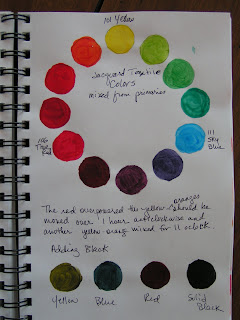
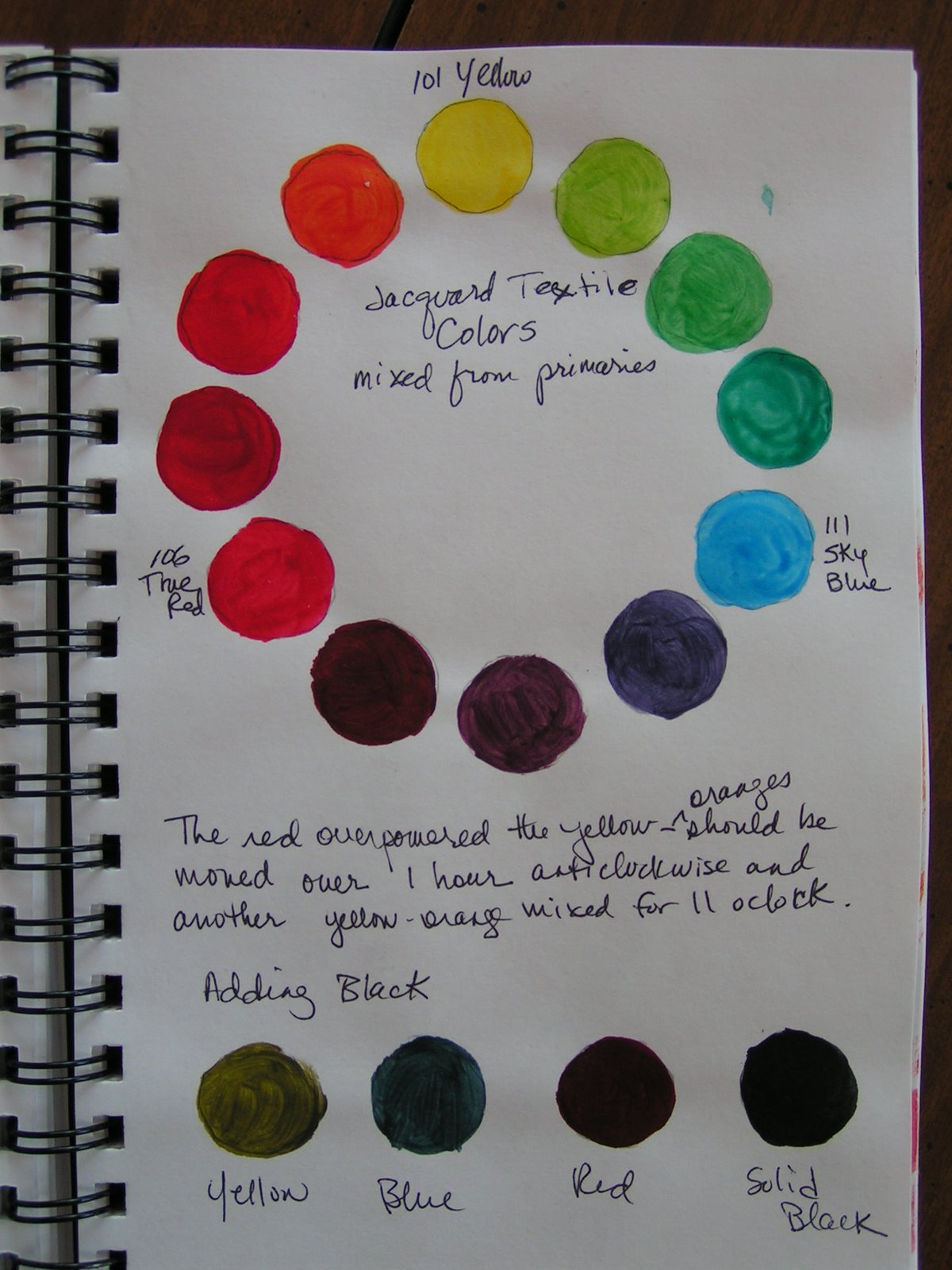
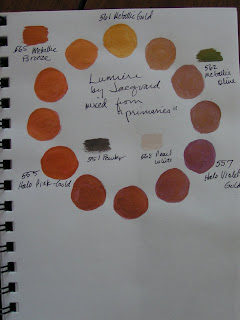
I am certainly not a color expert. (Most of this information came from this website.) That’s one of the reasons I’m doing these design focused posts, to help me learn more about color as well as design. One of the things I try to do is when I get new painting/color supplies, is to make a color wheel and mix the different colors together. I am always surprised by what comes out. One yellow is not the same as another yellow. One yellow may tend more toward the orange/red side of the color wheel, while another may tend toward green/blue. These different yellows will yield absolutely different results when mixed with other colors. I recently got some Golden acrylics. I mixed green and red and got purple. It wasn’t the color I was expecting. Try mixing your colors beforehand and making a sample of each mixture in your journal. If  you don’t keep a journal, just use a sheet of paper and keep it with your paints.
I found an excellent resource about color, books about color and just why it is important to learn more about color. Check out Roz Wound Up in this post. Here’s another one that has tons of information and links about color. There’s enough information there to keep you busy for a while.

When you’re thinking about color this month, ask yourself a few of these questions:

• How can you use color to evoke different emotions? Do you connect certain emotions to certain colors?

• What does using a monochromatic color scheme do to your composition? Complementary? Analogous? Or Triadic?

• How do you choose your color scheme? Is it affected by the subject of your composition? The mood you want to achieve? What is the impact of choosing a color scheme that is the opposite of your normal choice?

• What would your composition look like with all the same values? How can you use value changes to improve your focal point?

• Have you tried mixing various fabric paints to see what colors you can achieve? What colors do you achieve when you mix two colors together? What happens if you add black to your colors?

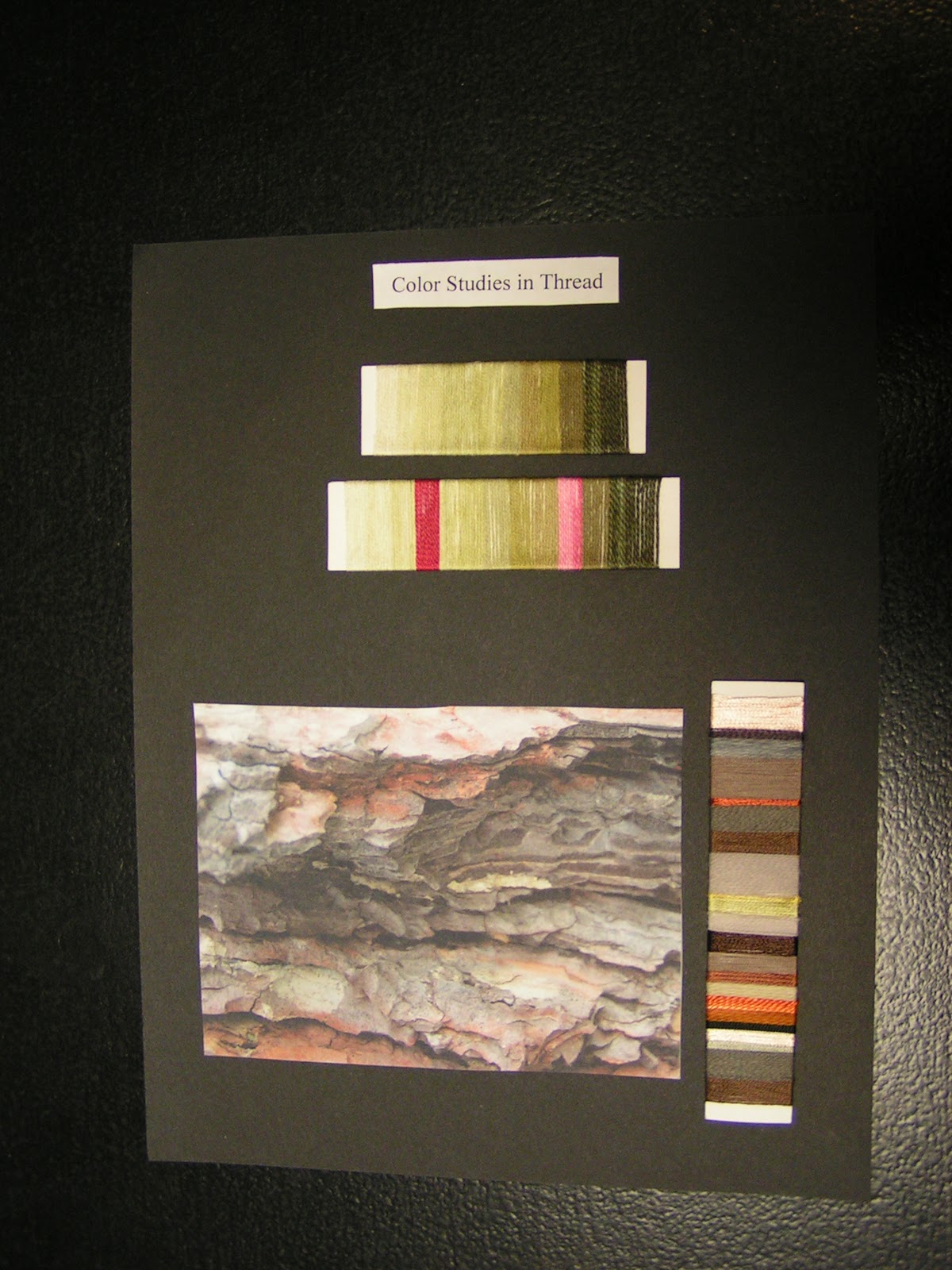
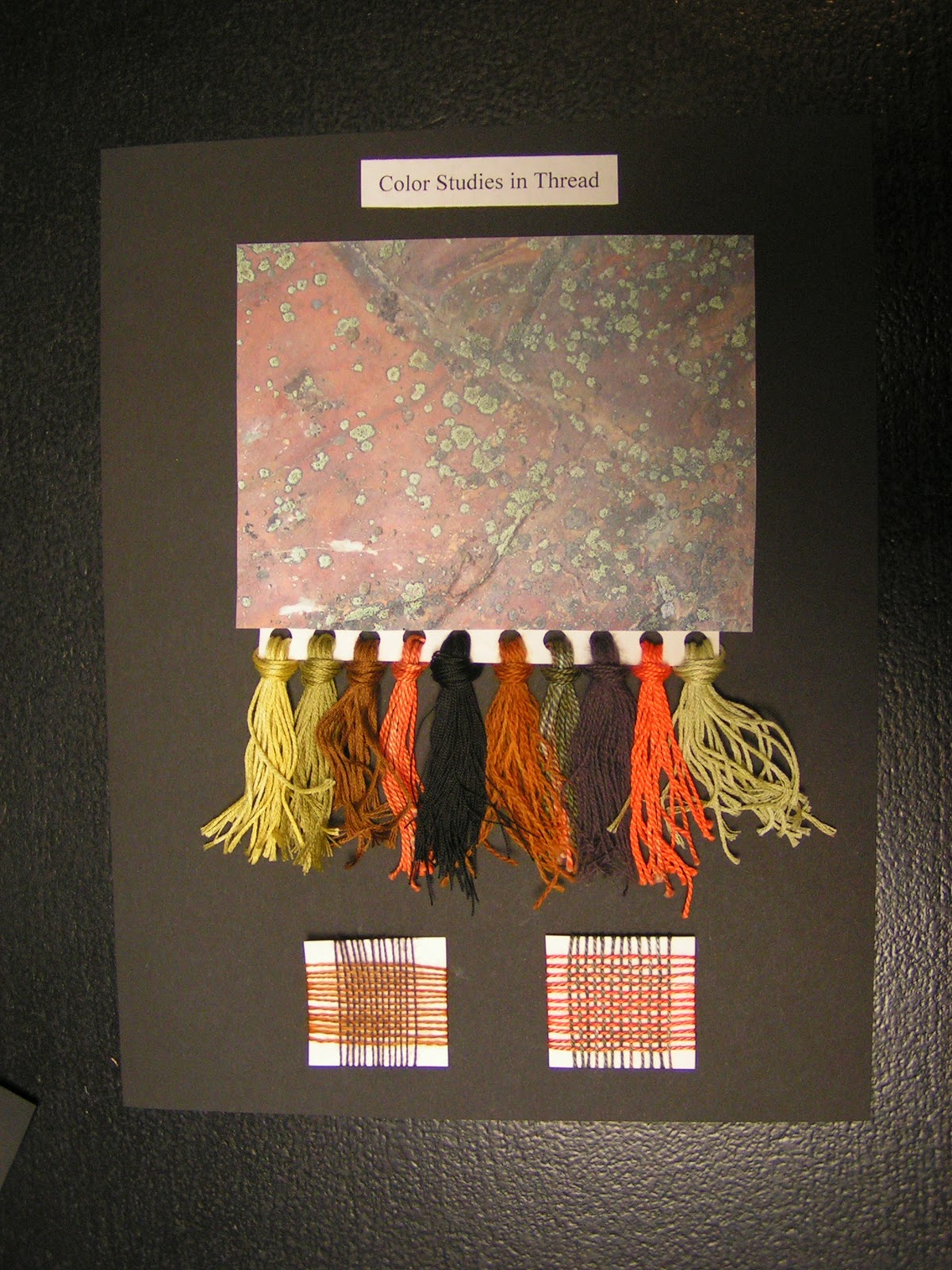
I’d love to hear what you’re working on and how you use color theory in your work. Leave a comment and give us a link to your favorite colors. Next week, I’ll hopefully have some thread color studies completed to show you.
Silk Screens

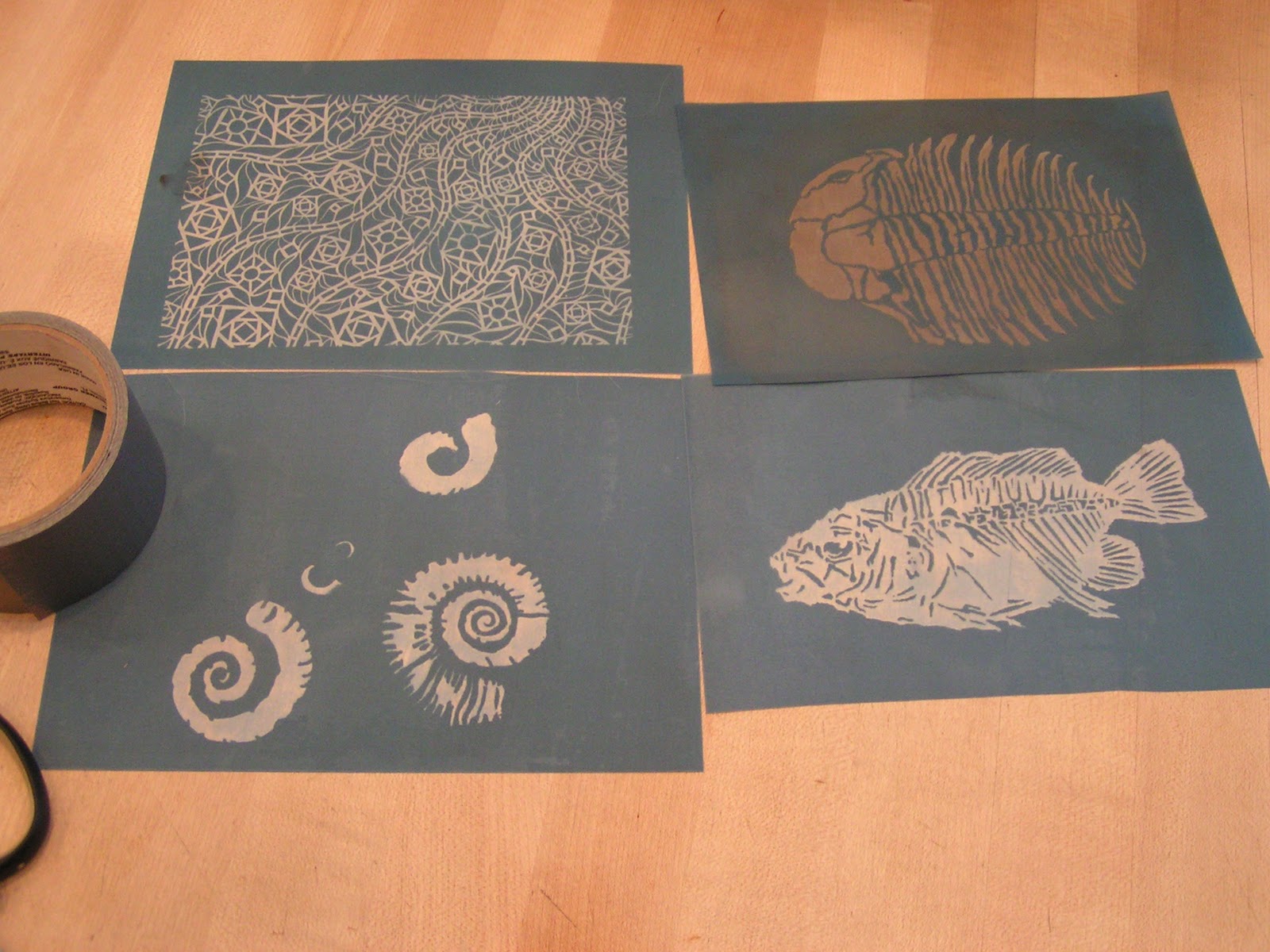
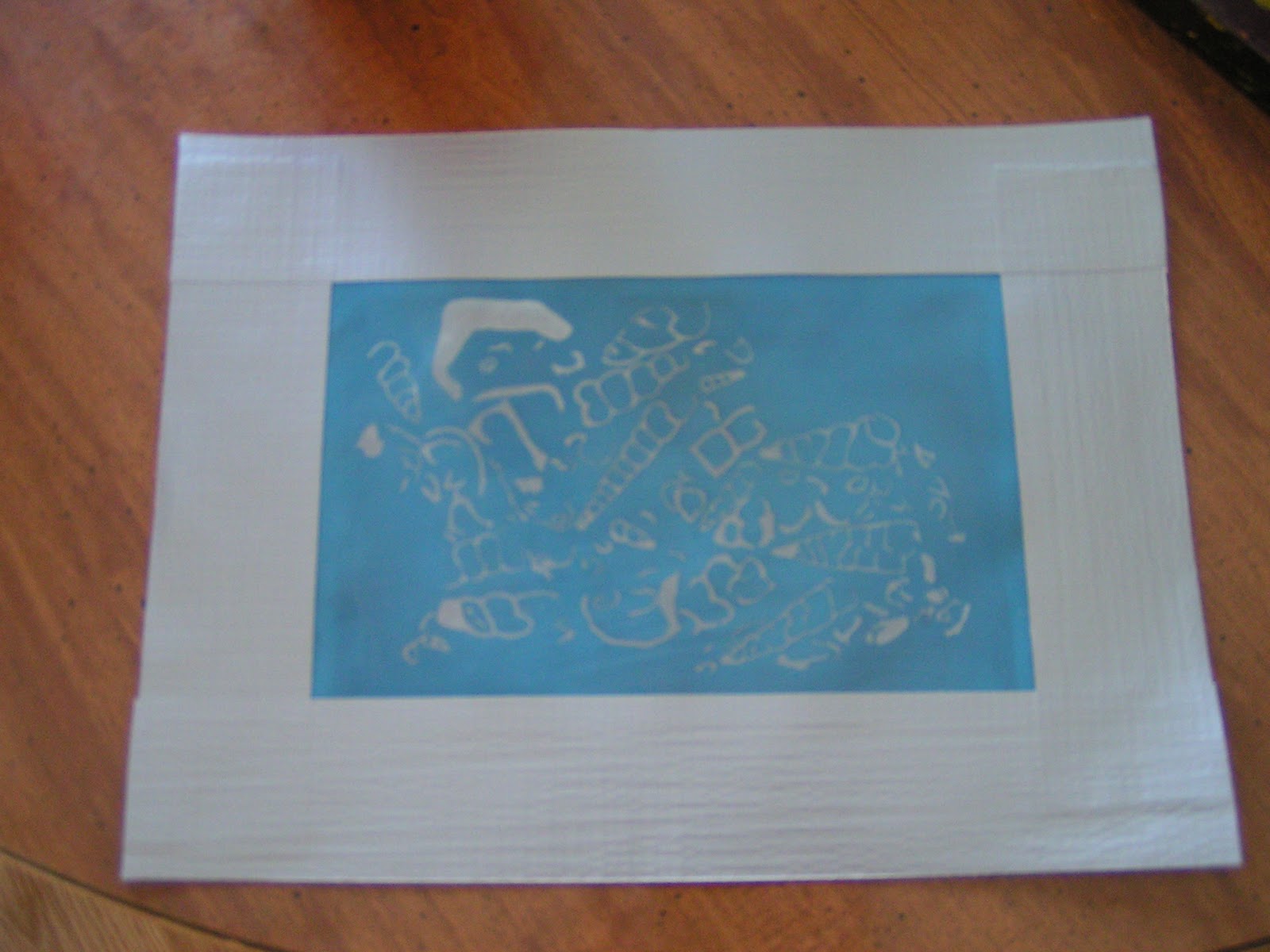
 When my local surface design group got together, we made silk screens. We used a combination of methods but it worked really well. We used PhotoEZ and a Yudu machine.  We tried to use the supplies that came with the Yudu machine but it didn’t work and took a really long time. With the PhotoEZ, you just need your design on a transparency, you put both on the Yudu machine and ‘burn’ the screen for 4 1/2 minutes. We used the high resolution screens. Then you soak them in the sink for 5-10 minutes and gently rub away the part that wasn’t exposed to light. And look at the screens I made! It was really exciting to see my designs become a silk screen. Today, I used duct tape to put around the edges so I would have a well space to put thickened dye.

 Here’s one screen with the duct tape around it.

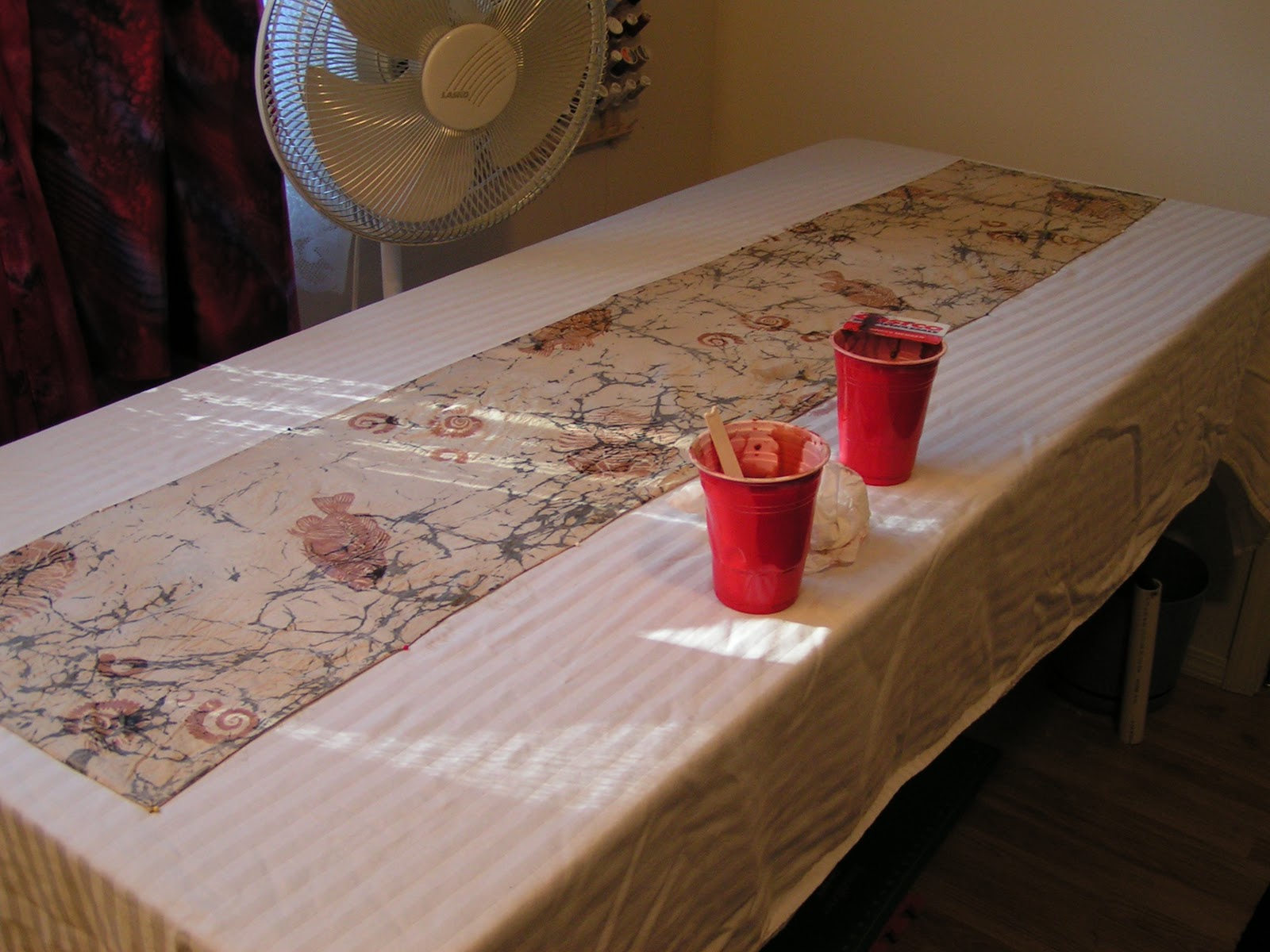
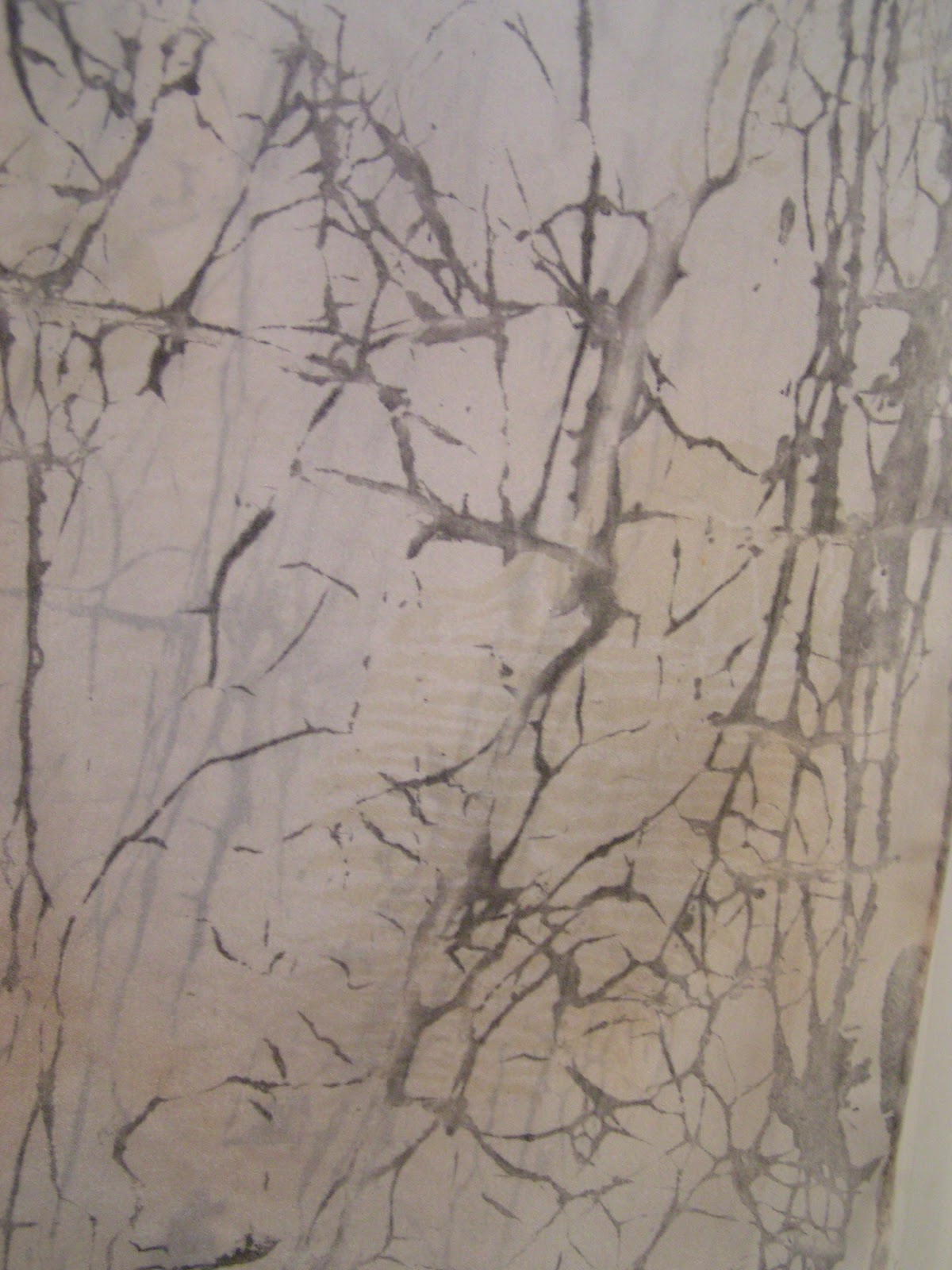
 Then I got busy using my new print table and my new silk screens. I used thickened acid dyes with presoaked (in acetic acid and water) scarves. I did both of my flour paste resist scarves. One I used brown and the other I used ecru.

 This is the brown one. I thought that I had made the brown a bit too red at this point.

 But once dry, the color works fairly well. The scarf on the right is the one with the ecru screen printing. It is really subtle, that is to say, you can hardly see the silk screening. But I actually like it that way.

 Here’s a close up of the brown silk screens.

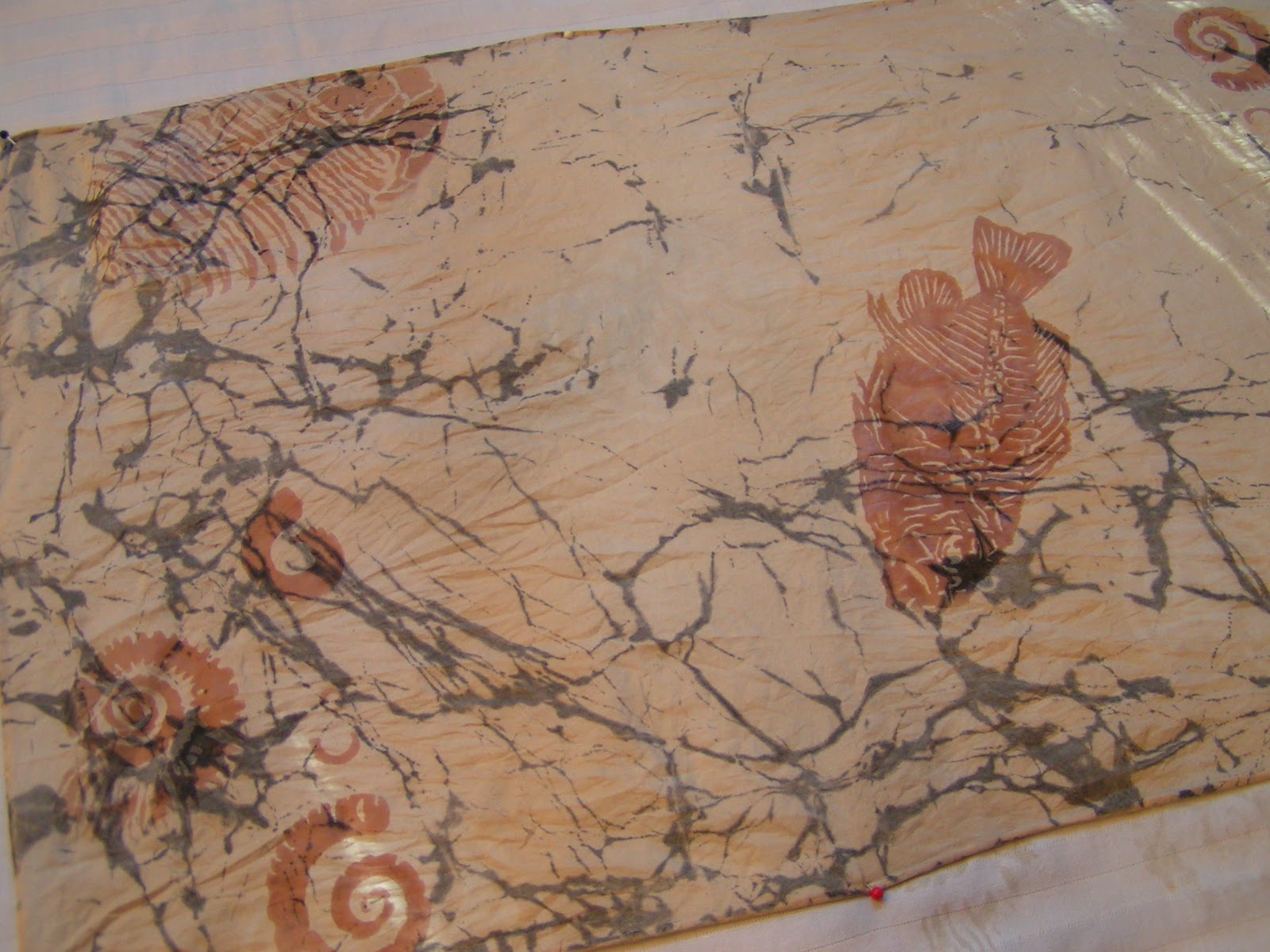
 My fossil fish.

 This is the trilobite screen on the right side. Can you see it?

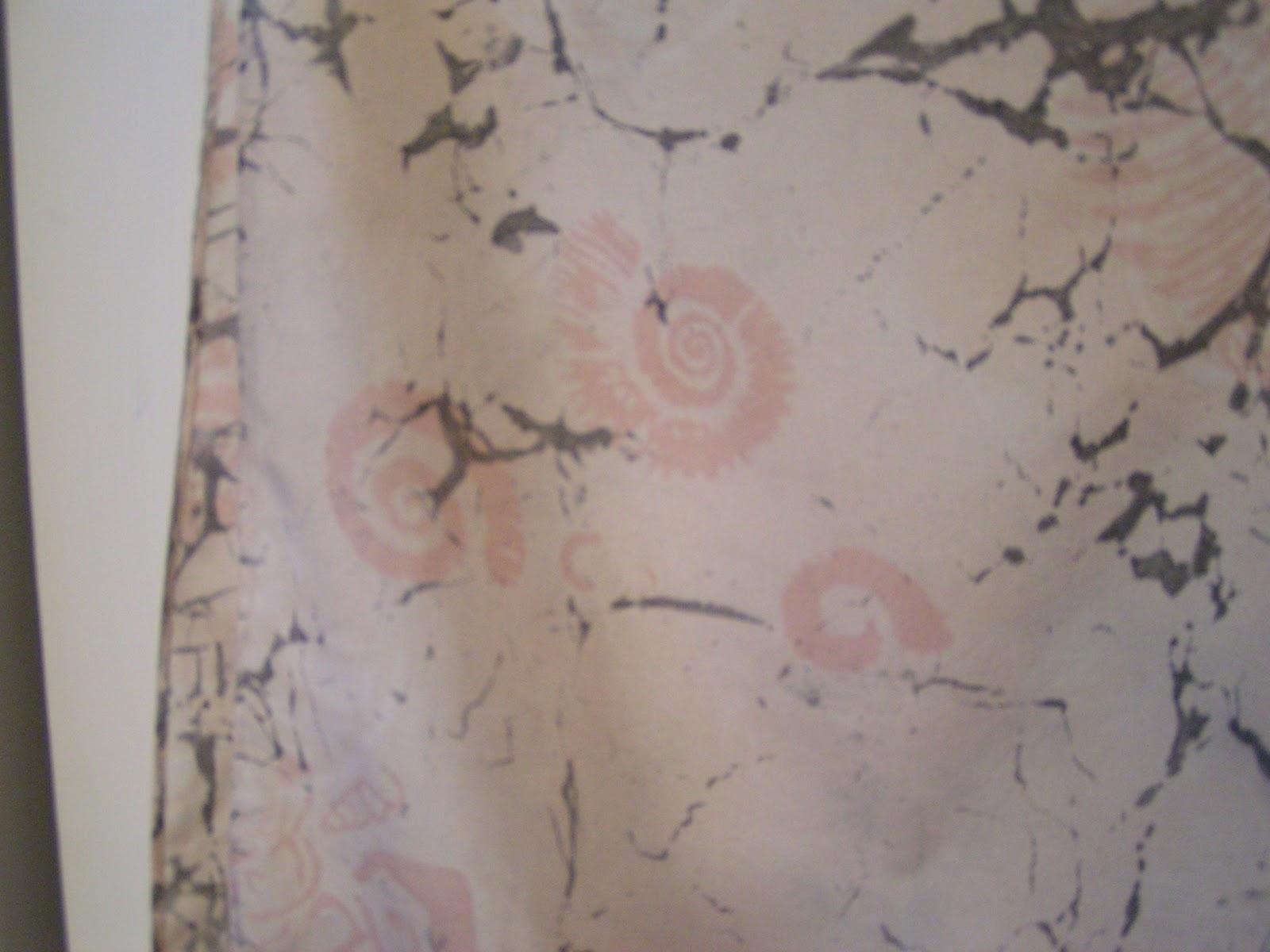
Here’s an ammonite

 Then I used the silk screens to do some discharge on this brown scarf. I always forget to test ahead of time and I always get a surprise as to what color remains after discharging.

These turned orange. Here’s a better photo of the trilobite. I had a blast and I really liked doing the silk screening with the PhotoEZ screens. It was simple and fairly quick. I will definitely have to order more of these. The only problem is how expensive they are, nearly $10 per sheet. The lower resolution ones are less expensive but we thought with the complexity of the designs we were using that the higher resolution would be better. If you haven’t tried these, you don’t need a Yudu to burn the screens. You just need a light source. It takes a bit longer but if you have a sunny day, it works in the sun as well. So give it a try, it’s great fun.

Design Focus Friday – Texture

 When my local group met last Friday, we tried a texture exercise that I read about in Creative Embroidery by Jan Beaney and Jean Littlejohn. You take white paper and make different textures by various methods such as twisting, crumpling, cutting tearing, curling, braiding etc. Each of us made lots of different textures and then we added them all to the same page. The photo above is a sample I made because I unfortunately forgot to get any photos of the group’s page. The reason that you use white paper is you want to think about texture and not about color. Once color becomes involved, you have a tendency to concentrate on color.

Once you’ve completed your texture sheet, you can scan it into the computer as a grey scale photo. I put this into Photoshop Elements and increased the contrast and decreased the brightness. Now you could take this and look at small portions of the page with a frame, picking out a portion that interested you. Then do sketches from that framed portion using the sketches as a basis for new work. Or you could find one of the textured papers that you really liked and think about making that texture into fabric. How would you get the same texture in fabric? How would you stabilize the texture and attach it to a base? Or do certain of the textures remind you of stitching? How could you stitch to achieve a similar texture and add it to your work? Really quite a simple exercise but one that has many possibilities that could lead you in different directions.

Next Friday, we’ll begin working with the element of color. That should be fun! Please let me know if you have been working with texture in your work, I’d love to hear what you’re doing.

Hand Stitch Sketch Book

I seem to have run out of “free” space on Blogger. So I deleted some old photos, hopefully that won’t be a problem but I guess I’ll have to work out how much I should pay for space per year. I have definitely been using more photos this past year. These are photos of my hand stitch sketch book that I started in my Level 1 Hand Stitch Class. We painted the first 10 pages with Procion MX dyes and then I painted more with Dye-na-flow paints when I got home. I really like this concept of keeping a record of various stitches in this book. I have added other stitches that we didn’t do in class. The page on the right above is one of my takes on fly stitch. I worked it in a circle. These could be snowflakes or flowers. The most tedious part of this is poking the holes and figuring out where the holes should go.
 This is the back of the page above. I haven’t done any stitching on the purple side yet.

 Here’s a few more pages that have just been painted

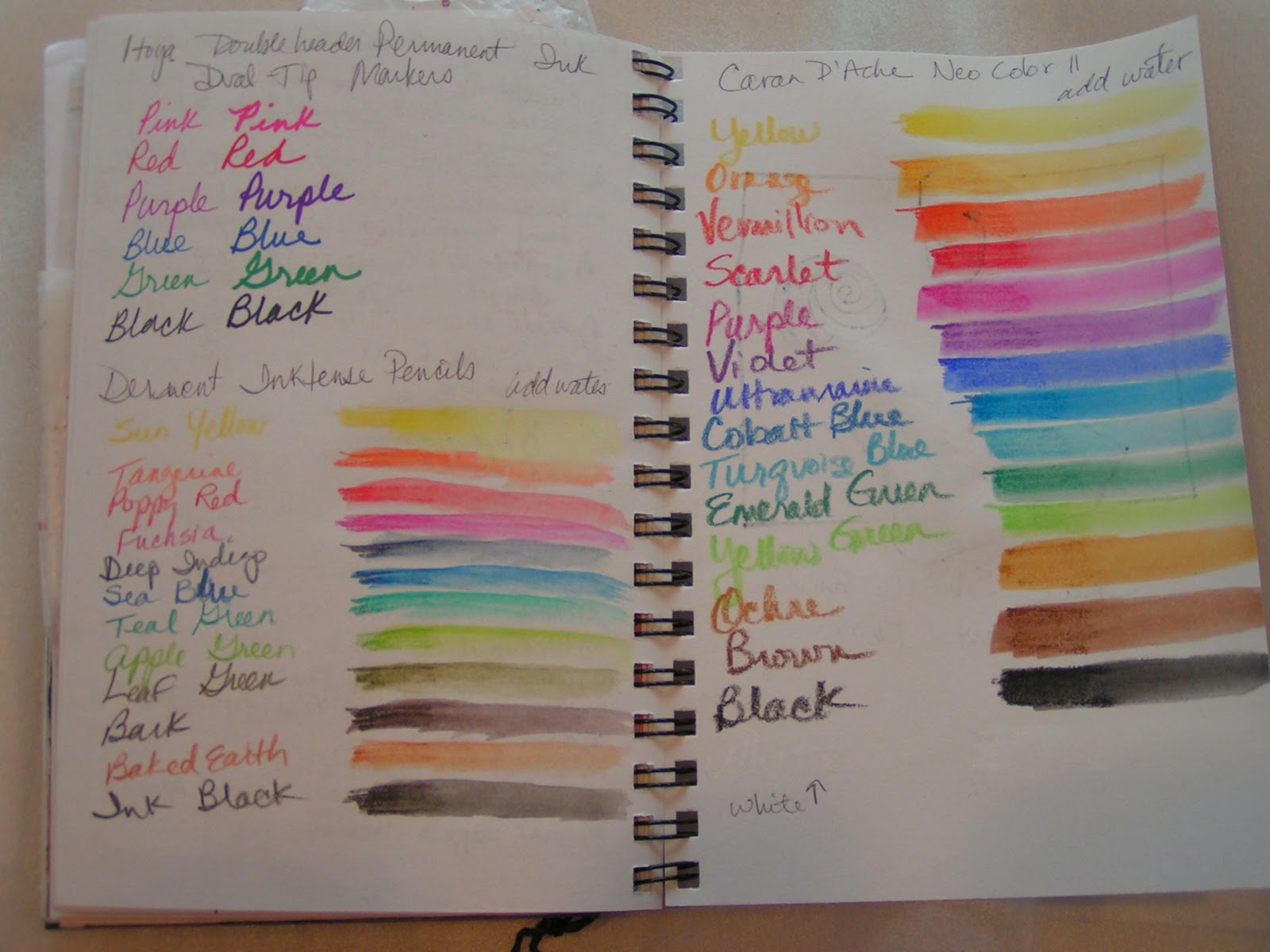
 We also made a color chart with the Procion MX dyes as you can see on the right hand page.

 The page on the left is the back side of the page that I already showed in previous posts. The front of that page is black with red chain stitch. The right page is couched yarns.

 Here’s the back of the couched yarn page on the left. I threaded another novelty yarn through the stitching on the back. It was quite painful to do due to the thickness of the novelty yarn. The partial page on the right was cut down and then stitched with button hole stitch around the edge. This was then covered with raised chain band stitch. The small dark edge is more button hole stitch done with a thinner thread.

 Here’s the back of the button hole page and then on the right is feather stitch.

 The back of the feather stitch on the left and then back stitch with various lacing options.

 The left is the reverse side of the back stitch and on the right is another page of fly stitch. Looks very different from the circular variety above.

 The back of the fly stitch is on the left and the chevron stitch is on the right.

 I did a lacing of the back of the chevron stitch so it looks very similar to the front side. The right is just painted with no stitching.

More painted pages.

The page on the right has herringbone stitch. I still have to do a “knotted” page for homework. I think I will be using one of the black/grey backgrounds with some of my orange hand dyed threads to resemble a lichen photo that I have. There are still 8 pages that are blank so if you have a suggestion for a stitch that I haven’t done and would work well through punched holes, let me know.