Silk Screens

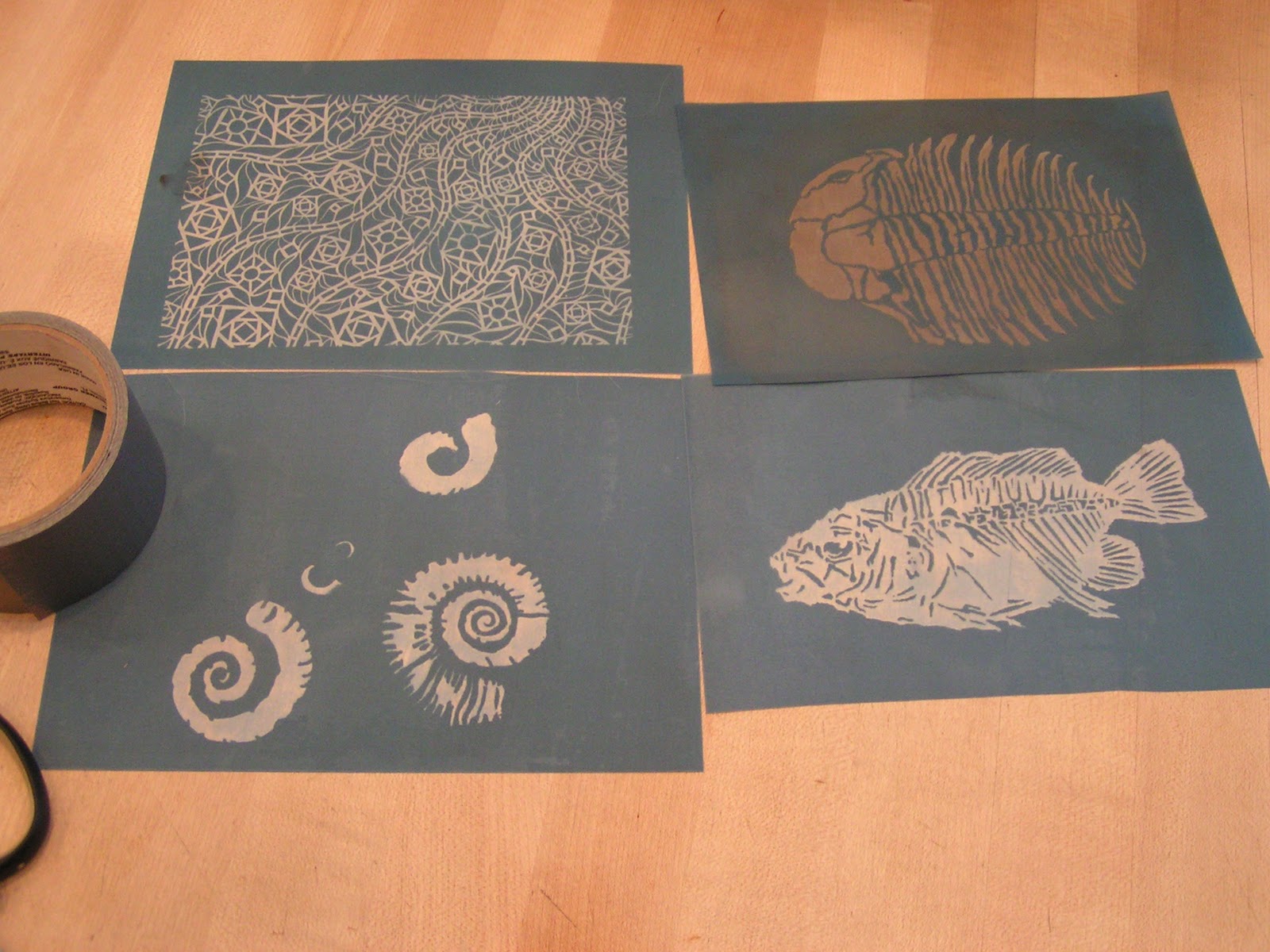
 When my local surface design group got together, we made silk screens. We used a combination of methods but it worked really well. We used PhotoEZ and a Yudu machine.  We tried to use the supplies that came with the Yudu machine but it didn’t work and took a really long time. With the PhotoEZ, you just need your design on a transparency, you put both on the Yudu machine and ‘burn’ the screen for 4 1/2 minutes. We used the high resolution screens. Then you soak them in the sink for 5-10 minutes and gently rub away the part that wasn’t exposed to light. And look at the screens I made! It was really exciting to see my designs become a silk screen. Today, I used duct tape to put around the edges so I would have a well space to put thickened dye.
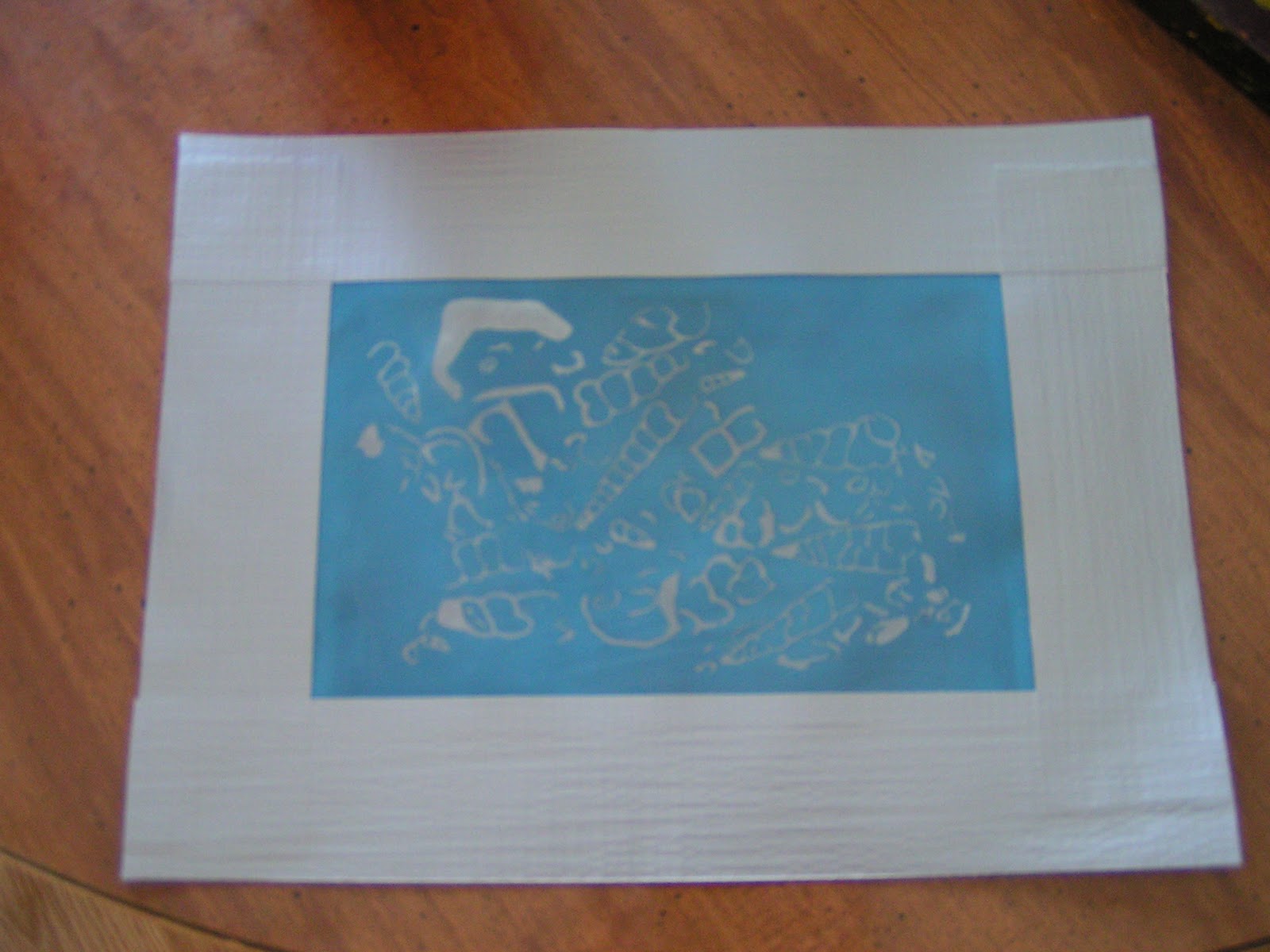
 Here’s one screen with the duct tape around it.
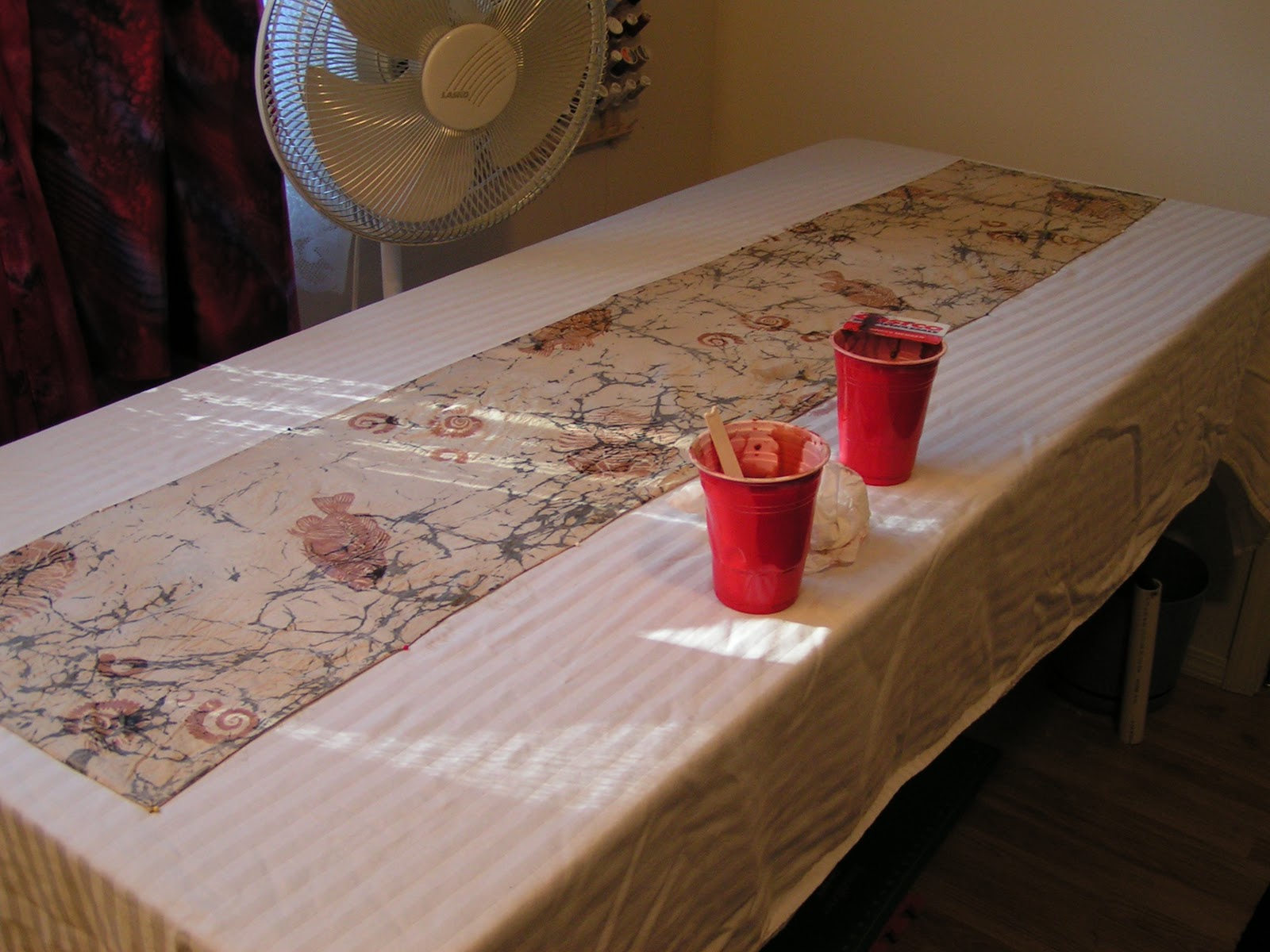
 Then I got busy using my new print table and my new silk screens. I used thickened acid dyes with presoaked (in acetic acid and water) scarves. I did both of my flour paste resist scarves. One I used brown and the other I used ecru.
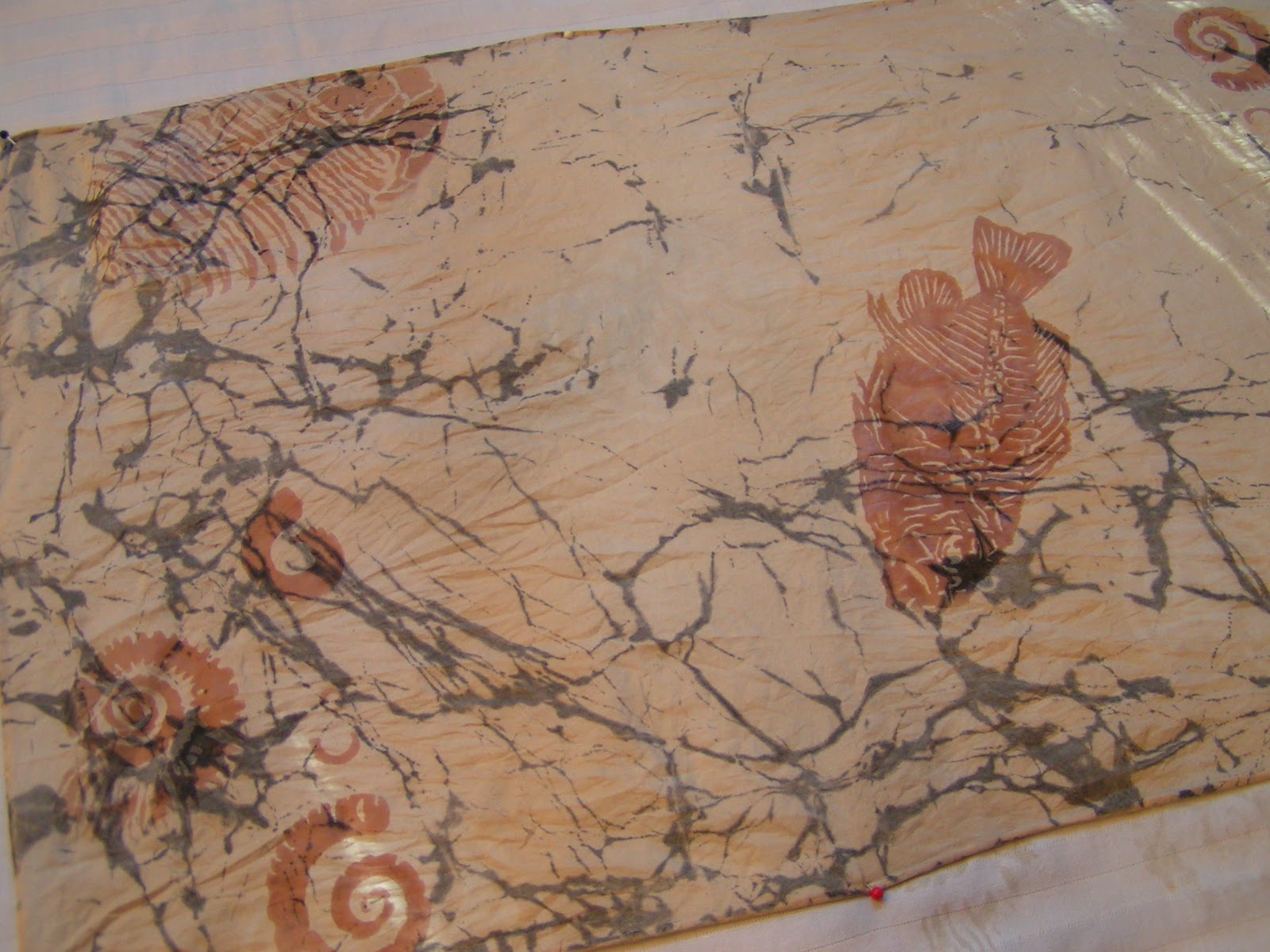
 This is the brown one. I thought that I had made the brown a bit too red at this point.

 But once dry, the color works fairly well. The scarf on the right is the one with the ecru screen printing. It is really subtle, that is to say, you can hardly see the silk screening. But I actually like it that way.
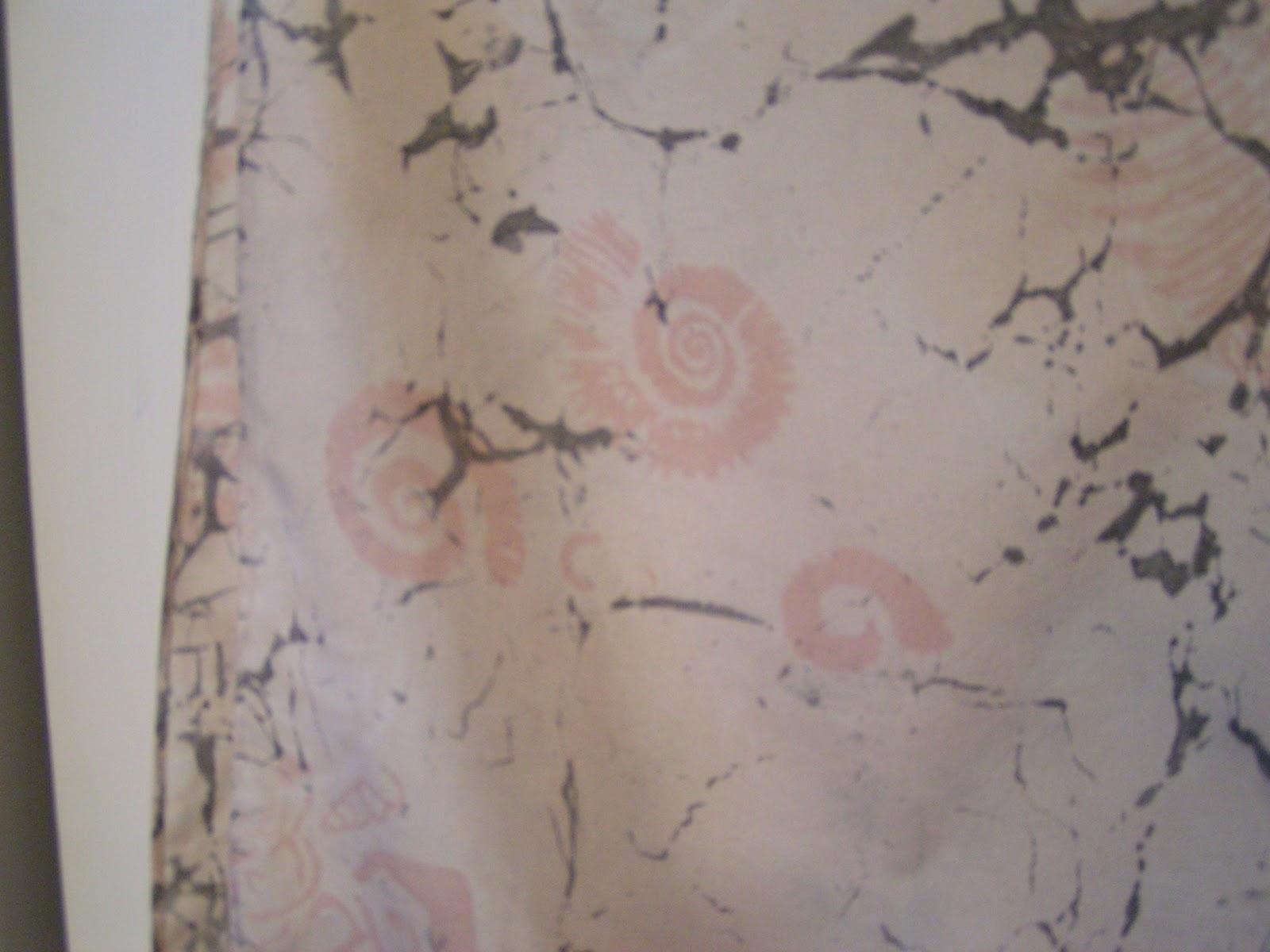
 Here’s a close up of the brown silk screens.

 My fossil fish.
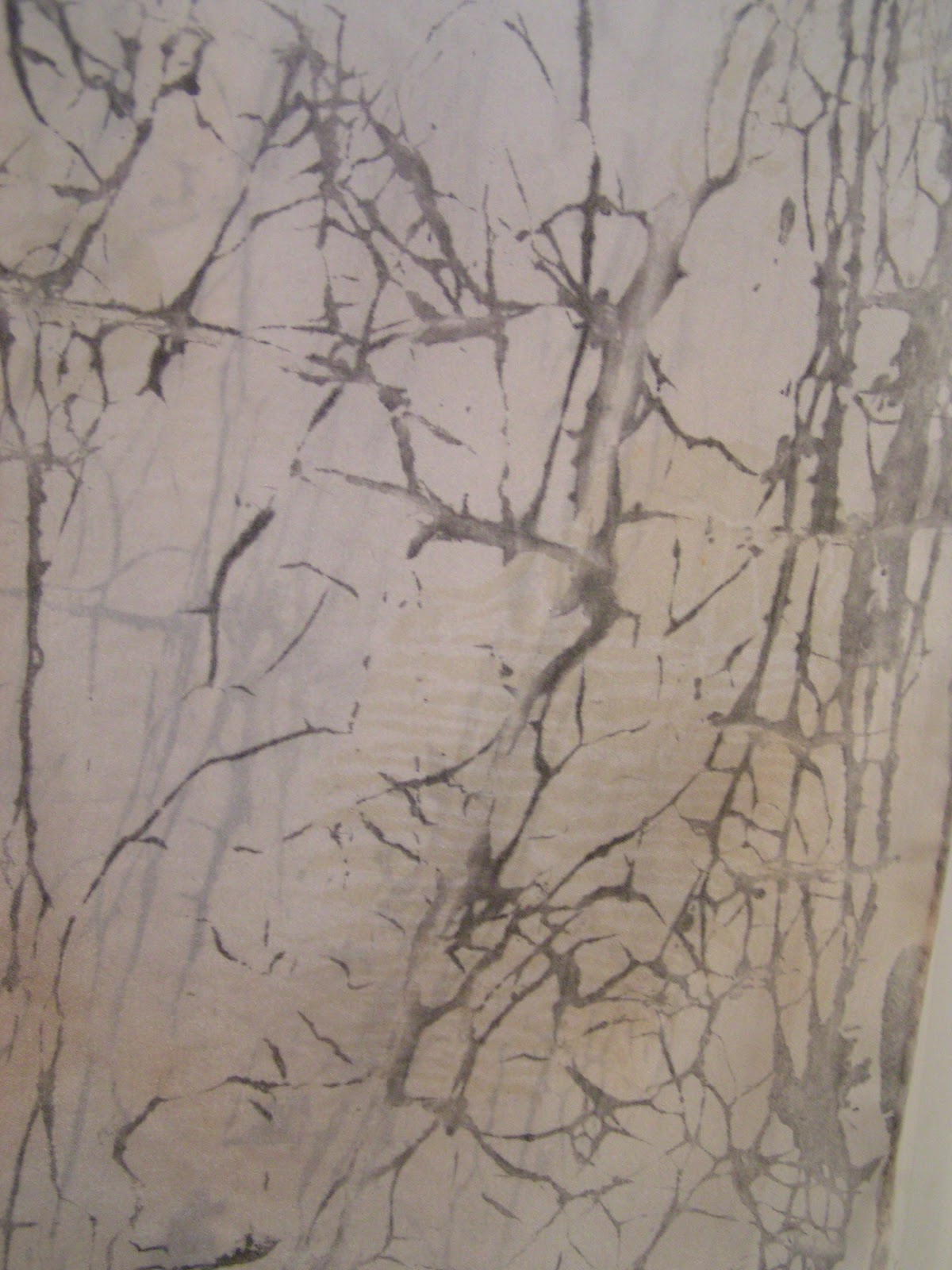
 This is the trilobite screen on the right side. Can you see it?

Here’s an ammonite

 Then I used the silk screens to do some discharge on this brown scarf. I always forget to test ahead of time and I always get a surprise as to what color remains after discharging.

These turned orange. Here’s a better photo of the trilobite. I had a blast and I really liked doing the silk screening with the PhotoEZ screens. It was simple and fairly quick. I will definitely have to order more of these. The only problem is how expensive they are, nearly $10 per sheet. The lower resolution ones are less expensive but we thought with the complexity of the designs we were using that the higher resolution would be better. If you haven’t tried these, you don’t need a Yudu to burn the screens. You just need a light source. It takes a bit longer but if you have a sunny day, it works in the sun as well. So give it a try, it’s great fun.
Hand Stitch Sketch Book

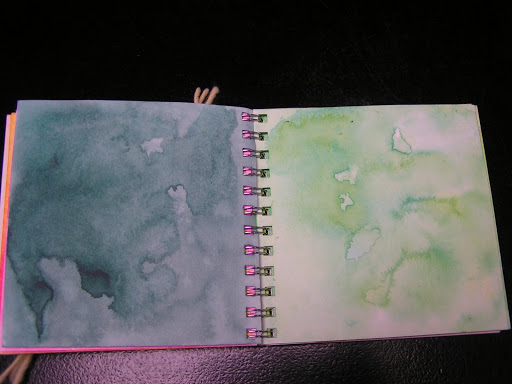
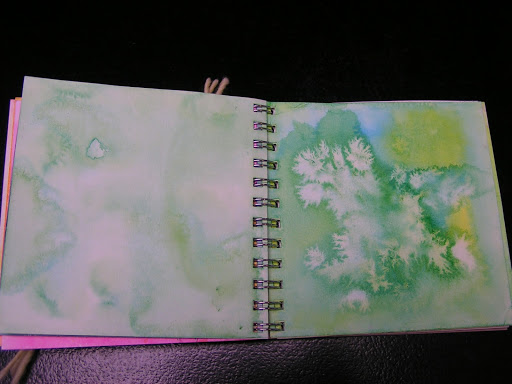
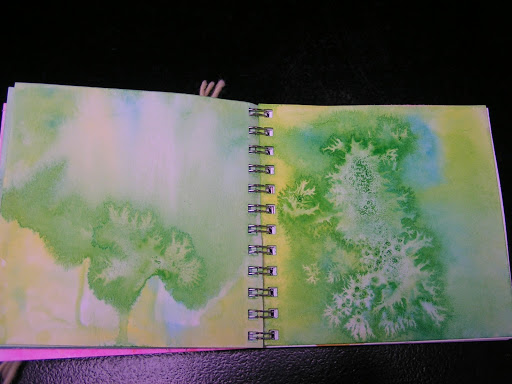
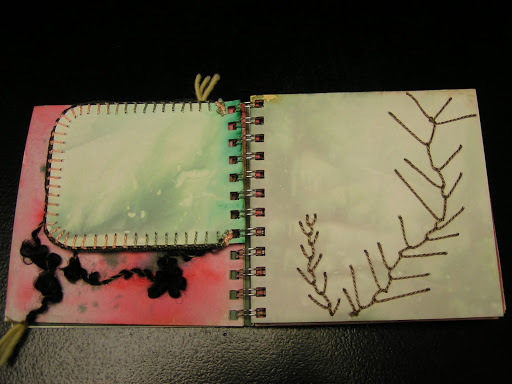
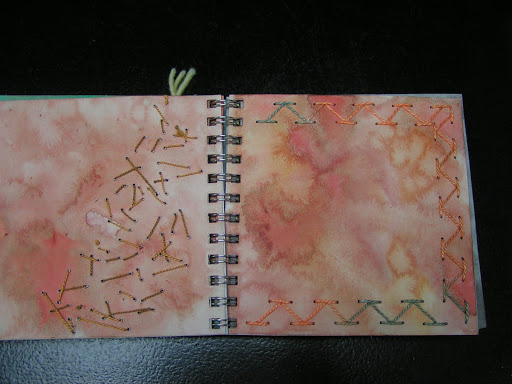
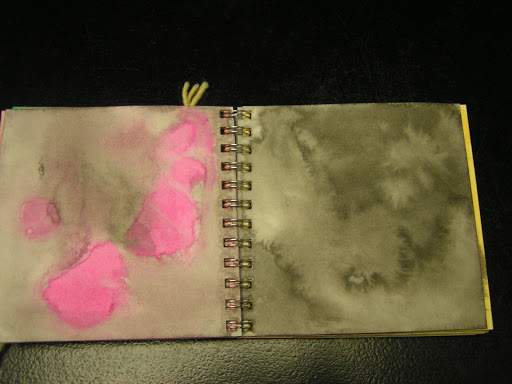
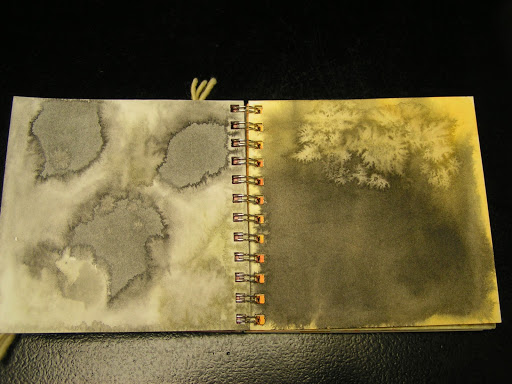
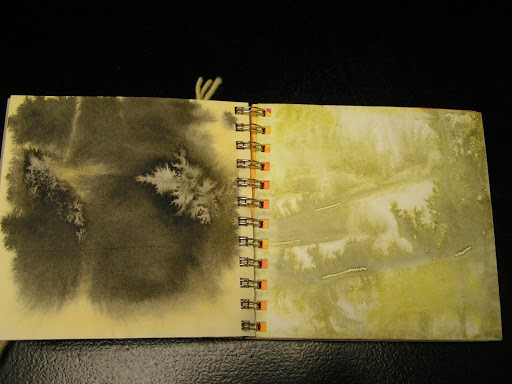
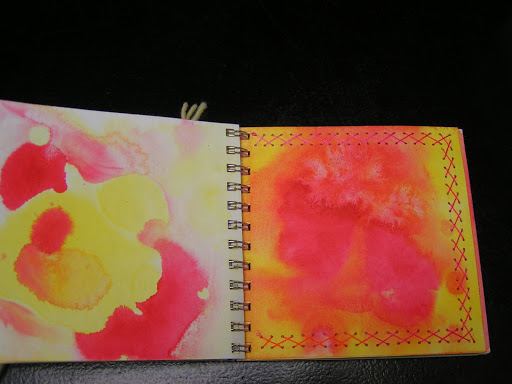
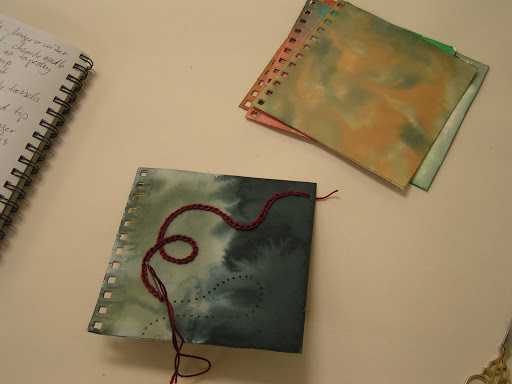
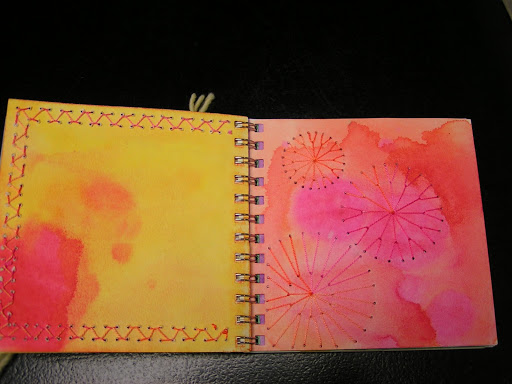
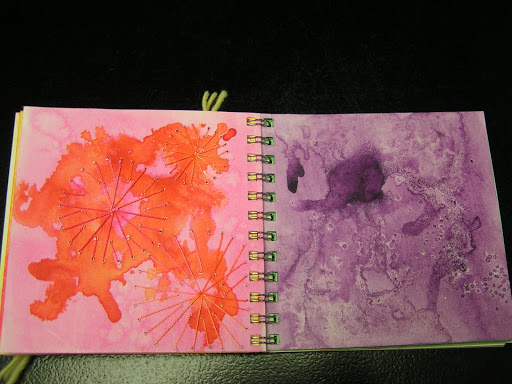
I seem to have run out of “free” space on Blogger. So I deleted some old photos, hopefully that won’t be a problem but I guess I’ll have to work out how much I should pay for space per year. I have definitely been using more photos this past year. These are photos of my hand stitch sketch book that I started in my Level 1 Hand Stitch Class. We painted the first 10 pages with Procion MX dyes and then I painted more with Dye-na-flow paints when I got home. I really like this concept of keeping a record of various stitches in this book. I have added other stitches that we didn’t do in class. The page on the right above is one of my takes on fly stitch. I worked it in a circle. These could be snowflakes or flowers. The most tedious part of this is poking the holes and figuring out where the holes should go.
 This is the back of the page above. I haven’t done any stitching on the purple side yet.

 Here’s a few more pages that have just been painted

 We also made a color chart with the Procion MX dyes as you can see on the right hand page.

 The page on the left is the back side of the page that I already showed in previous posts. The front of that page is black with red chain stitch. The right page is couched yarns.

 Here’s the back of the couched yarn page on the left. I threaded another novelty yarn through the stitching on the back. It was quite painful to do due to the thickness of the novelty yarn. The partial page on the right was cut down and then stitched with button hole stitch around the edge. This was then covered with raised chain band stitch. The small dark edge is more button hole stitch done with a thinner thread.
 Here’s the back of the button hole page and then on the right is feather stitch.

 The back of the feather stitch on the left and then back stitch with various lacing options.

 The left is the reverse side of the back stitch and on the right is another page of fly stitch. Looks very different from the circular variety above.

 The back of the fly stitch is on the left and the chevron stitch is on the right.

 I did a lacing of the back of the chevron stitch so it looks very similar to the front side. The right is just painted with no stitching.

More painted pages.

The page on the right has herringbone stitch. I still have to do a “knotted” page for homework. I think I will be using one of the black/grey backgrounds with some of my orange hand dyed threads to resemble a lichen photo that I have. There are still 8 pages that are blank so if you have a suggestion for a stitch that I haven’t done and would work well through punched holes, let me know.

Level 1 Hand Stitch Class

 I had a wonderful time at the Level 1 Hand Stitch course that I took at the Gail Harker Creative Studies Center. The first day we dyed threads and fabrics with Procion MX dyes. I hadn’t used this type of dye before since I usually use acid dye, so I was glad to get this experience.

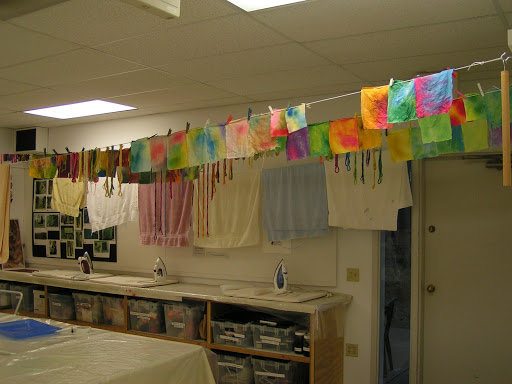
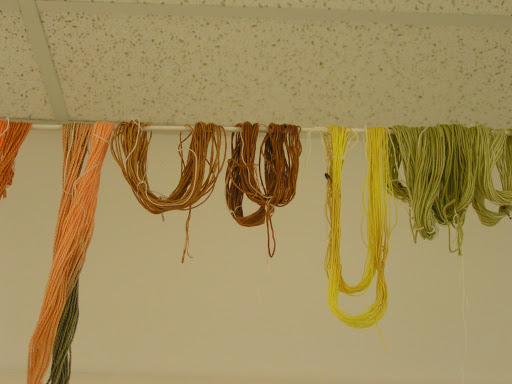
 Here are a few of my threads hanging on the line drying.

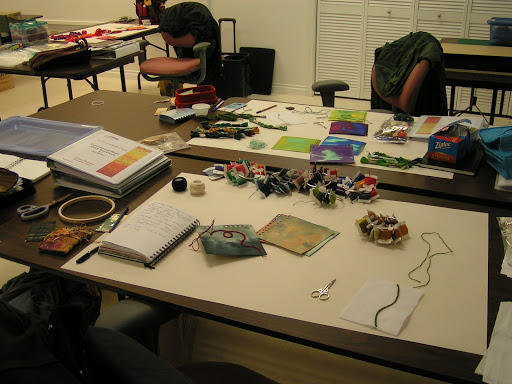
 Here is my work station on the second day. It looks fairly neat but you should have seen it by the 5th day. I had threads, projects and stuff strewn everywhere.

 Here is our first project in our sketchbooks. It is chain stitch. I have been doing chain stitch for years and  learned that I had been doing it incorrectly all this time. Who knew?

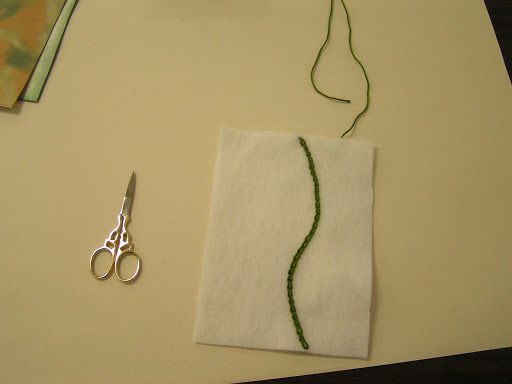
 Here is another chain stitch sample on felt.

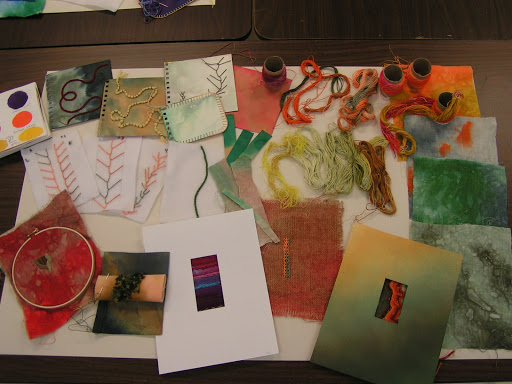
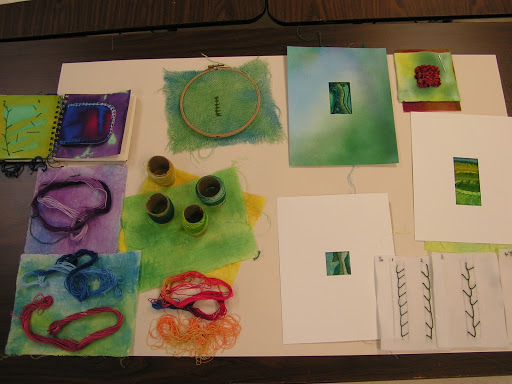
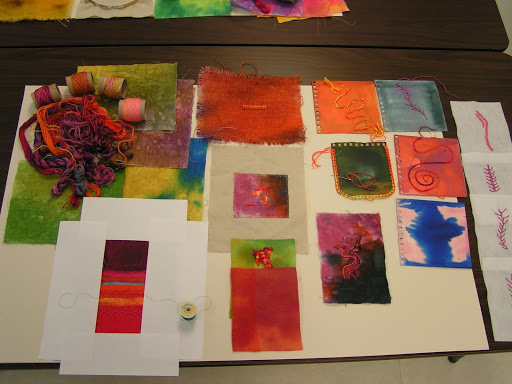
 Here is a collection of the work that I did during the five day course. I had many unfinished samples at this point.

 This is Bobbi’s work. Wonderful colors!

 Here is Nancy’s work. I love that page in the middle with bright yellow and deep blue.

 This is Marie’s work. Here colors are wonderful as well. I really liked her feather stitch sample, the one on the bottom left.

 This is Sarah’s work. She used quite a few pale backgrounds because she wanted her stitches to show up more.

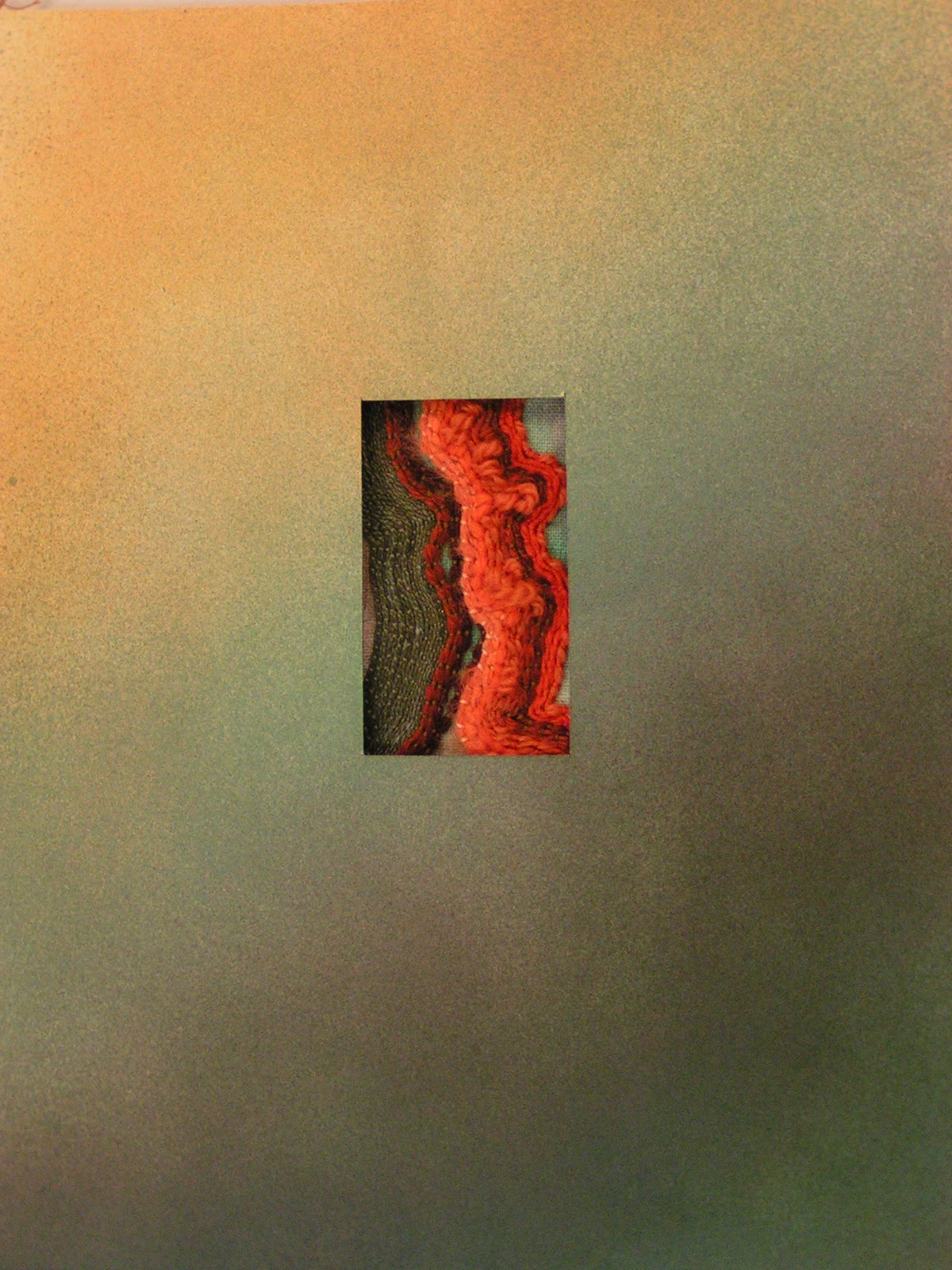
 This is the one sample that was fully complete at the end of the course. It is a couched thread sample.  The oranges are really not a color I am comfortable using so I was trying to stretch my color horizons a bit. When I started this piece, I thought it was going to be hideously ugly. But I am really pleased with the result. It was good to try a different color combination and work through the design process becoming more comfortable with the color choice as I went along. I need to take a closer photo of the stitches as you can’t see them all that well. But you can click on the photo to make it larger.

 Here’s Gail taking photos of all our work at the end of the class. The thing I like about Gail’s classes is that she really works to teach you design as you learn about stitching (or whatever you’re doing). I always learn so much from her and she really encourages everyone to go their own direction. If you are in the northwest, I would strongly recommend taking her classes. And she is also going to start having online classes, so if you aren’t close, you can take classes online soon. Click on the link in the first paragraph to take a look at the class offerings. They are well worth the investment.

I still have quite a bit of homework to complete to get my certificate for this course. I will show you all the samples once I’ve got everything completed.

Flour Paste Resist Tutorial

Here’s the promised flour paste tutorial. Put plastic over your surface on which you will be working. This is very messy so lots of plastic, much wider than your fabric. Pin the top edge of the fabric. You can see it in this photo but I have pinned the edge that is closest to the bucket of flour paste. Mix 1 cup cold water and 1 cup flour in a tub. Use cold water as to make the paste a better consistency. For this silk scarf, I used two recipes of flour paste. I forgot to take a photo before I put flour paste on but you get the idea.

  
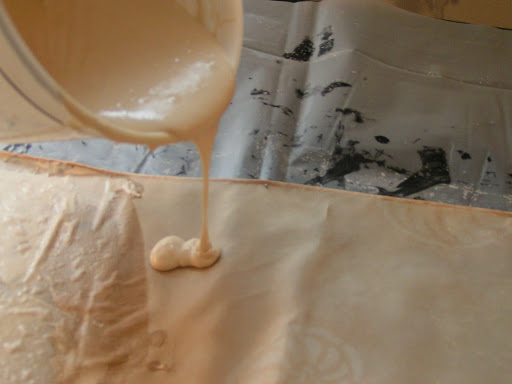
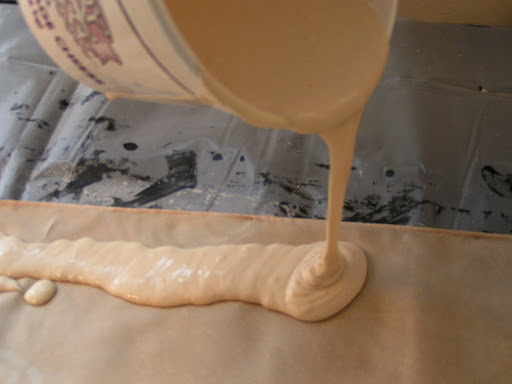
I just pour the paste straight out of the container on to the fabric. Pour along the top edge where you pinned the fabric down. It takes quite a bit so pour generously (more than this photo).
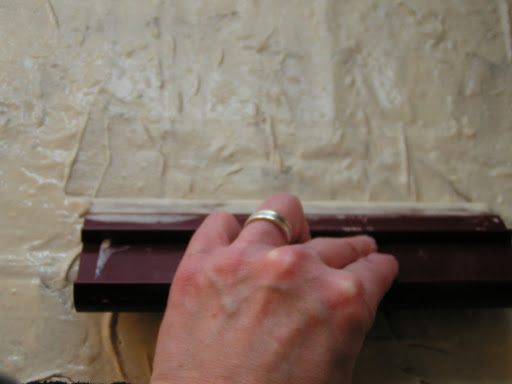
Then use a squeegee or some flat tool to scrape a layer of flour paste over the entire piece of fabric. This process stretches the fabric and is why you only pin the top edge.

 Here’s better photo of a generous pour of flour paste.

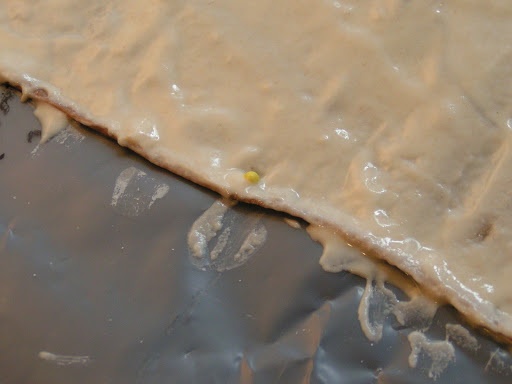
 Once you have your entire surface covered with flour paste, pin the bottom edge and ends of fabric. Make sure you have covered all your edges well. I have this on my “new” print table that I made by stapling a large piece of black felt to the table. Therefore, I can pin right through the plastic and into the felt.

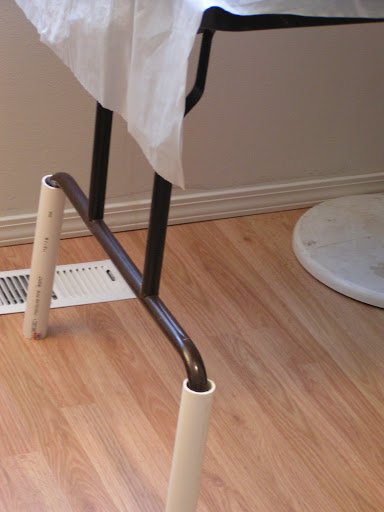
 If your table is too low, just add four pieces of PVC pipe. Works a charm to prevent your back from bothering when working.

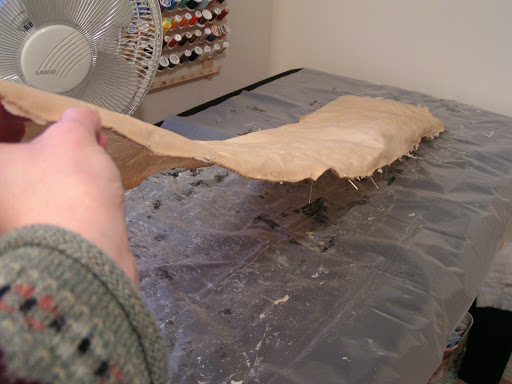
 Then let the piece dry for at least 24 hours. I had the fan going on this and it only took 12 hours to dry. It should all be the same color with no translucent looking spots when it is dry. If you look closely, you can see that almost all the pins have been pulled up due to shrinkage. If you don’t pin it down, the entire piece will curl up and be a big mess. Ask me how I know!!

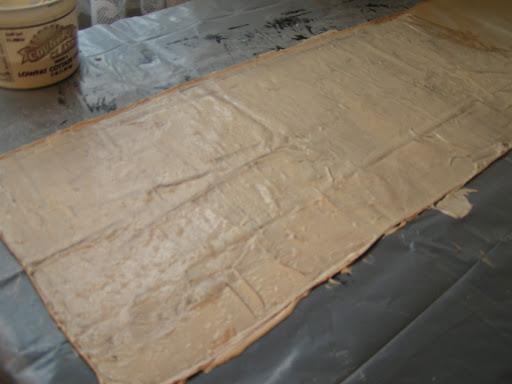
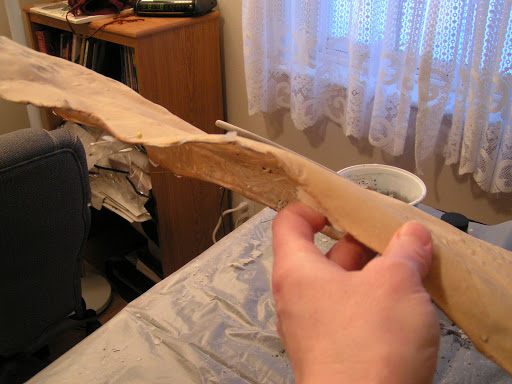
 This is how stiff it is when the flour paste is dry. This is an 8mm silk scarf – now turned into a flour paste plank.

 Here I am holding the end of the scarf. If you haven’t tried this technique, it seems really bizarre.

 Next, you need to crack the flour paste. The more you bend, roll or push on the fabric, the more cracking you will get.

 These are just a few photos showing the cracked flour paste.

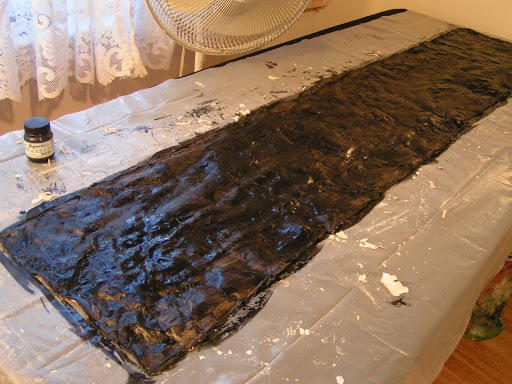
 Then you can either use fabric paint or thickened dye. I used Jacquard Textile paint mixed with half water and half paint. Paint over the entire surface making sure that your paint is covering all the flour paste resist.

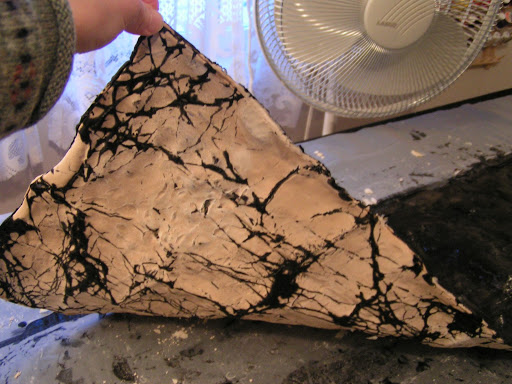
 Here’s a peak on the back after painting. This is about how it will look when you wash it out. If that isn’t enough crackling, carefully (you’ll get paint all over yourself) crack it some more and add more paint. Let paint dry for 24 hours. Most textile paints are supposed to be heat set but it doesn’t work to iron this mess. You could try it on the back but both times I’ve tried it, the paint was pretty well set after 24 hours dry time. If you’re using dye, batch like you normally do.

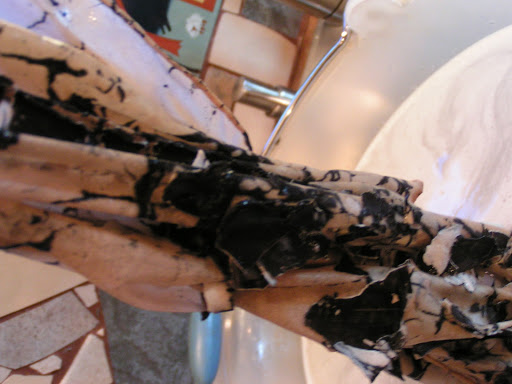
 Then fill a bucket with cold water. You don’t want to put the water directly in the sink because you won’t want this flour paste/paint gunk going down your sink. I just rolled the scarf up into a roll and dunked it in the water. It starts loosening almost immediately and you can peel it right off. Just let the gunk settle to the bottom of the bucket.

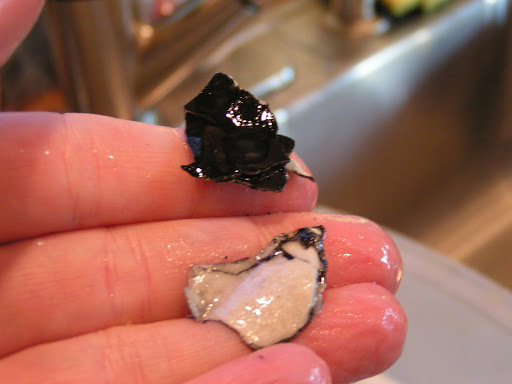
 Can you see the black stuff peeling off in pieces?

 Here’s what it looks like.

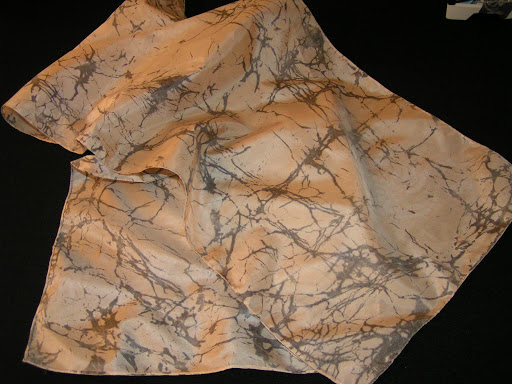
 Once you’ve got as much gunk off as possible, wash with mild detergent in the washing machine. Then iron and you’ll have a lovely crackled effect. I just love the look of these. I have to try some more with different colored paint. Don’t forget to pour the water and flour paste gunk outside. Do not pour it down your sink unless you have a crush on your plumber!

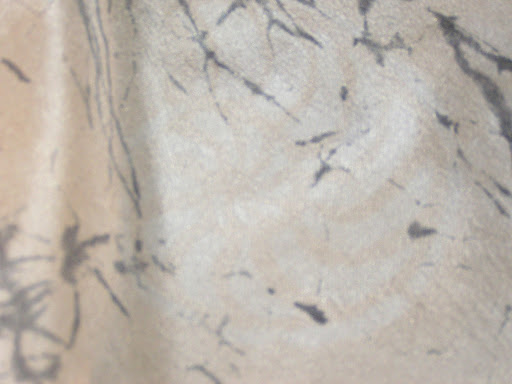
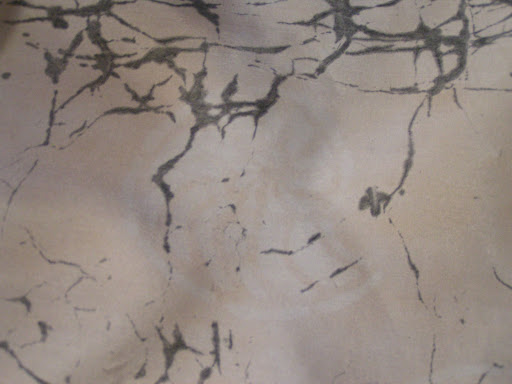
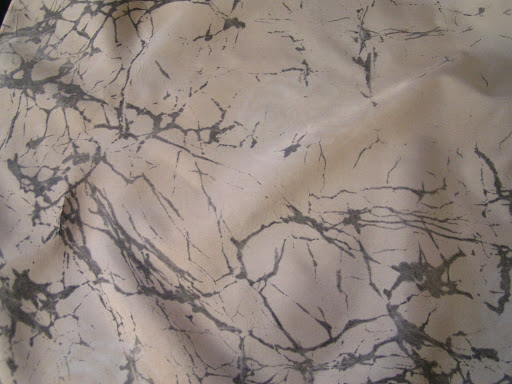
 Here’s a few close ups. Can you see the discharged ammonite?

 Here’s another look.
 I get carried away.
Because I really like this effect. I certainly did not come up with this idea and I got all instructions from Jane Dunnewold’s latest book. If you give it a try, let me know and show us some photos. If you have any questions, don’t hesitate to ask.