Automatic Machine Stitching

I normally don’t even look at the automatic machine stitches that are available on my sewing machine. But one of our assignments for class is to explore what the machine stitches can do.

 So I tried on stitch that looked interesting and varied the stitch width and length. This is a close up so you can see the way the stitch changes.

I also tried a little cable stitch as well. This photo shows the entire piece. Have you tried varying your automatic stitches?

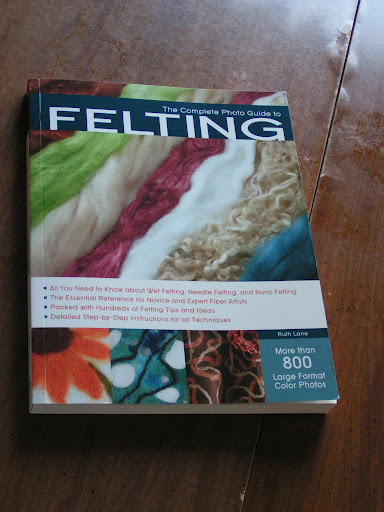
In case you haven’t noticed, I made a new page on the blog for my book, The Complete Photo Guide to Felting. If you’d like an autographed copy, you can order it directly from that page. I’m not sending them internationally because the postage is $17 and the book only cost $24.99. Didn’t seem to make too much sense. If you’re from anywhere outside the US or Canada, you can find it online at the regular book venues such as Amazon. I’d love to hear what you think about the book or if you’d do a review on Amazon, I’d really appreciate it.

More Machine Embroidery

I’ve been steadily working on completing my homework for my stitch class. I am supposed to be trying out different methods of machine embroidery, some historical and others from contemporary machine embroiderers.

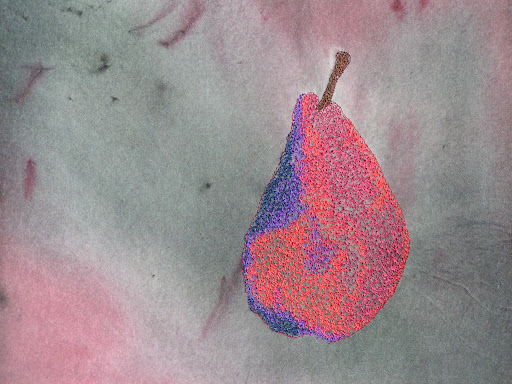
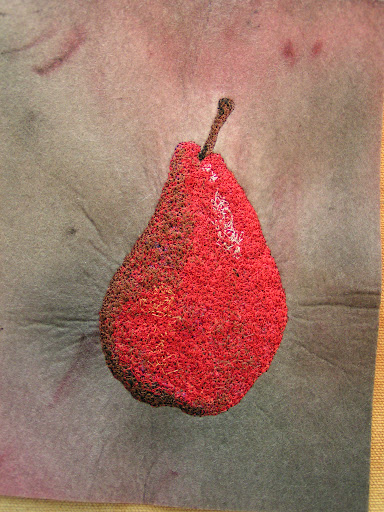
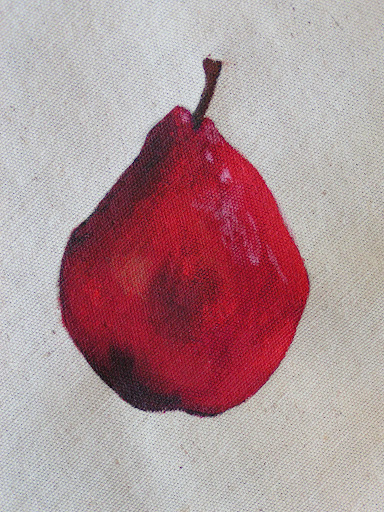
 I decided I would try different methods but use the same subject. Then I could see which one I liked best.. This first one is granite stitch using directions from a Singer instruction manual from the 1940’s. This is the underlayer of stitching. I had a really hard time going in circles. It was a bit jerky.

 This is the finished pear. Looking at it now, I think the shadows on the bottom are a bit dark. But that just might be because there are no corresponding shadows on the ground section. I just embroidered the pear and not the background. I got a lot of distortion of the background which is a heavy weight Pellon.

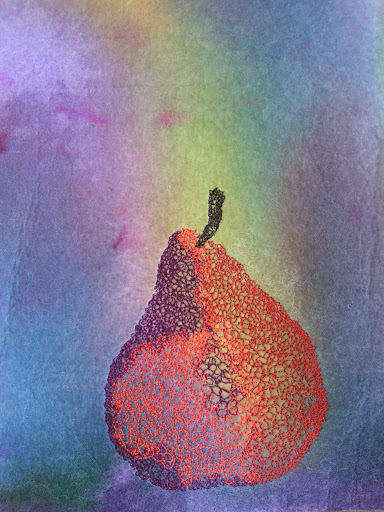
 This is my second attempt. I used heavy weight Pellon again but used the mossing stitching as described by Australian Ken Smith. I find this stitch easier but maybe because this is the one that I’ve practiced the most. Again, this is the underlayer of colors.

 The colors seem to mix better with this method. But the center of this one doesn’t have much variation either.

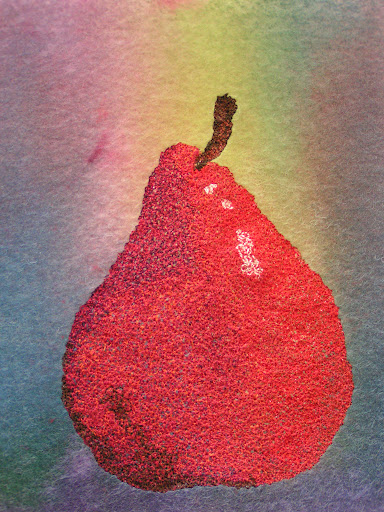
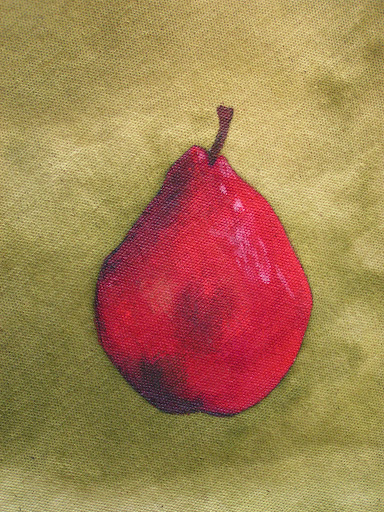
 This last one is on canvas. I am going to use Carol Shinn’s technique. She stitched on canvas cut on the bias and either uses a photograph transferred on to fabric or paints the image first. This is the painted image on white canvas. I decided it needed a background color since the other two had background colors.

 So I painted the background with Dye-Na-Flow. Here’s the finished painting after heat setting the paint. Now I need to stitch it. But I can only do so much of this type of work at once. Perhaps tomorrow.

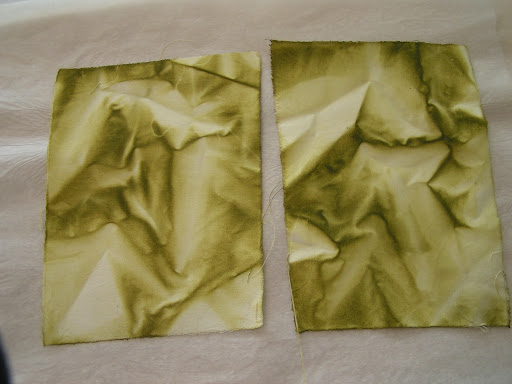
I had extra paint so I painted a couple of pieces of fabric and then scrunched it up and left it outside to dry. It looks like mountain ranges from above.
Next weekend I am hosting a felting retreat. We’re going out to a rustic lodge by a lake and felting all weekend. I am planning on washing some wool, doing some drum carding and hopefully getting something felted as well. I’ll let you know how it goes!

Botanical Sketches

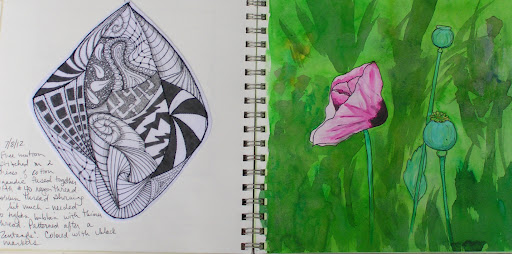
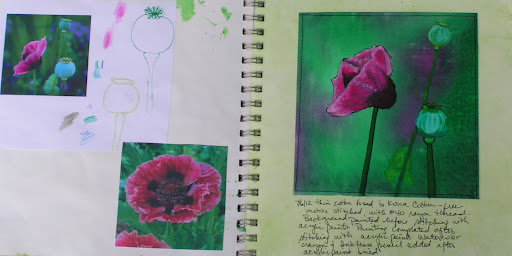
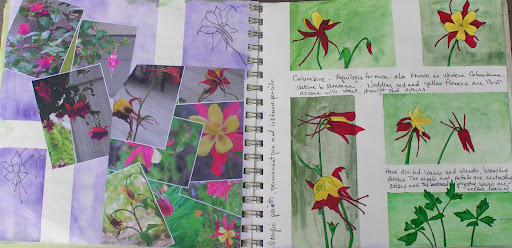
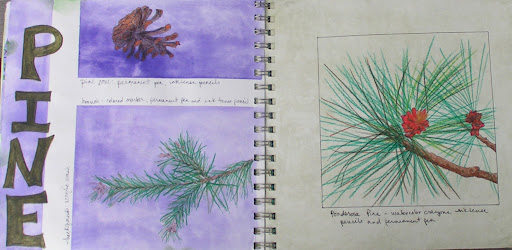
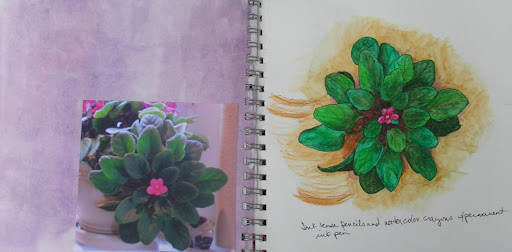
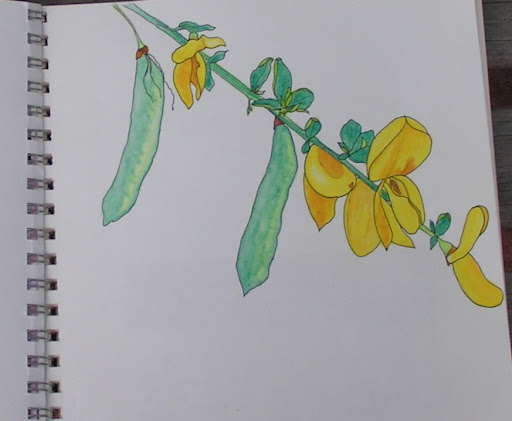
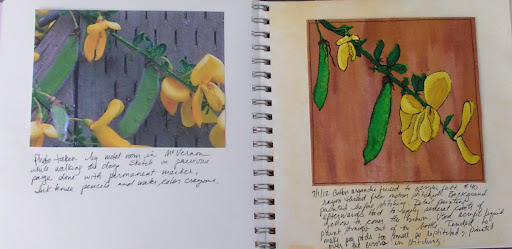
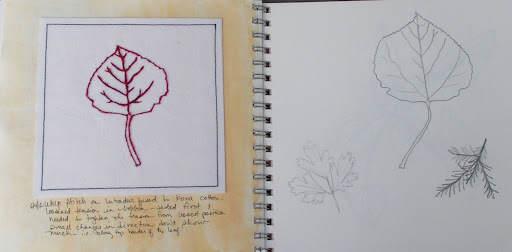
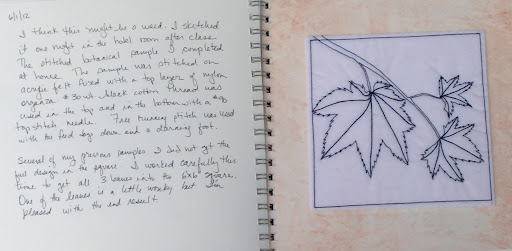
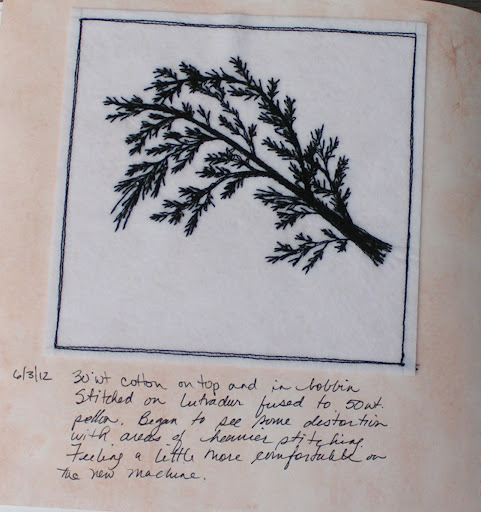
 I promised to show some of my homework for my stitch class. We’re working on free motion machine embroidery with botanicals as our inspiration. Some are done in black and white and some are painted afterward. I have been really enjoying working on my sketching skills and improving my free motion on the machine. These are a sampling of what I’ve been doing and some I’ve sketched but still haven’t stitched yet. I also have a post on the Felting and Fiber Studio tomorrow with a slide show of further work in the sketchbook if you’d like to check it out.

The Complete Photo Guide to Felting

 Woo Hoo! Look what arrived on my doorstep yesterday! The advanced copy of my book. How exciting to finally see the results of all that hard work. The books are not available yet for sale but will be in just a couple of weeks.

 Here’s a few sneak peaks of the book so you can see what it looks like. There are more than 800 photos!

 The book includes information about wool and different fibers, fiber preparation and dyeing, wet felting, nuno felting and needle felting including using a needle felting machine.

And you get to see my hands over and over again! If you’d like a signed copy, just send me an e-mail at info at purplepomegranate dot com. I’ll let you know the payment procedure and send the books out as soon as I get them in. I won’t charge you until the book is on its way. You can also pre-order at Amazon and other online sources. Keep your eyes peeled here and over at the Felting and Fiber Studio site. I’ll be doing some give aways and perhaps you’ll win a free copy!